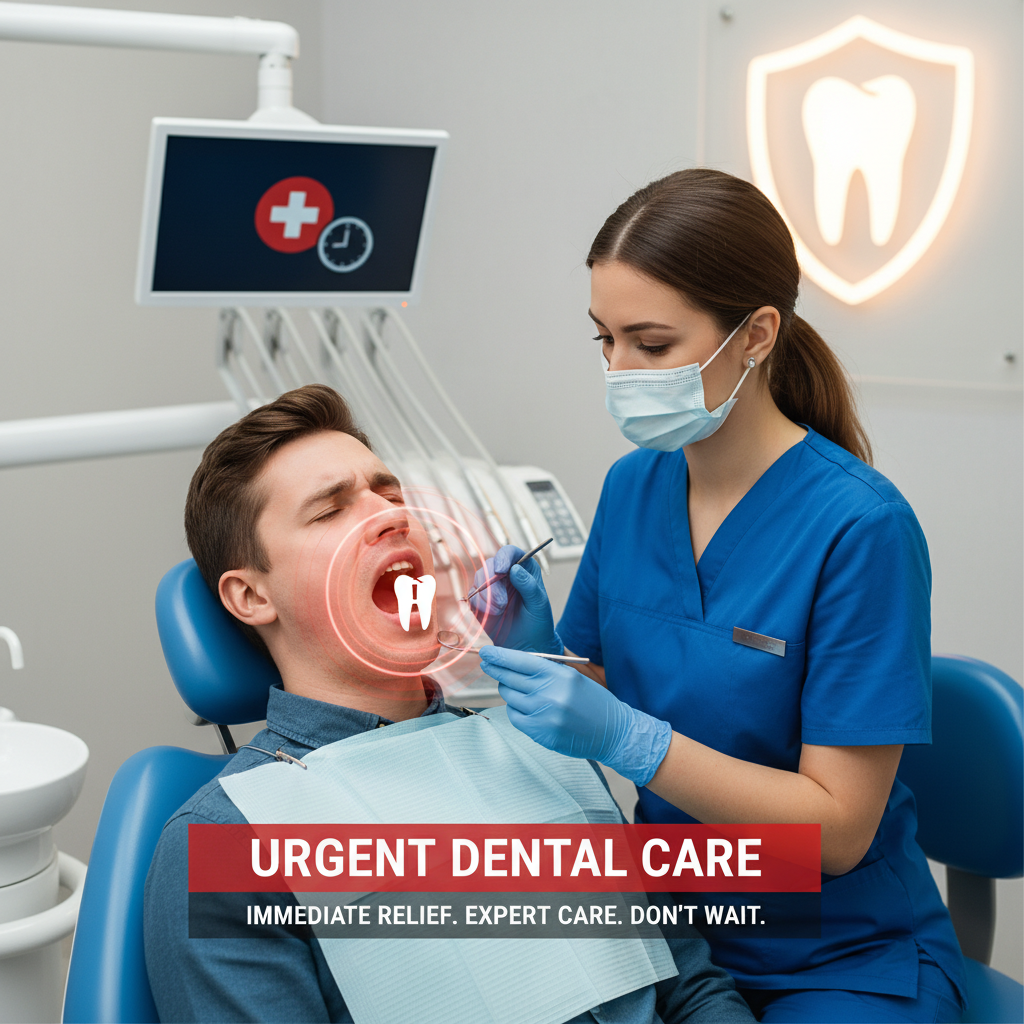
Understanding what dental issues require immediate treatment
If you are in pain or notice something suddenly wrong with your teeth or gums, it can be hard to know what dental issues require immediate treatment and what can safely wait. Ignoring true dental emergencies can lead to infections, tooth loss, and in rare cases serious health complications that affect your whole body [1].
This guide walks you through the main signs of urgent dental problems, when you should call a dentist right away, and when you may need to go straight to the emergency room. It also explains which issues are usually non urgent so you can make calm, informed decisions. For a broader overview, you can also review urgent vs non urgent dental problems and dental emergencies vs routine dental care.
How to quickly decide if it is an emergency
When something goes wrong with your mouth, start by asking three questions.
- Are you in severe pain, or has pain suddenly worsened?
- Is there heavy bleeding, major swelling, or trouble breathing or swallowing?
- Is a tooth badly damaged, very loose, or knocked out?
If you answer yes to any of these, you likely have a problem that requires same day or immediate care. You can use these additional guides if you are unsure, such as how to know if tooth pain is emergency and how to tell if you need urgent dental care.
In general:
- Life threatening symptoms like trouble breathing or swallowing mean you should go to the nearest ER or call 911.
- Severe pain, signs of infection, and obvious trauma usually mean you should see an emergency dentist as soon as possible.
- Mild discomfort, a small chip, or a lost filling without pain usually can wait for a scheduled appointment.
Severe toothache and when pain becomes serious
Tooth pain is one of the most common reasons people wonder what dental issues require immediate treatment. Not every toothache is an emergency, but some clearly are.
Red flag signs with tooth pain
You should seek same day care if you notice any of the following with a toothache:
- Pain that is sharp, throbbing, or constant and interferes with sleep or daily activities
- Pain that gets worse over 24 to 48 hours instead of improving
- Pain when biting or chewing that feels sudden and intense
- Swelling in your face, cheek, or gums near the painful tooth
- Fever, feeling generally unwell, or a bad taste or pus in your mouth
Persistent tooth pain that lasts more than 48 hours and worsens over time may be a sign of a cavity or dental infection that needs prompt treatment [2]. Severe toothaches can indicate deep decay, abscesses, infections, or gum disease [1].
If you are trying to decide how long you can wait, resources such as when tooth pain becomes serious and how long can you wait for tooth pain can offer additional direction.
Why you should not ignore intense pain
Severe tooth pain often means the nerve inside your tooth is infected or dying. Without treatment, the infection can spread to the jaw, neck, or even the bloodstream, which creates serious health risks [3].
Ignoring tooth pain or delaying care until it becomes unbearable can also make treatment more complex and costly. Delayed infections may lead to abscesses, tooth loss, or infections that affect your heart, lungs, or overall health [1].
If you are unsure how to handle your symptoms, see how to handle sudden dental pain and urgent dental issues explained for more context.
Tooth abscess and spreading infection
An abscessed tooth is one of the clearest examples of what dental issues require immediate treatment. A tooth abscess is a pocket of pus caused by a bacterial infection in or around the root of the tooth or in the gums [4].
Common symptoms of a tooth abscess
You should contact a dentist right away if you experience:
- Severe, throbbing tooth pain that may spread to your ear, jaw, or neck
- Swelling in your face, cheek, or gums
- A red, swollen bump on the gums that may leak pus
- Fever or feeling generally sick
- Bad breath or a foul taste in your mouth
Sharp, constant pain along with swelling, fever, or pus are strong signs of an abscess that requires urgent dental care to stop the infection from spreading [3].
A tooth abscess does not get better on its own. Pain relievers can mask discomfort, but they do not cure the infection. Professional treatment is needed, such as draining the abscess, antibiotics, or a root canal [3]. If the tooth cannot be saved, extraction may be necessary to protect your health [2].
When a tooth infection becomes an emergency
A tooth abscess becomes an emergency if there are signs the infection is spreading beyond your tooth. Call 911 or go to the ER immediately if you have:
- Difficulty breathing, swallowing, or opening your mouth
- Rapidly increasing swelling in your face, neck, or around the eyes
- A fever over 100.4°F with severe dental pain
- Swelling that extends down your neck or makes it hard to speak
Symptoms like high fever, trouble breathing or swallowing, or rapid facial swelling are strong warnings that you need emergency hospital care before dental treatment [5]. These can be signs of a spreading infection or a serious condition called Ludwig angina, which is life threatening without immediate medical attention [5].
According to the Cleveland Clinic, an untreated abscess can spread to the jawbone, facial tissues, heart, or brain, so prompt treatment is critical [4]. For more warning signs, see dental emergency symptoms to watch for and emergency dental warning signs.
Knocked out, loose, or badly broken teeth
Sudden trauma to your teeth often qualifies as a true dental emergency. Knowing how to respond in the first few minutes can make a big difference.
Knocked out teeth
A knocked out permanent tooth almost always requires immediate treatment. This is one of the clearest answers to what is considered a dental emergency. You should:
- Handle the tooth by the crown, not the root
- Gently rinse it with water without scrubbing
- Try to reinsert it into the socket if possible
- If you cannot reinsert it, keep it moist in milk or your saliva
- Get to a dentist or emergency clinic right away
Dentists may be able to replant and stabilize the tooth using a custom splint so the surrounding ligaments can reattach [6]. Ideally, this should happen within about 30 minutes for the best chance of saving the tooth [7].
If the situation involves a severe injury, uncontrolled bleeding, or broken facial bones, you should go directly to the ER [6].
Severely loose or dislodged teeth
If an adult tooth is suddenly loose, pushed out of position, or feels like it will fall out, you should see a dentist right away. You should not wiggle or try to pull the tooth yourself.
A loose tooth in an adult can be a sign of trauma or advanced gum disease, both of which need prompt evaluation [8]. Early treatment can sometimes stabilize the tooth and prevent tooth loss.
Guides such as how to identify dental trauma severity and when to go to an emergency dentist can also help you decide your next steps.
Cracked or badly broken teeth
Cracks and fractures are not always obvious, but they can be serious, especially if the crack reaches the inner pulp of the tooth. You should seek prompt care if:
- A large piece of tooth has broken off
- You feel sharp pain when biting or releasing the bite
- You see a visible crack that extends below the gum line
- The tooth is sensitive to hot, cold, or sweet foods
If a fracture extends to the pulp, root canal therapy is often needed to remove the nerves, blood vessels, and tissues inside the tooth, often followed by a crown [6]. In some cases, extraction may be necessary if the damage is beyond repair [6].
If you are unsure, you can refer to is a cracked tooth an emergency and is a chipped tooth a dental emergency to help gauge urgency.
Bleeding, swelling, and gum emergencies
Problems with your gums and soft tissues can be just as serious as tooth issues, especially if there is heavy bleeding or significant swelling.
When gum swelling is an emergency
Mild, slowly developing gum swelling is often related to gum disease and usually can wait for a scheduled appointment. However, you should seek urgent or emergency care if:
- Swelling appears suddenly and is painful
- Swelling spreads to your face or neck
- You have a fever along with swollen gums
- You notice pus, a bad taste, or a foul smell
These can be signs of a gum abscess or spreading infection that requires immediate treatment [4]. If swelling makes it hard to breathe, swallow, or open your mouth, go to the ER right away [5]. You can read more in when gum swelling is an emergency.
When bleeding gums are an emergency
Occasional light bleeding when brushing or flossing is usually not an emergency and often points to gingivitis. However, bleeding becomes urgent when:
- It is heavy or does not stop after 10 to 15 minutes of pressure
- It follows an injury or dental procedure and seems excessive
- It is combined with serious pain, facial trauma, or broken teeth
- You notice large blood clots, dizziness, or signs of shock
Injuries with severe pain, broken bones, or continuous bleeding should be evaluated in an emergency room if you cannot reach a dentist right away [6]. For more guidance, see when bleeding gums are an emergency.
Lost fillings, crowns, and other restorations
Not every broken or lost restoration is an emergency, but some situations do require prompt care to avoid more serious problems.
You should schedule an urgent visit if:
- A filling or crown falls out and the tooth is very painful or sensitive
- You can see exposed dark or soft inner tooth material
- The remaining tooth is sharp and cutting your tongue or cheek
Losing a filling or crown exposes the inner parts of the tooth, which can cause pain and increase the risk of infection. Replacing the restoration quickly helps protect the tooth and prevent future complications [7].
If the tooth is not painful and you can protect it from extreme hot or cold foods, you may be able to wait a short time for a scheduled appointment. A quick call to your dentist can help you decide. Resources like what is considered a dental emergency can also provide helpful context.
When to go to the dentist vs the ER
A common source of confusion is whether you should see an emergency dentist or go directly to the hospital. This table can help you quickly compare.
| Situation | Where to go first | Why |
|---|---|---|
| Severe toothache without breathing issues | Emergency or same day dentist | Likely infection or deep decay that needs urgent dental treatment [1] |
| Suspected abscess with facial swelling and pain | Emergency dentist, ER if swelling is rapidly worsening | Infection may spread, and early treatment can prevent serious complications [4] |
| Fever, difficulty breathing or swallowing with dental pain | Emergency room or call 911 | Signs of a spreading infection or Ludwig angina that is life threatening [5] |
| Knocked out or severely displaced tooth | Emergency dentist or ER with dental services | Tooth may be saved if treated quickly [6] |
| Broken jaw, large facial trauma, uncontrollable bleeding | Emergency room | Requires medical and possibly surgical care [6] |
In life threatening situations, always call 911 or go to the nearest ER. For most other urgent dental issues, an emergency dentist is the best first step. For more decision support, review when to go to an emergency dentist and signs you need emergency dental care.
What you can do at home before treatment
Home care will not cure infections or fix serious damage, but it can help you stay more comfortable and avoid making things worse until you see a professional. You can also review what to do before seeing emergency dentist for a step by step checklist.
For many dental emergencies you can:
- Rinse gently with warm salt water to help clean the area
- Use over the counter pain medicine as directed, unless your doctor has told you not to
- Apply a cold compress to the outside of your cheek to help with swelling
- Avoid extreme hot or cold foods on the affected area
- Keep any broken tooth pieces or knocked out teeth moist in milk or saliva
Remedies such as salt water rinses, cold compresses, and clove oil can offer temporary relief but they are not substitutes for professional dental treatment when there is infection or deep decay [2].
If you are ever unsure, it is safer to call a dentist and describe your symptoms than to wait and hope the problem goes away.
How to prevent many dental emergencies
You cannot avoid every accident, but you can reduce your chances of many urgent dental issues through consistent care.
- See your dentist regularly for exams and cleanings so small problems are found early
- Address tooth sensitivity, minor pain, or gum swelling promptly
- Wear a mouthguard for contact sports or activities with risk of impact
- Do not chew ice, pens, or hard candies that can crack teeth
- Follow any treatment plans your dentist recommends
Routine checkups and timely treatment of early symptoms are key steps in preventing abscessed teeth and other emergencies [4]. Waiting until something becomes an emergency usually means more discomfort and more complex care [1].
If you want a broader framework for understanding your symptoms, articles such as how to identify dental trauma severity, urgent vs non urgent dental problems, and urgent dental issues explained can help you feel more confident about when to act.
Recognizing what dental issues require immediate treatment and responding quickly protects not just your smile, but your overall health. When in doubt, reach out to a dental professional and describe exactly what you are feeling and seeing. It is always better to ask early than to wait until a minor issue becomes a serious emergency.