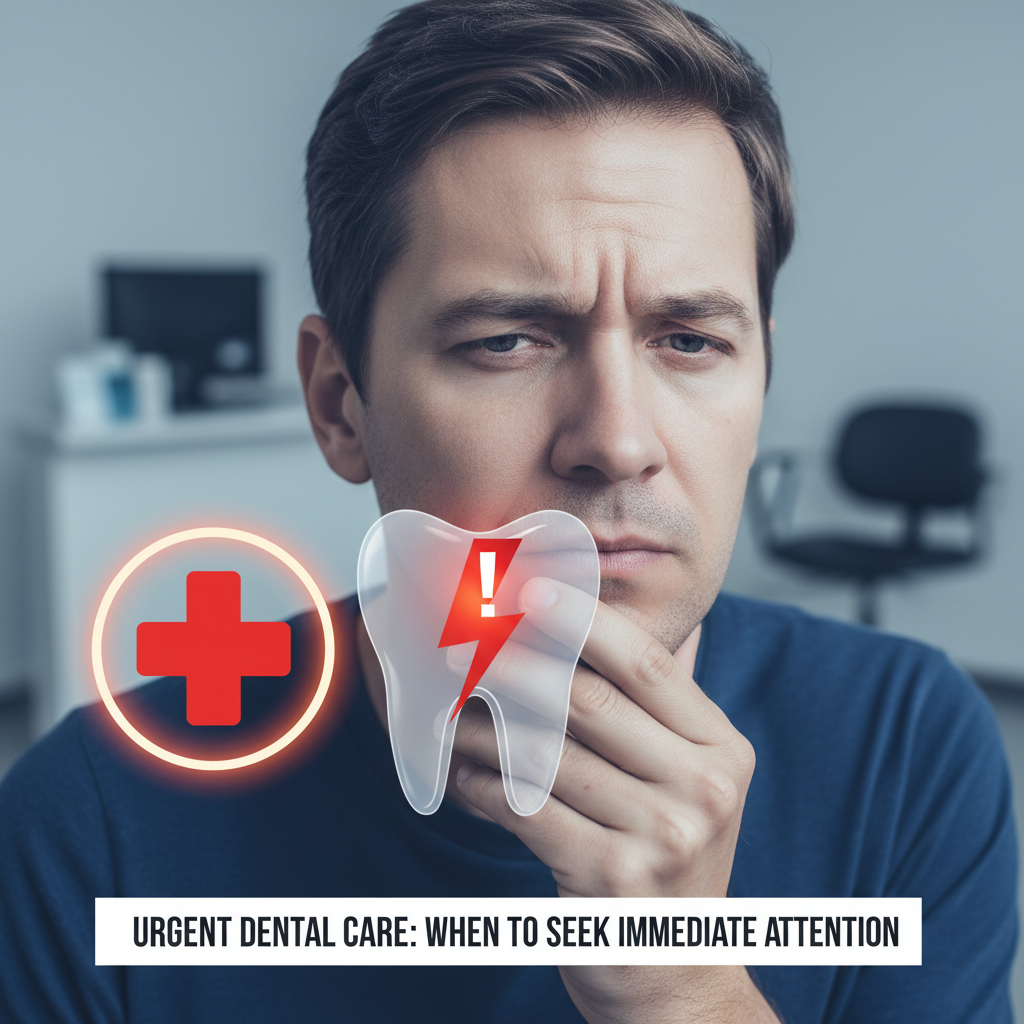
Dental problems have a way of showing up at the worst possible time. When you suddenly feel pain or notice something unusual, it can be hard to know how to tell if you need urgent dental care or if it is safe to wait for a routine appointment.
Understanding the difference between true dental emergencies and less urgent issues helps you protect your health, avoid complications, and reduce stress. This guide walks you through specific signs, symptoms, and situations so you can decide when to act, who to call, and what to do until you are seen.
Understanding urgent vs non urgent dental problems
Not every dental issue is an emergency, but ignoring the wrong symptom can lead to serious infection, tooth loss, or even life‑threatening complications.
In general:
- A dental emergency is any problem that needs immediate attention to control severe pain, stop bleeding, save a tooth, or prevent a serious infection from spreading. This often means same day care or a trip to the emergency room for very severe symptoms. The Cleveland Clinic describes emergencies as issues like bleeding that will not stop, pain that does not improve with medication, or broken facial bones [1].
- Urgent dental care is needed when a problem is serious and should be treated soon, usually within 24 to 48 hours, but is not immediately life threatening. Examples include a bad toothache, swollen gums, or a lost filling [2].
- Non urgent issues are problems that can usually wait for a scheduled visit, such as a small chip that does not hurt or minor sensitivity that comes and goes.
If you want a deeper comparison of these categories, you can review urgent vs non urgent dental problems and dental emergencies vs routine dental care.
Red flag symptoms you should never ignore
Certain symptoms are clear warning signs that you may need urgent or emergency dental care. Pay close attention if you notice any of the following.
Severe or persistent tooth pain
Tooth pain is one of the most common reasons people seek urgent dental care. A typical, mild toothache might be monitored for a short time. However, you should act quickly if:
- The pain is intense, throbbing, or constant
- Pain wakes you from sleep
- Over the counter pain medication does not help
- Pain is accompanied by fever, swelling, or difficulty swallowing
These signs can indicate a serious infection or abscess that can spread to your jaw, neck, or even brain if untreated [3]. Walterboro Family Dentistry notes that intense discomfort that interferes with sleep or daily life, especially with swelling or fever, is a dental emergency that needs immediate evaluation [4].
You can explore more detailed guidance in how to know if tooth pain is emergency, when tooth pain becomes serious, and how long can you wait for tooth pain.
Swelling in your face, gums, or jaw
Swelling often signals infection. You should treat it as urgent if you notice:
- Swelling in your cheek, jaw, or around a tooth
- A pimple like bump on the gums that may release pus, which is typical of a dental abscess [1]
- Swollen, red, or painful gums, especially with a foul taste in the mouth [4]
Rapidly developing facial swelling that affects your ability to open your eyes or swallow, particularly if you have fever or trouble breathing, is a serious medical emergency that needs immediate hospital care [4]. CareOregon Dental also notes that swelling that interferes with breathing or swallowing should be treated in an emergency room, not just a dental office [2].
You can read more about when swelling needs fast attention in when gum swelling is an emergency and dental emergency symptoms to watch for.
Bleeding that will not stop
Some minor bleeding after brushing hard or flossing is common. However, you should seek urgent help if:
- Bleeding in your mouth does not stop after 10 minutes of steady pressure with gauze or a damp tea bag
- You feel dizzy, weak, or lightheaded with the bleeding
Uncontrolled bleeding can result from gum disease, trauma, or a recent dental procedure. Machesney Dental Studio recommends urgent professional care for bleeding that does not stop with pressure [3]. The Cleveland Clinic also lists bleeding that will not stop as a key sign of a dental emergency [1].
Persistent gum bleeding may also be a warning sign of advanced gum disease. Gloss Dental notes that swollen, red, or bleeding gums can progress to severe periodontitis and tooth loss if not treated promptly [5]. For more focused guidance, see when bleeding gums are an emergency.
Sudden changes in tooth sensitivity
Temperature sensitivity can be normal, especially after whitening or recent dental work. However, you should pay attention if you notice:
- Sharp, sudden pain when you drink something hot or cold
- Sensitivity that lingers long after the hot or cold stimulus is gone
- New or worsening sensitivity without an obvious cause
Harvard Health Publishing notes that sharp tooth pain or temperature sensitivity can mean the tooth nerve is exposed due to cavities, cracked teeth, or loose fillings, all of which need prompt dental evaluation [6]. Walterboro Family Dentistry also highlights lingering sensitivity after hot or cold exposure as a sign of urgent dental issues [4].
Traumatic injuries: when damage is urgent
Accidents, sports injuries, and falls can cause dental trauma. Knowing how to identify severity helps you decide how quickly to seek care.
Knocked out (avulsed) tooth
A knocked out permanent tooth is always an emergency. Time is critical, and you have the best chance of saving the tooth if you act within 30 to 60 minutes [3].
Both Machesney Dental Studio and the Cleveland Clinic recommend the following steps [7]:
- Find the tooth and pick it up by the crown only, not the root.
- Rinse it gently with clean water. Do not scrub or remove attached tissue.
- If possible, reinsert it into the socket, facing the correct way, and gently bite down on gauze to hold it in place.
- If you cannot reinsert it, keep the tooth moist in milk, saline, or your own saliva.
- Seek emergency dental care within 30 to 60 minutes.
Walterboro Family Dentistry emphasizes that getting emergency dental care within 30 minutes offers the best chance of reimplantation [4].
You can learn more about evaluating trauma in how to identify dental trauma severity and what dental issues require immediate treatment.
Cracked, broken, or chipped teeth
Not every chip is a full emergency, but broken teeth should never be ignored. You need urgent care if:
- A large piece of tooth is missing
- You see pink or red tissue inside the tooth
- The tooth is sharp and cutting your tongue or cheek
- You feel sharp, shooting pain when biting down
- The tooth is very sensitive to temperature or pressure
Cracked or broken teeth that expose inner layers are vulnerable to infection and should be treated promptly [3]. Walterboro Family Dentistry notes that cracked or fractured teeth that cause discomfort, especially with biting or temperature changes, are signs of urgent issues that need quick professional treatment [4].
If you break or crack a tooth, Machesney Dental Studio suggests you:
- Rinse your mouth with warm water
- Save any pieces of the tooth
- Apply a cold compress to reduce swelling
- Cover sharp edges with dental wax or sugarless gum to protect soft tissues [3]
Gloss Dental also points out that broken or chipped teeth, even if they do not hurt, can lead to infection or decay if untreated, and may need bonding, veneers, or crowns to restore function [5].
For more specific guidance, you can review is a chipped tooth a dental emergency and is a cracked tooth an emergency.
Injuries to the jaw or face
Sometimes what feels like dental pain is actually a bone injury. If you suspect you have a broken jaw or nose, you should go directly to a hospital emergency room. These injuries need immediate medical evaluation, not just dental care [8].
CareOregon Dental and the Cleveland Clinic both note that broken facial bones are emergencies that belong in the ER, while most tooth and gum problems are best handled by a dentist [9].
Infections and abscesses: why fast care matters
Dental infections are a leading cause of emergency dental visits. An abscess is a pocket of pus caused by bacteria, often at the root of a tooth or in the gums.
Harvard Health Publishing explains that dental abscesses may start from untreated cavities or gum disease and can cause severe pain, facial swelling, and potentially life‑threatening infections if bacteria enter the bloodstream [6]. The Cleveland Clinic describes abscesses as swollen, pimple like infections around the tooth root or gum that require urgent care to prevent spread [1].
Common signs of a dental abscess include:
- Severe, throbbing tooth pain
- Swollen gums or a bump that may ooze pus
- Facial swelling on the side of the affected tooth
- Bad taste or odor in your mouth
- Fever, feeling generally unwell, or swollen lymph nodes
Walterboro Family Dentistry notes that painful, swollen gum abscesses with pus need urgent care even if they rupture on their own, because infection can still remain or return [4].
If you see signs of infection, you should contact a dentist or emergency provider right away. CareOregon Dental defines a severe abscess or bad mouth infection as a clear dental emergency [2].
To understand broader warning signs, you can review emergency dental warning signs and signs you need emergency dental care.
If you have swelling that affects breathing or swallowing, or swelling that extends into your neck, go to the emergency room immediately. These can be signs of a rapidly spreading infection that is life threatening [10].
Gum problems and mouth changes that need fast follow up
Not all urgent issues involve teeth. Your gums and soft tissues can also signal problems that should not be ignored.
Gum pain, redness, and pus
Persistent gum pain with redness, swelling, bleeding, or visible pus spots can signal advanced gum disease or a gum abscess. Harvard Health Publishing advises immediate dental consultation in these situations [6].
Gloss Dental also notes that swollen, red, or bleeding gums, especially if it happens regularly when you brush or floss, may indicate gum disease that can eventually lead to tooth loss if untreated [5].
These issues are usually urgent rather than life threatening, but you should not delay calling your dentist. You can learn more in urgent dental issues explained.
Sores, patches, or lesions that do not heal
If you notice sores, ulcers, or white or red patches in your mouth that last longer than one to two weeks, you should schedule a prompt evaluation. Gloss Dental explains that these signs can indicate infection, fungal conditions, or even oral cancer, and early detection is essential [5].
While these findings may not require same day emergency care, they should not be ignored or postponed for months. Persistent changes deserve timely attention.
When a toothache is not an ER problem
Severe tooth pain is frightening, and many people wonder if they should go to the emergency room. The answer depends on your symptoms.
The University of Utah Health explains that you usually do not need the ER for a typical toothache you can control at home with over the counter medication [10]. Emergency physicians are not trained to perform dental procedures such as fillings, root canals, or extractions. They can offer pain medication and sometimes antibiotics, but not permanent treatment.
You should consider the ER if:
- Pain is so severe you cannot control it with medication
- You have significant swelling in your face or neck
- You have trouble breathing or swallowing
- You feel very ill, with fever and signs of spreading infection
For times when dentists are not available, like weekends, urgent care centers can sometimes provide similar treatment to the ER, including pain management and antibiotics [10].
For most tooth and gum pain or tooth injuries, a dental emergency provider is the best choice. Douglas L McClung DDS notes that dental pain usually worsens without treatment and can lead to serious health problems, and emergencies rooms cannot perform fillings, extractions, or root canals [8].
You can explore more detailed guidance in when to go to an emergency dentist and what is considered a dental emergency.
When dental pain might be a heart problem
Not all jaw or tooth related pain comes from your mouth. Harvard Health Publishing points out that sudden neck and lower jaw pain can sometimes be related to heart problems, such as angina or a heart attack, not just dental issues [6].
You should call 911 or seek emergency medical care immediately if:
- You have sudden jaw pain with neck pain
- Pain is accompanied by chest discomfort, shortness of breath, sweating, or nausea
- Pain feels like pressure or tightness rather than a sharp, localized toothache
Chronic jaw pain that gradually worsens is more often related to temporomandibular disorders, but sudden jaw and neck pain together should always be treated as a possible medical emergency [6].
What to do before seeing an emergency dentist
If you decide your situation is urgent, there are practical steps you can take while you arrange care. These can help protect your tooth, reduce discomfort, and limit complications.
Immediate self care steps
Depending on your symptoms, consider the following while you contact a dentist:
- For pain: Take over the counter pain relievers as directed, unless a provider has told you otherwise. Avoid placing aspirin directly on gums or teeth.
- For swelling: Apply a cold compress to the outside of your cheek in 10 to 20 minute intervals.
- For knocked out or broken teeth: Keep any tooth or fragments moist in milk or saliva and handle them by the crown, not the root [11].
- For bleeding: Apply firm, steady pressure with clean gauze or a damp tea bag for at least 10 minutes.
- For abscesses: Rinse gently with warm salt water to help ease discomfort while you seek urgent care [1].
You can find more detailed step by step tips in how to handle sudden dental pain and what to do before seeing emergency dentist.
Who to call and when
CareOregon Dental advises that if you have an urgent or emergent dental need, you should call your dentist’s office immediately, even after hours, because many offices have on call providers who can guide you [2]. If you do not have a regular dentist, they recommend finding a local network provider as soon as possible.
Your next step depends on your symptoms:
- Call 911 or go to the ER right away if you have
- Trouble breathing or swallowing
- Swelling in your face or neck
- Possible broken jaws or facial bones
- Sudden jaw and neck pain with possible heart symptoms
- Call an emergency or urgent dentist the same day if you have
- Severe tooth pain, especially with fever or swelling
- Knocked out, cracked, or broken teeth
- Signs of a dental abscess
- Bleeding that will not stop with pressure
- Schedule a prompt but non emergency visit if you have
- Sores or patches that do not heal in 1 to 2 weeks
- Mild but persistent toothache
- A small chip or broken filling with mild sensitivity
If you are still unsure how to tell if you need urgent dental care, reviewing urgent dental issues explained and what dental issues require immediate treatment can help clarify your next steps.
Preparing for future dental emergencies
Planning ahead makes it easier to act quickly when something unexpected happens. Your Heritage Family Dentistry recommends that you prepare for dental emergencies by [12]:
- Identifying nearby dentists who offer after hours or emergency care
- Keeping their contact information easily accessible
- Knowing the general signs that require urgent or emergency treatment
- Reviewing your insurance coverage for emergency dental services
Having this information ready helps you respond calmly and effectively when you or a family member suddenly develops pain, swelling, or an injury.
Knowing how to tell if you need urgent dental care puts you in a stronger position to protect both your oral health and your overall well being. By paying attention to severe pain, swelling, bleeding, trauma, and signs of infection, and by understanding when to call a dentist versus when to go to the emergency room, you can act with confidence when something feels wrong.
References
- (Cleveland Clinic)
- (CareOregon Dental)
- (Machesney Dental Studio)
- (Walterboro Family Dentistry)
- (Gloss Dental)
- (Harvard Health Publishing)
- (Machesney Dental Studio, Cleveland Clinic)
- (Douglas L McClung DDS)
- (CareOregon Dental, Cleveland Clinic)
- (University of Utah Health)
- (Douglas L McClung DDS, Cleveland Clinic)
- (Your Heritage Family Dentistry)