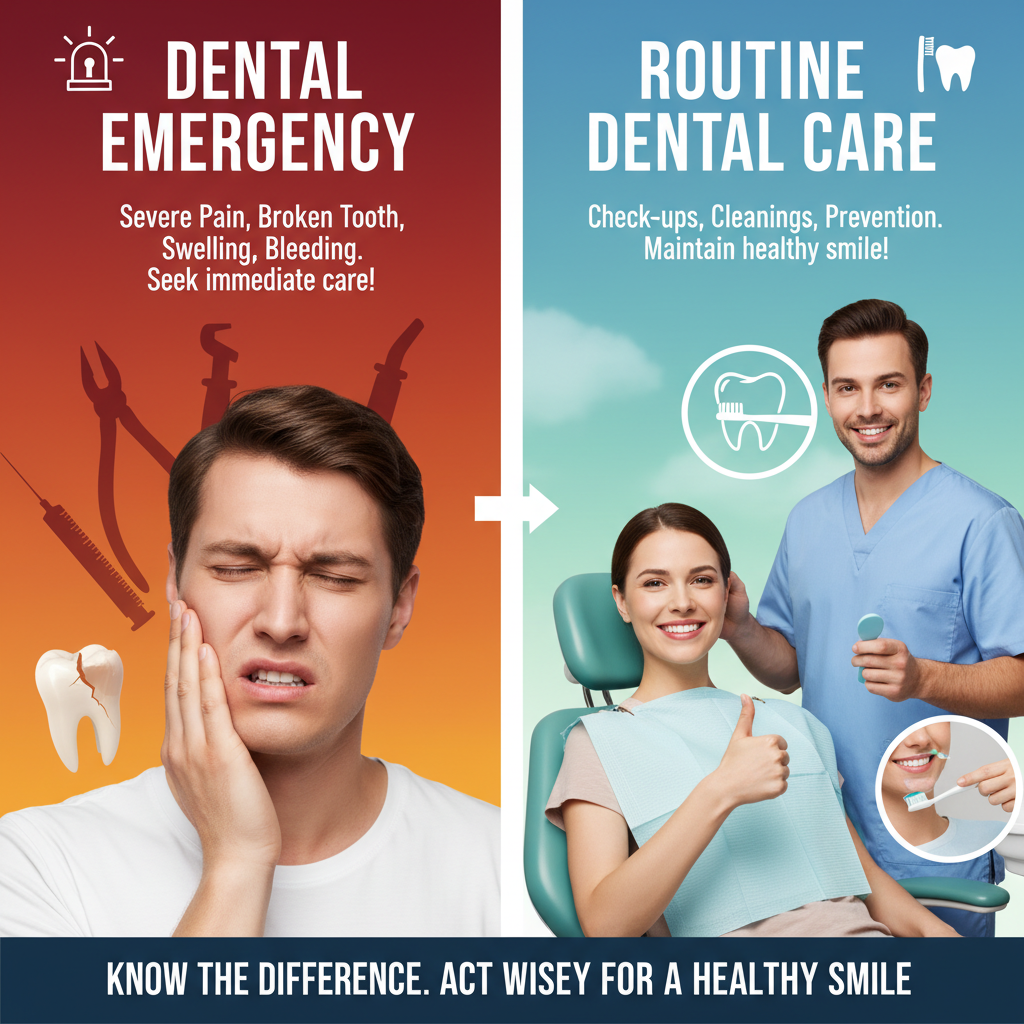
Dental pain or a broken tooth can be stressful, especially when you are not sure if you need urgent care or if it can wait for a regular appointment. Understanding dental emergencies vs routine dental care helps you act quickly when it truly matters and avoid unnecessary late‑night trips when it is safe to wait.
This guide walks you through how to tell the difference, what symptoms to watch for, and how to decide when to seek immediate help.
Understanding dental emergencies vs routine dental care
Dental professionals use specific criteria to determine if a problem is an emergency or something that can be managed during normal office hours.
According to the Cleveland Clinic, a dental emergency is any problem that requires immediate attention, such as uncontrolled bleeding, pain that does not improve with medication, or broken facial bones [1]. The American Dental Association (ADA) describes dental emergencies as conditions that may be life threatening or that need urgent treatment to stop bleeding, eliminate infection, or relieve severe pain [2].
Routine dental care, on the other hand, includes checkups, cleanings, fillings, and non‑urgent problems that can safely be scheduled within normal hours. These visits are essential for prevention, but they do not require immediate action.
You can think of it this way:
- If waiting could risk your overall health, your ability to breathe or swallow, or the survival of a tooth, you are likely dealing with a dental emergency.
- If the issue is uncomfortable but stable and you can manage it temporarily at home, it usually falls under routine or non‑urgent care.
For more context on timing and urgency, you can also review urgent vs non urgent dental problems.
Types of dental emergencies you should not ignore
Dental emergencies fall into a few main categories. Recognizing them quickly helps you seek the right care and avoid serious complications.
Traumatic injuries to teeth or face
These often result from accidents, sports, or falls. The ADA identifies traumatic injuries such as tooth fractures, luxations (loose or displaced teeth), and avulsions (knocked‑out teeth) as a major cause of emergencies [2].
Situations that usually require immediate care include:
- A knocked‑out permanent tooth
- A tooth that is suddenly very loose after an injury
- A large piece of tooth broken off with pain or exposed nerve
- Trauma to the jaw or face with swelling, difficulty moving your jaw, or suspected broken bones
If a tooth is knocked out, you typically have the best chance of saving it if you see a dentist within about 30 minutes [3]. Handle the tooth by the crown, gently rinse it with water if dirty, keep it moist in milk or in your cheek, and seek emergency care right away.
If you are unsure how serious your injury is, resources like how to identify dental trauma severity can help you think through what you are seeing and feeling.
Severe or spreading infections
Infections are one of the most common reasons for emergency dental visits. Dental infections, often starting from untreated cavities, can progress to pulpitis or abscesses and sometimes require hospital care [2].
Signs of a possible emergency infection include:
- Severe, throbbing tooth pain that does not improve with over‑the‑counter medication
- Swelling in your face, cheek, or jaw
- A visible bump of pus on the gums
- Fever, chills, or feeling generally unwell
- Trouble swallowing, breathing, or opening your mouth
Dental abscesses, which often present with fever, pus, swollen glands, and a foul taste, are considered emergencies that need immediate attention, because the infection can spread to the bloodstream and become life threatening [4].
If you notice these warning signs, do not wait. Check guides like dental emergency symptoms to watch for and contact an emergency dentist or go to urgent care or an emergency room if you have any trouble breathing or swallowing.
Uncontrolled bleeding or suspected broken bones
Some problems require emergency medical or hospital care rather than a dental office visit.
Seek immediate help in an emergency room if you experience:
- Bleeding from the mouth that does not slow after firm pressure with clean gauze
- A jaw you cannot close properly, or that looks obviously misaligned
- Suspected broken facial bones after trauma
Cleveland Clinic notes that emergencies such as broken facial bones or uncontrolled bleeding should be evaluated in an emergency room, not a standard dental office [1].
Routine and non‑urgent dental problems
Not every toothache or chipped tooth demands an urgent visit. Many issues still need timely care, but it is usually safe to wait for a scheduled appointment.
According to several dental sources, common non‑emergency or less urgent problems include:
- Dull toothache that responds to pain medication
- Small chips or minor cracks without pain
- Lost fillings, crowns, or bridges without severe sensitivity
- Food stuck between teeth that causes mild discomfort
- Minor broken dental restorations that are not sharp or painful
These issues may feel annoying or inconvenient, but they are rarely dangerous if you see your dentist within a day or two [5].
Regular checkups, professional cleanings, and early treatment of cavities are also part of routine care. Cummings Dental notes that this type of care is crucial for long‑term oral health, even though it does not require immediate intervention [6].
If you are unsure how quickly you need to be seen, you can explore urgent dental issues explained or contact your dentist for guidance.
Quick comparison: emergency vs routine issues
To make the differences clearer, here is a simple overview you can refer to when you are deciding what to do next.
| Situation | Likely Category | Typical Action |
|---|---|---|
| Severe toothache that does not improve with medication, wakes you from sleep, or is paired with swelling | Dental emergency | Call an emergency dentist or medical provider immediately. See also how to know if tooth pain is emergency. |
| Knocked‑out permanent tooth | Dental emergency | Seek urgent dental care within 30 minutes if possible [3]. |
| Sudden facial swelling, fever, or trouble swallowing | Dental emergency | Go to an emergency dentist or ER right away [2]. |
| Mild, occasional tooth sensitivity or dull ache | Non‑urgent / routine | Schedule a dental appointment within a few days. |
| Small chip in a tooth with no pain | Non‑urgent / routine | Call your dentist and schedule the next available visit. See also is a chipped tooth a dental emergency. |
| Routine checkup or cleaning | Routine care | Book during normal office hours. |
| Lost filling with no severe pain | Urgent but not emergency | Call for a next‑day or soonest available appointment [3]. |
This table is a starting point, not a substitute for professional judgment. When in doubt, it is safer to call your dentist and describe your symptoms.
Tooth pain: when to act fast and when you can wait
Tooth pain is one of the most confusing symptoms, because it can range from mildly irritating to truly unbearable. Learning how to differentiate urgent dental pain from less serious discomfort will help you decide when tooth pain becomes serious.
Signs your tooth pain is a dental emergency
You should seek immediate care if:
- The pain is severe, throbbing, or constant and does not improve with over‑the‑counter pain relievers
- Pain is paired with facial swelling, a bad taste, fever, or swollen lymph nodes
- You have sharp pain after a recent dental procedure, especially with significant bleeding
- You feel pressure or pain when lying down or bending over, which can signal infection
Smile Savers Dentistry notes that severe toothaches that do not respond to medication usually indicate serious problems that require emergency care [7]. Winter Haven Dental adds that excruciating tooth pain lasting more than 48 hours likely points to a cavity that needs prompt treatment, often a filling or crown [3].
If you are facing intense pain, visit how to know if tooth pain is emergency and how long can you wait for tooth pain to better understand your situation.
Tooth pain that is usually non‑urgent
Some types of discomfort can typically wait for a scheduled appointment, such as:
- Short, sharp sensitivity to cold or sweets that fades quickly
- Mild ache that comes and goes and is relieved with pain medication
- Slight tenderness after biting something hard, without swelling or visible damage
These are still important to address, because untreated issues can progress into emergencies over time. However, they rarely require same‑day treatment.
If you are managing milder pain, you may find it helpful to review how to handle sudden dental pain for interim comfort strategies while you wait to see your dentist.
Chipped, cracked, or broken teeth
Cracks and chips can look alarming. Whether they are emergencies depends on how deep the damage is and how much pain you feel.
When cracks and chips are emergencies
You should treat the situation as an emergency if:
- A large portion of the tooth has broken off
- The tooth is very painful, especially to temperature or pressure
- You can see the inner yellow or pink part of the tooth
- There is significant bleeding from the tooth or surrounding gums
- The crack extends below the gumline, or the tooth feels loose
Winter Haven Dental considers broken teeth with large missing pieces or serious cracks or chips to be emergency conditions, particularly when they cause pain or expose the nerve [3].
If you are experiencing this type of damage, it can be helpful to look at is a cracked tooth an emergency and what dental issues require immediate treatment for additional clarity, then contact an emergency dentist right away.
When you can wait for a routine visit
You can often wait for a regular appointment if:
- The chip is small and only affects the edge of a front tooth
- There is no pain, or only very mild sensitivity
- The tooth is not sharp enough to cut your tongue or cheeks
These situations still need professional evaluation, but they are not usually time critical. For minor chips, is a chipped tooth a dental emergency offers more detail on what to expect.
Gum problems and bleeding: emergency or not?
Gums can tell you a lot about your oral health, but not all bleeding or swelling means you need urgent care.
Signs of a gum‑related emergency
Call an emergency dentist right away if you notice:
- Sudden, severe gum swelling that spreads to your face or jaw
- Painful swelling paired with fever or feeling very unwell
- Bleeding that does not stop after 10 to 15 minutes of firm pressure
- Swelling or infection around a tooth that makes it hard to swallow or breathe
Dental abscesses in the gum or around a tooth are emergencies due to the risk of infection spreading [8]. If you are unsure, you can consult when gum swelling is an emergency and when bleeding gums are an emergency.
Bleeding and swelling that are usually non‑urgent
Not every gum issue means a trip to an emergency dentist. For example:
- Minor bleeding after flossing often indicates early gum disease and typically is not an emergency [7]
- Mild, painless swelling around the gums without fever can often wait for a scheduled visit
However, ongoing bleeding, recurring swelling, or any changes in your gums should be checked during routine care. Delaying this type of evaluation can lead to more serious problems over time [6].
Costs, insurance, and why prevention matters
Dental emergencies often cost more than routine dental visits. Emergency appointments may happen outside regular hours, require specialized procedures, and use advanced tools, which raises costs compared with standard cleanings or checkups [9].
Insurance coverage can also differ. Some policies cover emergency exams but may not fully cover restorative treatments or after‑hours care, which can result in higher copays [10].
On the other hand, preventive care like regular checkups and cleanings is a cost‑effective way to avoid many emergencies. Gentle Dental emphasizes that routine visits are one of the best strategies to reduce the risk of severe infections, extractions, or complex surgeries later on [11]. Cummings Dental adds that timely care helps prevent tooth loss, gum disease, and other serious complications [6].
If you are worried about costs, you can ask your dentist about options like dental savings plans, third‑party financing, or dedicated emergency funds, which can help manage unexpected expenses [11].
What to do when you are unsure
Sometimes it is genuinely difficult to tell if what you are experiencing is a true emergency. In those situations, a clear decision process can help.
- Check for red‑flag symptoms
Look for severe pain, uncontrolled bleeding, swelling that affects your breathing or swallowing, fever with facial swelling, or a knocked‑out tooth. If any of these are present, treat it as an emergency. Pages like emergency dental warning signs and signs you need emergency dental care can help you assess quickly. - Call a dentist or emergency line
When in doubt, follow the advice of Brian Rich DMD and call a dentist to describe your symptoms. They can help determine whether you need immediate care or can wait for a regular appointment [12]. You can also review how to tell if you need urgent dental care. - Use interim care safely
For non‑emergency situations, you can often manage symptoms briefly with over‑the‑counter pain relievers, cold compresses, or saltwater rinses while you wait to be seen. Avoid putting aspirin directly on gums or teeth, as this can cause burns. If you already know that you are headed for an emergency visit, you can prepare by reading what to do before seeing emergency dentist. - Err on the side of caution
Dental infections and trauma can worsen quickly. If you are debating when to go to an emergency dentist and cannot reach your regular provider, seeking urgent care is often the safer choice.
Putting it all together
Differentiating dental emergencies vs routine dental care is about understanding the severity, speed of change, and potential risks of your symptoms. Emergencies typically involve:
- Severe, unrelenting pain
- Rapidly spreading infection or swelling
- Uncontrolled bleeding or trauma
- Loss of a tooth or major damage to teeth or jaw
Routine or non‑urgent issues are usually stable, manageable with simple measures, and safe to schedule within normal office hours.
If you pay attention to warning signs, keep up with regular checkups, and reach out promptly when something feels wrong, you significantly reduce your risk of serious complications. And whenever you are uncertain, your best step is to contact a dental professional, explain what you are experiencing, and let them guide you on the urgency of care.
References
- (Cleveland Clinic)
- (NCBI Bookshelf)
- (Winter Haven Dental)
- (Smile Savers Dentistry; Winter Haven Dental)
- (Cleveland Clinic; Winter Haven Dental)
- (Cummings Dental)
- (Smile Savers Dentistry)
- (Smile Savers Dentistry; NCBI Bookshelf)
- (Gentle Dental; Emergency Dentist Mission Valley)
- (Emergency Dentist Mission Valley)
- (Gentle Dental)
- (Brian Rich DMD)