Understanding what to do before seeing an emergency dentist
When you are in pain or something feels wrong in your mouth, knowing what to do before seeing an emergency dentist can protect your teeth and reduce complications. It also helps you decide whether you truly need emergency care or if your issue can safely wait for a scheduled visit.
In a stressful moment it is easy to panic or do nothing at all. By learning how to act quickly and calmly, you give yourself the best chance at fast relief and long‑term oral health.
Decide if it is a true dental emergency
Not every dental problem is an emergency. Some issues can wait a day or two, while others need immediate attention to save a tooth, stop infection, or control serious pain.
You can start by asking a few key questions:
- Are you in severe, unrelenting pain that does not improve with over‑the‑counter medication?
- Do you have heavy or ongoing bleeding that does not slow down?
- Is your face or gums swollen, especially with fever or trouble swallowing or breathing?
- Did you experience trauma such as a fall, blow to the face, or accident?
- Has a tooth been knocked out, pushed out of position, or badly cracked?
Situations like these usually fall under what is considered a dental emergency and should not be ignored. You can learn more about these scenarios in depth by reviewing what dental issues require immediate treatment and urgent vs non urgent dental problems.
If your symptoms are milder, for example a small chip without pain or a filling that came loose but does not hurt, you likely still need care, but you may not need same‑day treatment. Understanding this difference can reduce anxiety and help you act appropriately.
Common emergencies and how to respond before your visit
Your specific steps before seeing an emergency dentist depend on what has happened. Taking the right action in the first minutes and hours can make the difference between saving and losing a tooth.
Severe toothache
A toothache can range from a mild ache to a sharp, throbbing pain that makes it hard to sleep or focus. Before your appointment, you can:
- Rinse your mouth gently with warm water to clear debris and soothe the area [1].
- Use dental floss to remove any food trapped between teeth that might be causing pressure.
- Apply a cold compress on the outside of your cheek if there is swelling.
- Take an over‑the‑counter pain reliever like ibuprofen, naproxen, or acetaminophen as directed on the label, unless your doctor has told you not to use these medications [2].
Do not place aspirin or any pain medicine directly against your tooth or gums. This can burn the soft tissue and make the situation worse [1].
If you are unsure whether your toothache is urgent, review how to know if tooth pain is emergency and when tooth pain becomes serious. These resources can help you judge the urgency until you speak with a dentist.
Cracked, chipped, or broken tooth
Not all broken teeth are alike. A small chip with no pain is often less urgent. A deep crack, pain with biting, or a tooth that feels loose usually needs fast attention.
Before you get to the dentist you should:
- Rinse your mouth carefully with warm water to keep the area clean [1].
- Save and gently rinse any pieces of tooth that have broken off. Bring them with you.
- If there is bleeding, apply gauze with gentle pressure for about 10 minutes.
- Use a cold compress on the cheek to reduce swelling and discomfort.
You can read more about specific situations in is a cracked tooth an emergency and is a chipped tooth a dental emergency. These guides can help you decide how quickly to seek care and what to expect.
Knocked‑out tooth
A knocked‑out adult tooth is always an emergency. You have the best chance of saving the tooth if you see a dentist within one hour. What you do on the way to that appointment is critical.
According to the Cleveland Clinic, you should [1]:
- Handle the tooth only by the crown, which is the chewing surface, not the root.
- Rinse the root gently with water if it is dirty. Do not scrub and do not remove any tissue fragments.
- If possible, gently place the tooth back into the socket, facing the correct way, and hold it there. Do not force it.
- If you cannot reinsert it, place the tooth in a container of milk, saline solution, or a tooth preservation product like Save‑a‑Tooth.
- Get to a dentist or emergency room as quickly as you can.
Keeping the tooth moist and acting quickly significantly improves the chances of successful reimplantation [3].
Partially dislodged or extruded tooth
If a tooth has been pushed out of position but has not completely come out, you should:
- Apply a cold compress on the outside of your face near the injured area to limit swelling.
- Take over‑the‑counter pain relief as needed and as directed.
- See an emergency dentist or go to an emergency room right away [1].
You should not try to force the tooth back into position yourself. Leave that to a dentist to avoid additional damage.
Lost crown, filling, or other restoration
When a crown, bridge, or filling comes loose, the exposed tooth can be sensitive and vulnerable to further damage. Until your appointment, you can:
- Keep the area clean by gently brushing around it and rinsing with warm water.
- Use sugarless chewing gum or over‑the‑counter temporary dental cement to cover a cavity if a filling has fallen out.
- If you still have the crown or bridge, clean the inside and, if comfortable, use temporary dental cement, toothpaste, or denture adhesive to hold it in place for a short time. Do not use super glue [1].
- Avoid chewing on that side until it is properly repaired.
Bring any lost pieces with you. They may help your dentist restore the tooth more easily [2].
Manage pain and swelling safely before your visit
Once you have contacted an emergency dentist and know when you will be seen, your focus shifts to staying as comfortable and safe as possible.
You can usually:
- Take over‑the‑counter pain relievers such as ibuprofen, naproxen, or acetaminophen according to the package directions, or your physician’s guidance. Research suggests these nonsteroidal anti‑inflammatory drugs, sometimes combined with acetaminophen, are preferred over opioids for dental pain control [2].
- Apply a cold compress to the outside of your cheek in short intervals, about 10 to 20 minutes on and 10 to 20 minutes off, to reduce pain and swelling [3].
- Keep your head elevated, especially while lying down, to lessen throbbing.
- Rinse gently with warm salt water if advised by your dentist, which can help soothe irritated tissues.
Avoid the following unless your dentist specifically recommends them:
- Placing aspirin directly on the gums or tooth
- Applying heat to the area
- Using alcohol‑based mouthwashes on painful or injured tissues
If you are unsure how to handle sudden discomfort, you can read how to handle sudden dental pain for additional guidance.
Protect and clean the affected area
Before your emergency appointment, your goal is to protect the injured area from further harm and keep it as clean as possible. This helps control inflammation and can make treatment easier.
You can:
- Gently brush your other teeth as you normally would and floss around, but not directly through, the injured area if it is uncomfortable.
- Rinse with warm water to flush away food particles that can irritate sensitive tissue [1].
- Avoid chewing on the injured side to prevent additional cracking, loosening, or pain [2].
Keeping the affected tooth clean and noting when pain worsens, such as with cold, chewing, or lying down, helps your dentist quickly pinpoint the cause and decide on the best treatment [2].
Be mindful of what you eat and drink
What you eat and drink before seeing an emergency dentist can influence your comfort and, in some cases, your safety.
Alman & Katz Dental suggest that, for most routine dental visits, it is reasonable to eat a light meal 1 to 2 hours beforehand so you are not hungry or queasy during treatment [4]. The same applies to many emergency appointments that do not involve sedation or surgery.
However, you should:
- Avoid sticky, sugary, hard, or very crunchy foods that can worsen pain or damage a cracked or loose tooth [4].
- Skip very hot or very cold beverages if they trigger sensitivity or pain [3].
- Choose lukewarm water, which keeps you hydrated without aggravating sensitive teeth or gums.
- Avoid alcoholic or sugary drinks that can dry your mouth or leave residue on your teeth [4].
If your emergency visit is likely to involve anesthesia or oral surgery, you may be instructed to avoid food and drink for a period beforehand to reduce risks related to sedation [4]. When you call, ask the office whether you should eat or not based on the planned treatment.
Call your dentist and arrange emergency care
Once you have assessed your symptoms, the next step is to contact a dental professional. Many general dentists provide urgent or same‑day care, even if your situation arises outside normal hours.
Quarterpath Dental notes that the first step before seeing an emergency dentist is to call your regular dentist’s office and ask whether they can see you urgently [5]. They can:
- Help determine if you are facing a true emergency
- Offer guidance on what to do until you arrive
- Tell you when they can see you or whether you should go directly to an emergency room
If your problem is severe, for example uncontrolled bleeding, facial swelling that impairs breathing or swallowing, or major trauma, you may be told to seek immediate care at a hospital emergency department.
If you call after hours and cannot reach anyone, Keys Dental Specialists recommend leaving a detailed message with your name, situation, and phone number so the office can call you back to arrange an emergency visit or advise next steps [6].
To better understand when to seek urgent care, you can review when to go to an emergency dentist, how to tell if you need urgent dental care, and emergency dental warning signs.
Prepare important information and documents
Being organized before you arrive can shorten your wait and help your dentist focus quickly on treatment. Several practices recommend bringing the following items and details to an emergency visit [7]:
- Photo identification, such as a driver’s license or passport
- Dental insurance card and policy number, if you have coverage
- A form of payment
- A list of current medications, including prescription drugs, over‑the‑counter medicines, vitamins, and herbal supplements, along with dosages
- A list of medical conditions and any known allergies, especially to medications or anesthetics
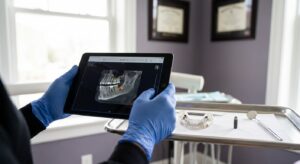
- Recent dental records or X‑rays if you have them available
- Contact information for your regular dentist
Preparing this information in advance supports quicker triage and helps your emergency dentist choose safe, effective treatment options.
Know what to expect during an emergency visit
Understanding the basic steps of an emergency dental appointment can reduce worry and help you feel more prepared.
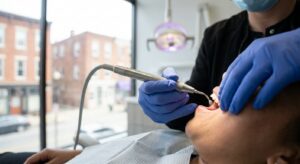
Quarterpath Dental explains that emergency visits usually work differently from routine checkups. You are often added to the schedule as quickly as possible, sometimes on the same day, depending on the severity of your condition [5]. Once you arrive, you can expect:
- A brief review of your symptoms, medical history, and medications
- A focused exam of the painful or injured area
- X‑rays or other tests if needed to understand the problem [8]
- Pain control measures such as local anesthesia and, when appropriate, sedation, especially for children or those with significant anxiety [5]
- A discussion of your diagnosis, the urgency of treatment, and your options
If your situation is not life‑threatening and immediate full treatment is not possible, the dentist may focus on stabilizing your condition, controlling pain, and scheduling a follow‑up for more definitive care.
Arriving 10 to 15 minutes early can allow time for paperwork and reduce stress on arrival [9].
Stay calm and avoid common mistakes
In a dental emergency it is normal to feel anxious. However, staying as calm as you can helps you make better decisions and avoid actions that might worsen the problem.
Keys Dental Specialists recommend slowing your breathing and reminding yourself that most dental emergencies can be managed successfully with prompt professional care [6].
Try to avoid:
- Ignoring severe pain, swelling, or bleeding, hoping it will resolve on its own
- Using home remedies that burn or irritate tissues, such as placing aspirin directly on the gum
- Delaying a call to your dentist when you notice serious dental emergency symptoms to watch for
- Chewing hard or sticky foods on a damaged tooth
- Self‑adjusting braces, wires, or appliances, unless your orthodontist gives you specific instructions
When in doubt, you can cross‑check your symptoms with resources like signs you need emergency dental care, dental emergencies vs routine dental care, or urgent dental issues explained, then call a dentist to confirm the best course of action.
When your issue can safely wait
Not every dental concern requires same‑day treatment, even though it may feel urgent to you. Issues that often can wait for a scheduled appointment include:
- A small chip in a tooth without pain or sensitivity
- A mildly sensitive tooth that only hurts with very cold food, with no swelling or visible damage
- A loose crown that is not causing significant discomfort
- Slight gum irritation without fever, swelling, or discharge
Even in these situations you should still schedule a dental visit, ideally within a few days. Problems that seem minor can worsen if ignored. If you are wondering how long you can wait for tooth pain, talk to your dentist about your specific symptoms.
Learning to recognize when bleeding gums are an emergency or when gum swelling is an emergency can also help you decide whether you can wait or need urgent care.
Putting it all together before you see an emergency dentist
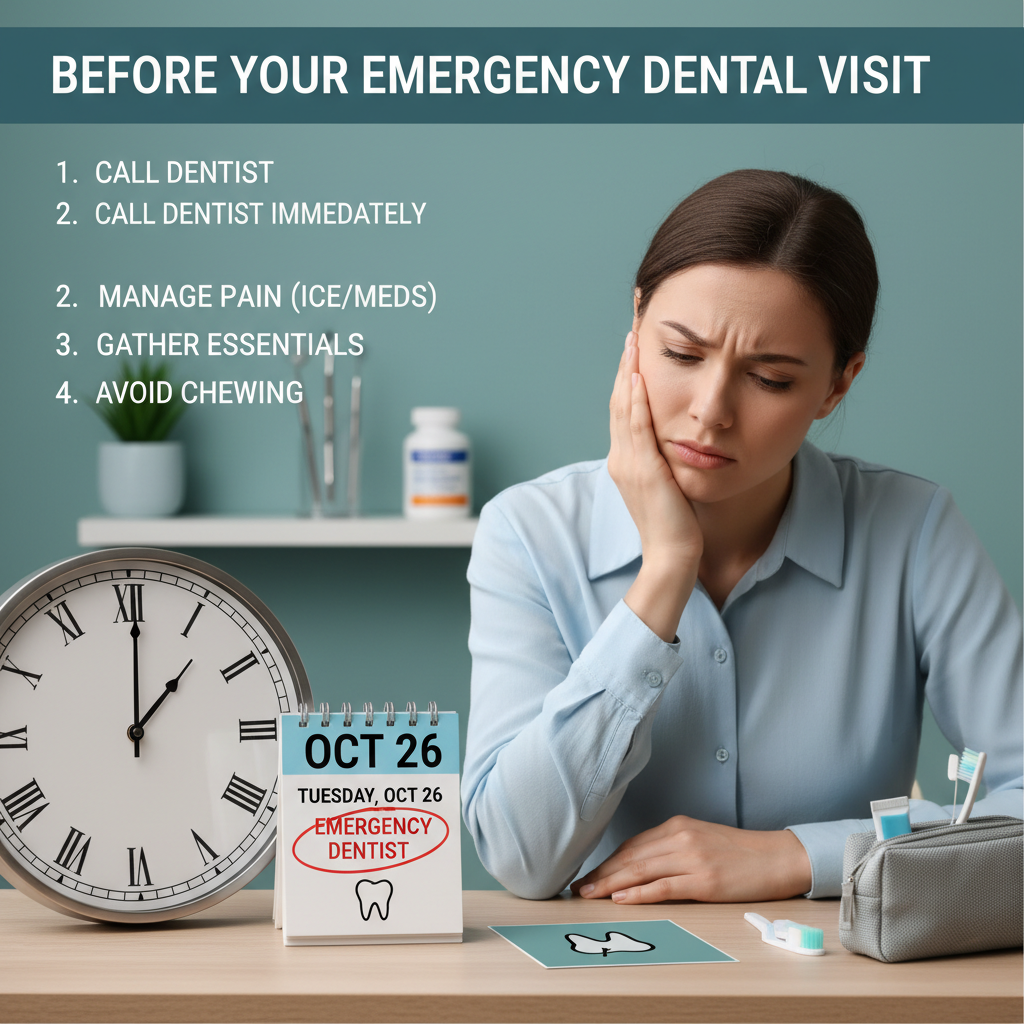
In a stressful moment, having a simple mental checklist can help you remember what to do before seeing an emergency dentist:
- Assess your symptoms. Look for key warning signs like severe pain, heavy bleeding, major trauma, or facial swelling that affects breathing or swallowing.
- Protect the tooth. Rinse gently, preserve any broken pieces or a knocked‑out tooth correctly, and avoid chewing on the injured side.
- Control pain and swelling. Use over‑the‑counter pain relievers and cold compresses as directed, and avoid aspirin on the gums or direct heat.
- Call a dentist. Contact your regular dentist first to ask about emergency availability and instructions. If needed, seek care at an emergency room.
- Prepare for your visit. Gather identification, insurance details, a medication list, and any dental records. Arrive a bit early to complete paperwork.
By understanding how to identify a true emergency and taking thoughtful steps before your appointment, you support faster relief and better long‑term outcomes for your oral health. If you are ever uncertain, err on the side of calling a dental professional and use resources like how to identify dental trauma severity and what is considered a dental emergency to guide your decisions.