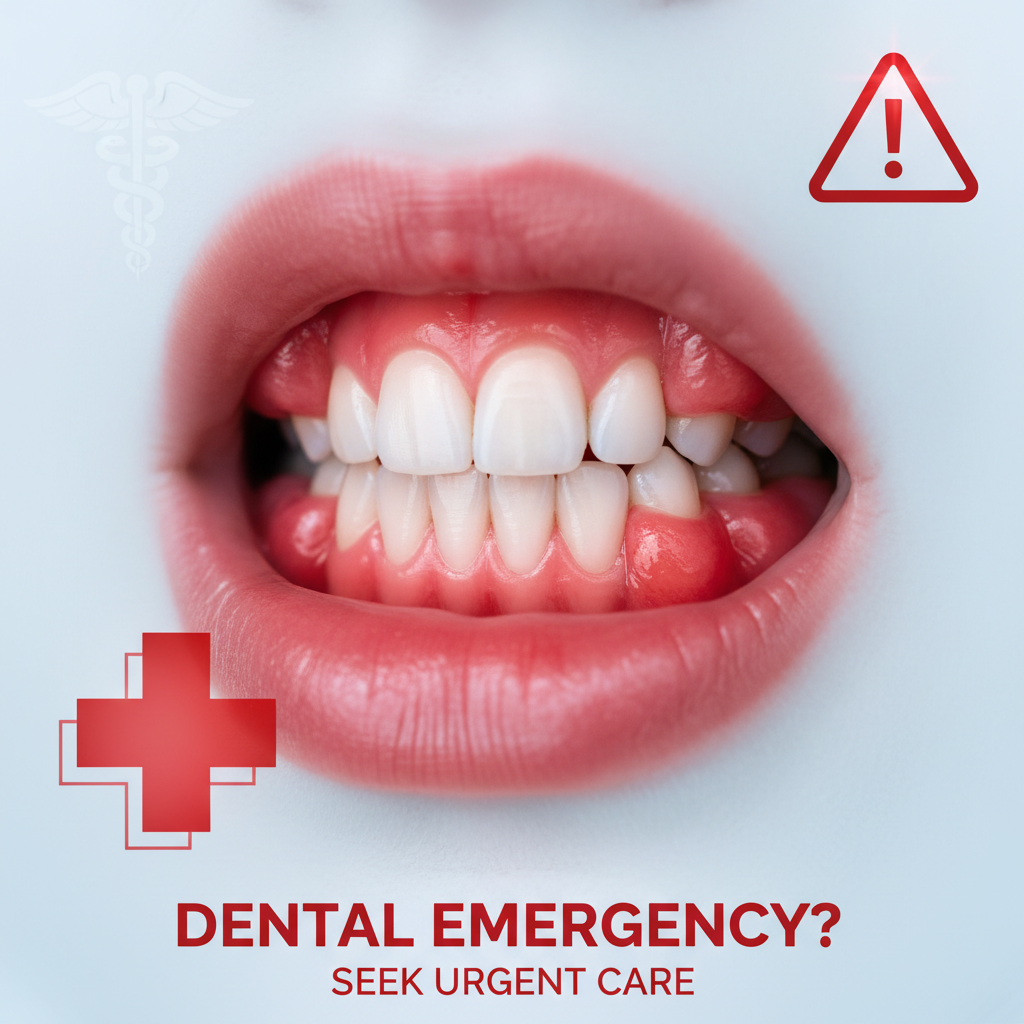
Swollen gums can feel confusing. Sometimes they are a minor irritation that improves in a day or two. Other times they are a sign of serious infection that can threaten your teeth and even your overall health. Knowing when gum swelling is an emergency helps you decide whether you can wait for a routine visit or need urgent care.
In this guide, you will learn how to recognize when gum swelling needs same day attention, which symptoms are warning signs, what you can safely try at home, and when you should call a dentist or go to the ER.
Why gum swelling is not something to ignore
Gum swelling almost always signals that something is irritating or damaging your gum tissue. Often that is plaque and bacteria along the gumline. In other cases, it can be an abscess, an injury, a reaction to medication, or even signs of a systemic condition.
Swollen, tender, or bleeding gums are early warning signs of periodontal disease and should prompt a dental visit as soon as possible to prevent disease progression and complications [1]. In the earliest stage, gingivitis, inflammation is still reversible with professional care and good home hygiene. If you wait too long, that inflammation can progress to periodontitis, where gum tissue and bone that support your teeth start to break down.
Periodontal disease is usually painless in its early stages, so gum swelling might be the only symptom you notice [1]. That is why you should not assume it is minor just because it does not hurt very much.
When gum swelling becomes a dental emergency
Gum swelling is an emergency when it suggests active infection, rapid progression, or risk to your teeth or overall health. You should seek urgent or emergency care if you notice any of the following.
Red flag symptoms that need urgent care
If you have gum swelling plus any of these symptoms, you should treat it as an emergency:
- Swelling that spreads to your face, jaw, or neck
- Difficulty swallowing or breathing
- Fever or feeling very unwell
- Throbbing pain that keeps you up at night or worsens quickly
- Pus, a bad taste, or a foul smell from the swollen area
- A visible bump on the gum that is tender or filled with fluid
- Loose teeth or teeth that suddenly feel different when you bite
- Swelling that appeared suddenly and is not improving within 24 hours
Gum swelling that spreads to your face or jaw, causes trouble swallowing, or comes with a fever is a true dental emergency and requires immediate medical attention because of the risk of serious infection [2].
Sudden gum swelling is considered an emergency even without pain because it signals an underlying problem that needs prompt professional evaluation to prevent worsening conditions [3].
If you are unsure how your situation fits within broader dental emergencies, it can help to review general emergency dental warning signs and how to tell what is considered a dental emergency.
Gum abscess and infection
One of the most common emergency causes of swollen gums is a gum or tooth abscess. This is a pocket of pus caused by bacterial infection. It often presents as:
- Localized, balloon-like swelling near one tooth
- Throbbing or pulsating pain
- Sensitivity to biting or chewing
- Pus or a salty or foul taste in your mouth
An abscessed tooth that causes gum swelling requires immediate emergency dental care. Treatment usually involves draining the pocket, prescribing antibiotics, and often a root canal or crown to save the tooth [4]. A gum abscess may initially occur without much pain, but delaying care can let the infection spread deeper into bone or other tissues [3].
If you suspect an abscess, this is not something to watch at home. Contact a dentist immediately or seek an emergency dentist if it is after hours. For broader context on urgent situations, you can also read about when to go to an emergency dentist and what dental issues require immediate treatment.
When swollen gums are urgent but not life threatening
Some situations do not put your life at immediate risk but still need prompt evaluation to protect your teeth and prevent serious complications.
Persistent swelling that does not improve
If you notice gum swelling that has lasted for more than one to two weeks, or you see it getting worse instead of better, you should book a dental appointment soon.
Swollen gums that last longer than two weeks or become noticeably worse are a sign to contact a dentist or healthcare provider since persistent swelling may indicate an underlying condition [5]. Gum swelling that persists beyond one day and is accompanied by significant pain is also a reason to seek an urgent evaluation by a dental professional to protect surrounding teeth and bone [2].
If you have tried basic home care such as a gentle saltwater rinse and careful brushing, and your gums are still swollen or they worsen after several days, that is a strong signal you need professional help. Guidance on urgent vs non urgent dental problems can also help you gauge your timeline.
Swelling with bleeding and tenderness
Gum swelling accompanied by redness, bleeding, and inflammation along the gumline is often an early sign of gingivitis [6]. Gingivitis is the first, reversible stage of gum disease. Early treatment can prevent it from progressing to periodontitis, which causes irreversible damage [1].
Even if you are not in severe pain, you should not ignore these signs. Periodontal disease is usually painless at first, so swollen or tender gums may be the only indication that you need treatment quickly to prevent damage and tooth loss [1]. For related guidance, you may also want to review when bleeding gums are an emergency.
Signs of advanced gum disease
When gum swelling is part of advanced periodontal disease, it becomes an urgent dental issue. Advanced gum disease causes destruction of gum tissue and the bone that supports your teeth. This leads to pockets between teeth and gums that trap more bacteria and can result in loose teeth and tooth loss, a situation that needs professional intervention [6].
You should contact a dentist promptly if you notice:
- Deep pockets between your teeth and gums
- Gums pulling away from your teeth
- Teeth that feel loose or shift when you bite
- A change in how your teeth come together
- Ongoing bad breath or a bad taste that does not go away
Immediate dental consultation is recommended when gum swelling is accompanied by gum pockets, tooth looseness, or signs of infection to prevent tooth loss and systemic health risks [6].
When gum swelling can usually wait for a routine visit
Not every episode of gum swelling is an emergency. In some cases, you can monitor at home for a short time while you schedule a regular dental appointment.
You may be able to wait a bit, as long as you do not have any of the emergency red flags, when:
- The swelling is mild and localized
- It started after you flossed vigorously or ate something sharp
- You recently started new dental work like braces or a filling
- You are not in significant pain
- There is no fever, trouble swallowing, or facial swelling
Minor irritation from a piece of food stuck between teeth or a small cut often improves within a day or two with gentle care. If symptoms linger or worsen, that moves the situation toward an urgent visit.
If you are sorting out where your situation falls, it can help to compare your symptoms to common dental emergency symptoms to watch for or read more about dental emergencies vs routine dental care.
Common causes of gum swelling and how serious they are
Understanding what might be causing your gum swelling can help you judge the level of urgency. Only a dentist can diagnose the exact cause, but here is how common sources generally compare.
| Cause of gum swelling | How it feels | Typical urgency |
|---|---|---|
| Early gingivitis | Red, puffy, may bleed when brushing or flossing, mild tenderness | Needs timely dental visit, usually not same day unless worsening fast |
| Advanced periodontitis | Swollen, receding gums, pockets, loose teeth, possible pus | Urgent dental care, risk of tooth loss and systemic effects |
| Gum or tooth abscess | Localized swelling, throbbing pain, possible pus, bad taste | Emergency, needs same day care |
| Food impaction or trauma | Sore, slightly swollen area after eating or biting lip/cheek | Monitor 1 to 2 days, see dentist if not improving |
| Medication or hormonal changes | Generalized puffiness, often without severe pain | Schedule evaluation, consider medical review if widespread |
| Systemic conditions or oral cancer | Unusual swelling, lump, or persistent sore, may or may not hurt | Prompt dental or medical evaluation, do not ignore |
Sudden gum swelling can be linked to gum disease, abscess, oral cancer, allergies, or medication reactions. Some of these may not cause pain at first, but still require urgent attention to avoid serious complications [3].
Swollen gums can also be a symptom of oral cancer, which affects tens of thousands of Americans yearly and can be life threatening. That is why any unusual gum swelling that does not resolve should be evaluated early [3].
How gum swelling affects your whole body
Gum disease is not just about your mouth. Left untreated, infection in the gums can spread beyond the teeth and gums and increase the risk of systemic conditions such as heart disease, stroke, and diabetes complications [1]. Severe gum swelling that progresses to periodontitis may also raise the risk of respiratory infections and adverse pregnancy outcomes [6].
If you have chronic health conditions such as diabetes or heart disease, ignoring gum swelling can make both your oral health and overall health harder to manage. This is another reason to avoid delaying care when your gums are persistently inflamed or swollen.
What you can safely do at home before seeing a dentist
Home care can reduce discomfort and sometimes calm minor irritation, but it does not replace professional evaluation when symptoms are significant or persistent. If your symptoms are mild and you do not have emergency warning signs, you can:
- Rinse gently with warm salt water several times a day
- Brush twice daily with a soft toothbrush, paying attention to the gumline
- Floss carefully once a day to remove trapped food, without snapping the floss
- Use a cold compress on the outside of your cheek if there is mild soreness
- Stay hydrated and avoid very hot, spicy, or crunchy foods near the swollen area
Home remedies such as warm saltwater rinses and cold compresses can ease soreness and swelling, but they do not replace the need for professional care if gums stay swollen or worsen [5].
If you try home measures like saltwater rinse, hydrogen peroxide rinse, oil pulling, aloe vera gel, or turmeric paste and your gum swelling is persistent, worsening, or accompanied by bleeding that is not improving within a week, this should be considered an emergency condition requiring professional care [7].
For more general guidance on what to do before you reach a provider, you can review what to do before seeing emergency dentist.
When to call a dentist, urgent care, or ER
Knowing who to contact saves time when you are worried about gum swelling.
Call your dentist or an emergency dentist
You should contact a dentist promptly if:
- Swelling has lasted more than a few days without improvement
- Your gums are swollen along with redness, bleeding, and tenderness
- You see a bump on the gums, even if there is not much pain
- A tooth near the swelling feels loose or painful
- You have tried home care for several days with no real improvement
Patients are advised to book an emergency dental appointment if gum swelling persists for several weeks or if at home care fails to reduce swelling, even without obvious infection signs, because this may indicate a more serious condition [4]. Guidance on how to tell if you need urgent dental care and urgent dental issues explained can help you make that decision.
Go to an ER or call emergency services
You should seek emergency medical help, not just a dental appointment, if:
- Swelling spreads rapidly to your face, jaw, or neck
- You have difficulty breathing or swallowing
- You have a high fever or feel very ill
- You are unable to open your mouth fully
- You feel that your airway might be compromised
These are signs that a localized dental problem might be turning into a serious infection in deeper tissues. In those situations, immediate medical care is more important than waiting to see a dentist.
How gum swelling fits with other dental emergencies
Gum swelling can appear alongside other dental problems, such as tooth pain, cracked or chipped teeth, or trauma to the mouth. Putting the full picture together helps you decide how quickly to act.
If you also have tooth pain, it can help to learn how to know if tooth pain is emergency, when tooth pain becomes serious, and how long can you wait for tooth pain. If trauma is involved, you may also want to understand how to identify dental trauma severity and how to handle sudden dental pain.
Cracks or chips in teeth can allow bacteria to enter and cause infection that ultimately leads to gum swelling. If you recently injured a tooth, reviewing is a chipped tooth a dental emergency and is a cracked tooth an emergency can help you see whether there might be a connection that needs urgent attention.
Understanding these related issues makes it easier to recognize broader signs you need emergency dental care.
How to prevent gum swelling from becoming an emergency
While not every problem is preventable, you can greatly reduce your risk of emergency gum swelling with consistent care and early attention to changes in your mouth.
Routine habits that help include:
- Brushing your teeth twice daily with fluoride toothpaste
- Flossing or using interdental cleaners once a day
- Visiting your dentist regularly for professional cleanings and exams
- Avoiding tobacco products, which increase gum disease risk
- Managing conditions like diabetes in partnership with your physician
Routine oral hygiene with brushing, flossing, and professional cleanings is a key preventive measure for swollen gums and for avoiding emergency situations caused by gum disease or infections [5].
If you notice small changes like occasional bleeding when you floss or mild puffiness, bring them up at your next dental visit instead of waiting. Early detection and treatment of swollen gums from gingivitis can stop the condition before it progresses to irreversible stages that require complex treatment [1].
Putting it all together: when gum swelling is an emergency
You do not have to diagnose yourself, but recognizing patterns can guide your next step. In general, you should treat gum swelling as an emergency and seek immediate care if:
- It is sudden and severe
- It comes with fever, facial swelling, difficulty breathing, or swallowing
- You notice pus, a bad taste, or a visible abscess
- A tooth near the swelling is very painful or feels loose
- Swelling persists or worsens after a week of good home care
You can usually schedule a prompt, but not same day, dental visit if:
- Swelling is mild
- There are no systemic symptoms like fever
- You see gradual improvement with home measures within a day or two
Any time you are unsure how serious your symptoms are, it is safer to call a dentist and describe what you are experiencing. Your dental team can help you decide whether you need to be seen right away, whether you can wait for a scheduled appointment, or whether medical emergency care is the safer option.
By learning to recognize when gum swelling is an emergency, you protect not only your teeth and gums, but also your overall health.