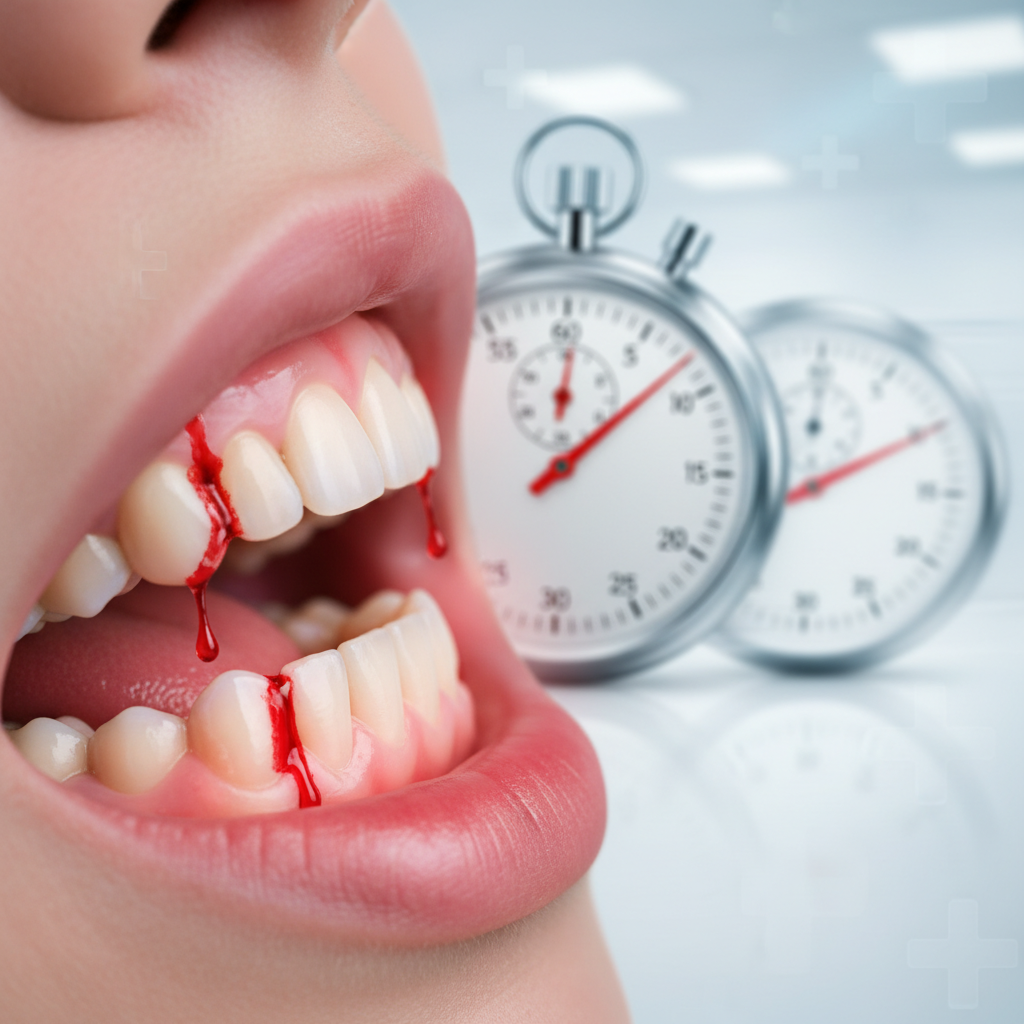
Why bleeding gums matter
When you notice blood on your toothbrush or in the sink, it is easy to dismiss it as “brushing too hard.” Sometimes that is true. Other times, bleeding gums are an early warning sign of gum disease or a more serious health problem.
According to the Cleveland Clinic, bleeding gums most often signal gingivitis or other forms of gum disease, but they can also point to hormone changes, vitamin deficiencies, blood-clotting disorders, or significant stress [1]. Understanding when bleeding gums are an emergency helps you decide whether you can improve your home care, schedule a routine appointment, or seek urgent attention.
This guide walks you through what is normal, what is not, and how to judge when bleeding gums require immediate care.
Common non‑emergency causes of bleeding gums
Not all bleeding gums mean you need to rush to an emergency dentist. Some causes are mild and respond well to better home care and a timely, but not urgent, dental visit.
Plaque buildup and early gingivitis
The most common cause of bleeding gums is plaque buildup at the gumline. Plaque is a soft film of bacteria that forms on your teeth. If it is not removed with brushing and flossing, it irritates your gums and leads to gingivitis.
MedlinePlus explains that plaque at the gumline causes inflammation and bleeding and can progress to periodontitis if it is not treated [2]. In early stages, you might notice:
- Gums that bleed a little when you brush or floss
- Mild redness along the gumline
- Slight tenderness, but not intense pain
- No obvious loose teeth
This situation is rarely an emergency, but it does require attention. Improving your brushing and flossing and scheduling a dental cleaning within the next few weeks is usually appropriate.
Brushing or flossing too aggressively
If you recently changed your brushing habit, used a harder toothbrush, or started flossing again after a long break, your gums may bleed temporarily. Dental professionals in Chesapeake, VA note that minor bleeding that stops quickly, especially without pain or swelling, is often due to aggressive brushing and is not usually an emergency [3].
Switching to a soft-bristled toothbrush and using gentle, circular motions often helps. If the bleeding improves over several days, the issue is likely non urgent. If it persists, it deserves a closer look.
Hormonal and lifestyle influences
Hormonal changes, such as pregnancy or certain medications, can make gums more reactive and prone to bleeding. Tobacco use also increases your risk of gum sensitivity and bleeding. AZFD notes that smoking and other tobacco products raise the risk of gum disease and bleeding gums, and cutting back or quitting is strongly advised for oral health [4].
These causes often do not create a sudden emergency, but they do increase your risk of serious gum problems over time. Regular dental checkups are especially important if you fall into these categories.
Warning signs that bleeding gums are serious
While mild, occasional bleeding can be non urgent, certain patterns and symptoms indicate that the problem is more serious. Recognizing these warning signs helps you decide when to act quickly and when you can safely wait.
Persistent bleeding that does not improve
If your gums bleed almost every time you brush or floss for more than one to two weeks, even after you improve your home care, it is a red flag. The Cleveland Clinic recommends seeing a dentist or primary care physician if bleeding gums persist for more than two weeks despite home care to check for gum disease or underlying health issues [1].
Shumway Dental Care in Chandler similarly notes that bleeding gums that last more than a day or two signal a need to schedule a dental appointment, since mild problems can worsen if ignored [5].
Persistent bleeding does not always mean an emergency, but it is a clear sign you should not delay evaluation.
Bleeding with pain, swelling, or fever
Bleeding that is accompanied by other symptoms is more concerning. You should treat bleeding gums as a higher priority if you notice:
- Swollen, tender gums
- Painful areas between teeth where you floss
- Red, hot, or throbbing gums
- A fever or feeling generally unwell
Larwin Squared Dentistry explains that swollen, tender, and bleeding gums can indicate infection or inflammation and that urgent evaluation is important to prevent complications like abscess formation [6]. AZFD also notes that pain between the gums where you floss, along with swelling or a fever that worsens, may point to gingivitis, periodontitis, or an infection that requires prompt contact with your dentist [4].
These symptoms suggest the problem is moving beyond simple irritation and closer to a dental emergency.
Signs of progressing gum disease
Bleeding gums rarely appear alone. When they are part of a broader pattern of changes, you may be dealing with more advanced gum disease. Watch for:
- Gums that look very red or purplish
- Gums receding or pulling away from teeth
- Spaces developing between teeth
- Teeth that feel loose or shift slightly
- Persistent bad breath that does not improve with brushing
Gums that recede and expose tooth roots can indicate gum disease or damage from aggressive brushing. This increases your risk of infection and should be assessed and treated promptly to prevent further harm [6]. Persistent bad breath combined with bleeding suggests bacterial infection that calls for careful evaluation and timely treatment [6].
These issues often fall into the “urgent but not middle-of-the-night” category. They may not require a same day visit unless symptoms are severe, but they should not be put off for months.
If you want help comparing different types of urgent problems, you can review broader guidance on urgent vs non urgent dental problems.
When bleeding gums are a dental emergency
You may still wonder where the line is between “call soon” and “this is an emergency.” Several specific situations mean you should seek emergency dental or medical care rather than waiting for a routine appointment.
Heavy or uncontrolled bleeding
Excessive bleeding that does not stop after you apply gentle pressure to the area for several minutes is a strong sign of a dental emergency. Larwin Squared Dentistry notes that ongoing heavy bleeding can indicate severe gum disease, trauma, or another serious condition that requires immediate attention [6].
This is especially important if:
- The bleeding started suddenly without an obvious cause
- The amount of blood seems more than just “pink in the sink”
- The bleeding resumes quickly each time you remove pressure
In these scenarios, you should contact an emergency dentist or urgent care right away. Articles such as when to go to an emergency dentist and what is considered a dental emergency can help you prepare, but do not delay calling if bleeding is heavy.
Bleeding after injury or trauma
If you have been hit in the mouth, fallen, or experienced any form of dental trauma and your gums are bleeding, the situation is different from routine gingivitis. Shumway Dental Care recommends treating heavy bleeding from the gums after an injury as a dental emergency and contacting a dental office immediately [5].
Bleeding in this context might mean:
- A tooth or root is fractured
- The gums have been torn or lacerated
- The supporting bone or ligaments are damaged
Resources like how to identify dental trauma severity and emergency dental warning signs can give you an overview of what to look for, but direct professional assessment is critical after trauma.
Bleeding plus signs of spreading infection
When bleeding gums are paired with symptoms that suggest infection is spreading, you move into clear emergency territory. Concerning signs include:
- Significant swelling in the gums, jaw, or face
- Intense, throbbing pain that keeps you awake or interferes with eating
- Pus, a bad taste, or fluid draining from around the teeth
- Difficulty swallowing or breathing
- Fever or chills
Dentists in Chesapeake, VA emphasize that bleeding accompanied by pain during chewing or brushing, particularly with swelling, may indicate advanced gum disease or an abscess that demands immediate intervention to prevent infection from spreading [6].
If you notice these symptoms, do not wait to see if they improve. Contact an emergency dentist, your primary care doctor, or an urgent care facility the same day. You can also review dental emergency symptoms to watch for to understand other warning signs.
Bleeding with possible systemic health problems
Sometimes, bleeding gums are not just a dental issue. The Cleveland Clinic notes that persistent or unexplained gum bleeding can indicate blood-clotting disorders or even conditions like leukemia, particularly if the bleeding is severe or lasts more than two weeks without a clear cause [1].
You should seek immediate medical evaluation, not just dental care, if you have:
- Unusual bleeding from other areas, such as nosebleeds or easy bruising
- Extreme fatigue or unexplained weight loss
- Fever that is not linked to a clear infection
- Bleeding gums without any obvious dental trigger
In these situations, contacting your primary care provider or an emergency department is appropriate.
If in doubt, treat persistent or unexplained bleeding as a medical issue first and let your healthcare team decide whether a dental referral is needed.
How dentists evaluate and treat bleeding gums
Understanding what to expect at the dentist can make it easier to decide when to call. MedlinePlus describes a typical dental evaluation for bleeding gums as including a review of your oral hygiene, diet, medications, and a thorough exam to determine the cause and appropriate treatment [2].
In-office assessment
During your visit, your dentist or hygienist will usually:
- Ask about when the bleeding started and how often it occurs
- Review your brushing and flossing habits and tools
- Ask about medications and health conditions that affect clotting or immunity
- Examine your gums for redness, swelling, recession, and pockets
- Take X‑rays if needed to check the bone around your teeth
This evaluation helps determine whether you are dealing with mild gingivitis, periodontitis, trauma, or another condition.
Treatment options
Treatment depends on the cause and severity. It may include:
- Professional cleaning to remove plaque and tartar
- Deep cleaning (scaling and root planing) for more advanced gum disease
- Antibiotics or antimicrobial rinses if infection is present
- Adjustments to dental restorations that irritate gums
- Guidance on brushing, flossing, and at-home rinses
- Referral to a physician if a systemic issue is suspected
If you arrive with an emergency, such as heavy bleeding or an abscess, the dentist will focus on stabilizing you first, then create a plan for follow-up care. Articles like what dental issues require immediate treatment and urgent dental issues explained help clarify how different conditions are prioritized.
What you can do at home while you decide
While you are monitoring your gums or waiting for an appointment, a few steps can help control minor bleeding and support healing, as long as your symptoms are not severe.
MedlinePlus recommends home care that includes gently brushing twice daily with a soft-bristled toothbrush, flossing twice a day, regular dental visits every six months, and using mouth rinses recommended by your dentist to reduce inflammation [2].
If your bleeding is mild and not clearly an emergency, you can:
- Switch to a soft or extra-soft toothbrush and avoid scrubbing.
- Brush for two minutes twice a day, focusing on the gumline with gentle circles.
- Floss daily, moving slowly and curving the floss around each tooth to avoid snapping into the gums.
- Avoid tobacco and reduce sugary snacks and drinks.
- Rinse with a saltwater solution or a dentist-approved mouth rinse.
If you are waiting for an emergency appointment, you can also review what to do before seeing emergency dentist to prepare and protect the area as much as possible.
If at any point your bleeding worsens, becomes painful, or is joined by swelling or fever, move from “watchful waiting” to contacting an emergency provider.
How to decide: urgent vs non‑urgent bleeding gums
It often helps to think of your situation in three levels: monitor at home, schedule soon, or seek emergency care. Use the descriptions below as a practical reference.
| Situation | Examples of symptoms | Recommended action |
|---|---|---|
| Non‑urgent, monitor | Small spots of blood occasionally when brushing or flossing, no pain, no swelling | Improve home care and schedule a routine dental visit within a few weeks |
| Urgent, soon | Bleeding most times you brush for more than 1–2 weeks, receding gums, persistent bad breath, mild tenderness | Call your dentist for an appointment in the near future and ask how soon they want to see you |
| Emergency, now | Heavy or uncontrolled bleeding, bleeding after trauma, swelling, severe pain, pus, fever, trouble swallowing or breathing | Contact an emergency dentist or medical provider immediately, do not wait |
If your situation matches the middle or right columns, it can help to review how to tell if you need urgent dental care, signs you need emergency dental care, and dental emergencies vs routine dental care so you can better frame your symptoms when you call.
Protecting your gums and preventing emergencies
While you cannot control every factor, you can greatly reduce the chances that bleeding gums turn into an emergency.
Key long-term steps include:
- Maintaining gentle but consistent brushing and flossing habits
- Seeing your dentist twice a year, or more often if you have gum problems
- Quitting tobacco, which significantly raises your risk of gum disease [4]
- Letting your dentist know about new medications or health diagnoses
- Responding quickly to early signs of gum irritation instead of waiting
Bleeding gums are your body’s way of getting your attention. Most of the time, you have the opportunity to act before the situation becomes critical. By recognizing when bleeding gums are an emergency and when they are an early warning sign, you give yourself the best chance to protect your oral health and avoid more serious complications.