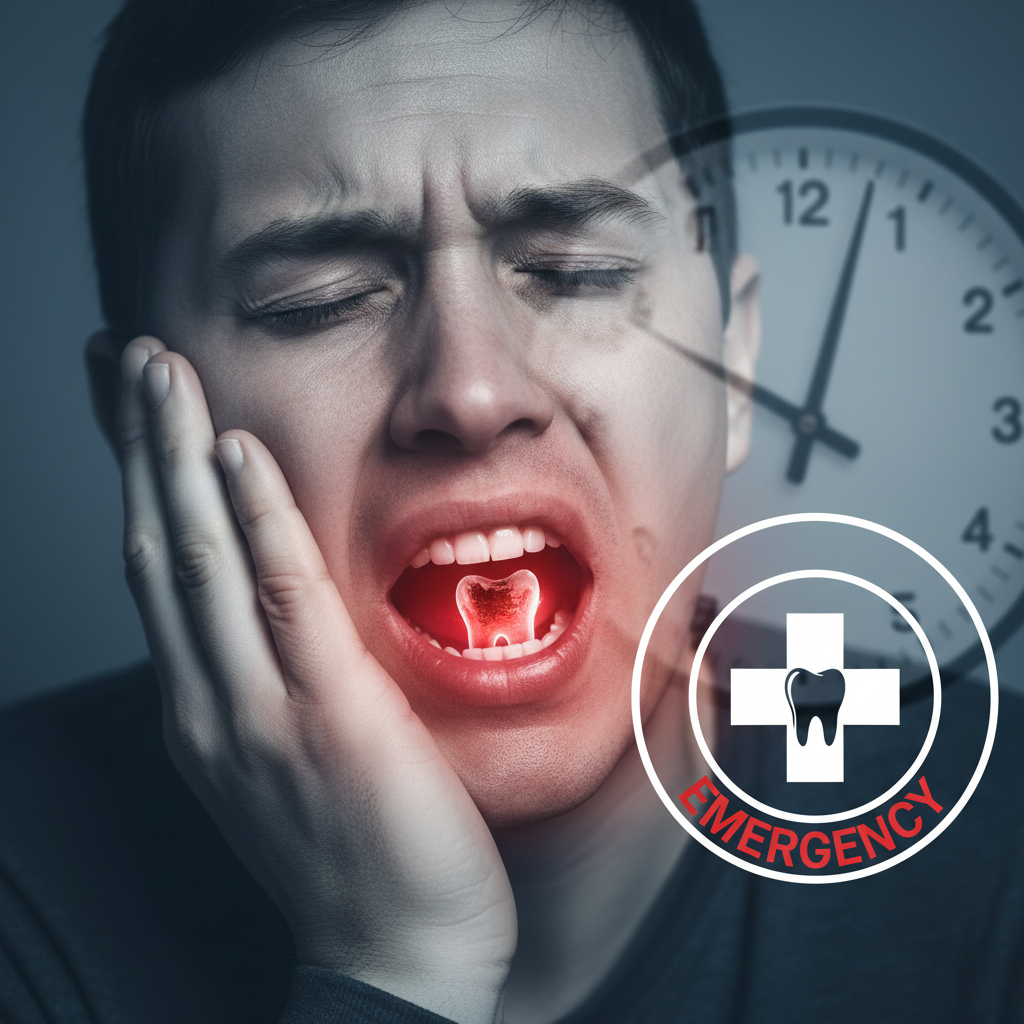
Tooth pain can be confusing. One moment it is a dull ache, the next it is throbbing so badly you cannot sleep. Knowing how to know if tooth pain is emergency helps you protect both your health and your smile. This guide walks you through clear warning signs, what can usually wait, and what to do next.
Understanding tooth pain and emergencies
Tooth pain usually signals that something is wrong. A true toothache, meaning pain coming from the tooth itself, rarely goes away on its own and often indicates a problem that needs professional dental treatment [1]. Sometimes that problem is urgent and sometimes it is not.
When you understand the difference between an urgent and a non urgent issue, you can decide whether you need an emergency dentist today or can schedule a regular appointment. If you want a broader overview after this article, you can also review how dentists classify urgent vs non urgent dental problems and dental emergencies vs routine dental care.
In general, tooth pain is an emergency when there is a risk of infection spreading, permanent damage to a tooth, or serious impact on your ability to function.
Clear signs your tooth pain is an emergency
Certain symptoms mean you should treat your situation as an emergency and seek care right away. These are also common emergency dental warning signs.
Severe, throbbing, or escalating pain
Intense, throbbing tooth pain that will not go away and continues to worsen is a key sign of a dental emergency. This type of pain often suggests infection or nerve involvement and requires immediate care to prevent serious issues such as tooth loss or spread of infection [2].
If your pain is:
- Sharp or pulsating
- Strong enough to keep you from sleeping, eating, or working
- Not responding to over the counter medication
then it fits the profile of pain that many dentists consider urgent [3].
You can read more about when pain crosses the line from uncomfortable to dangerous in when tooth pain becomes serious.
Pain with swelling, fever, or feeling ill
Tooth pain paired with signs of infection should always be taken very seriously. You may be dealing with a dental abscess, which is a pocket of infection in or around a tooth.
Seek emergency care immediately if you notice:
- Swelling in your gums, face, or jaw that is warm, red, or tender
- A visible bump or pimple on your gum near a painful tooth
- Fever, chills, or feeling generally unwell
- Bad taste in your mouth or foul smelling breath along with pain
Swelling like this can be a sign that infection is spreading and needs prompt treatment to avoid complications [4].
Unbearable tooth pain with fever and chills is considered a true dental emergency because mouth infections can sometimes travel to the bloodstream or brain if ignored [1]. Infection related symptoms are also on the list of dental emergency symptoms to watch for.
Trouble breathing, swallowing, or opening your mouth
If tooth or jaw pain is accompanied by:
- Difficulty breathing
- Trouble swallowing
- Swelling under the tongue or in the neck
- Inability to fully open your mouth
go to the nearest emergency room or call emergency services immediately.
An abscessed tooth with significant facial swelling, especially when swelling extends into the neck or affects breathing, is a medical emergency and needs immediate attention [5].
Injury, broken, or knocked out tooth with pain
Trauma to your teeth or mouth combined with pain is often an emergency, especially if it involves a permanent tooth.
Situations that typically require urgent dental care include:
- A tooth knocked completely out (avulsed tooth)
- A tooth pushed out of position or very loose after an accident
- Significant fractures that expose the inner layers or nerve of the tooth
- Deep cuts to your lips, tongue, or inside your mouth with heavy bleeding
A dislodged tooth needs swift treatment to increase the chance of saving it [6]. Ideally, you should see a dentist within 30 to 60 minutes. Gently placing the tooth in milk or back into the socket while you seek help can improve the odds [7].
If you are unsure how severe the trauma is, resources like how to identify dental trauma severity, is a chipped tooth a dental emergency, and is a cracked tooth an emergency can help you assess next steps.
Uncontrolled or heavy bleeding in the mouth
Any mouth bleeding that will not stop after applying pressure for around 10 to 15 minutes is a strong sign you need emergency care. This includes:
- Persistent heavy bleeding after an extraction
- Bleeding following a dental or mouth injury
- Excessive bleeding from gums along with pain or infection signs
Ongoing or heavy bleeding can indicate significant injury or advanced gum disease and should be evaluated quickly [8]. Persistent bleeding after extraction is also considered an emergency that calls for immediate attention [6].
If bleeding is centered in the gums, you can also review when bleeding gums are an emergency.
Pain that disrupts daily life
Tooth pain does not always come with dramatic symptoms, but the level of disruption matters. If your pain:
- Keeps you awake at night
- Prevents you from eating or drinking
- Makes it hard to talk or function at work
you should treat it as urgent, even if there is no visible swelling. Pain that interferes with daily functioning or does not improve with home care is a reason to seek an emergency dentist [9].
For a broader list of red flags, you can also read through signs you need emergency dental care and what is considered a dental emergency.
When tooth pain usually is not an emergency
Not every toothache means you must rush to an emergency dentist or ER. Some situations can usually wait for a scheduled appointment within a few days, as long as they do not worsen.
Mild, short lived sensitivity
Brief sensitivity to hot, cold, or sweets that goes away quickly after the stimulus is removed often points to minor issues such as:
- Slight enamel wear
- Small cavities
- Gum recession
This type of discomfort can be annoying, but if it is mild and does not linger, it is usually not an emergency. You should still see your dentist soon, since sudden sensitivity can also indicate early decay that needs attention [2].
Minor gum irritation
If pain seems to come from the gums rather than deep inside the tooth, and you recently flossed more aggressively, ate something sharp, or started a new toothbrush, you may be dealing with short term gum irritation.
Temporary gum irritation that causes mild pain and improves within a day or two may resolve on its own. However, if gum pain persists or worsens, or if swelling or bad taste develop, you need professional evaluation [1]. If you notice swelling in your gums, especially around one tooth, review when gum swelling is an emergency.
Dull ache that responds to medication
A toothache that:
- Is mild to moderate
- Comes and goes
- Improves with over the counter pain medication
- Does not show other warning signs like swelling or fever
may not require immediate emergency care. You should still schedule a dental visit as soon as you can, because true tooth pain usually means an underlying issue such as decay or early infection that needs treatment [10].
If you are unsure how long you can safely wait, it can help to look at how long can you wait for tooth pain so you do not delay too long.
Comparing urgent and non urgent tooth pain
The table below summarizes common patterns of tooth pain and how quickly you should act.
| Situation | What you might feel or see | Likely urgency |
|---|---|---|
| Severe, throbbing pain with swelling or fever | Intense pain, face or gum swelling, possible bad taste, feeling unwell | Emergency, call dentist or ER immediately [1] |
| Sharp pain when biting, recent crack or injury | Sudden shooting pain on chewing, visible crack or break | Urgent, same day or next day dental visit |
| Knocked out or severely loose tooth | Missing tooth, tooth hanging or shifting after trauma | Emergency, see dentist within an hour if possible |
| Persistent heavy bleeding | Bleeding after injury or extraction that will not stop with pressure | Emergency, seek care right away [6] |
| Mild to moderate ache, no swelling, improves with medication | Dull ache, can sleep and eat, no fever or swelling | Non urgent but needs appointment soon |
| Brief sensitivity to cold or sweets | Quick twinge that stops when stimulus is gone | Usually non urgent, mention at next dental visit unless it worsens |
If you are still unsure how your situation fits, guides like urgent dental issues explained and how to tell if you need urgent dental care can help you weigh your symptoms.
What to do before you see a dentist
When you suspect a dental emergency, your first step is to call a dentist. Many offices keep time open for urgent visits or can guide you to after hours care. While you are waiting to be seen, certain steps can make you more comfortable and reduce risk.
Use pain relief wisely
Over the counter pain relievers such as ibuprofen or acetaminophen can help take the edge off tooth pain while you wait for an appointment. These medications only manage symptoms and do not treat the cause, so they are not a substitute for dental care [11].
Follow package instructions, avoid applying pain medication directly to your gums or tooth, and do not exceed recommended doses.
Try simple home comfort measures
While home remedies cannot cure a serious problem, they can help you manage discomfort temporarily:
- Rinse gently with warm salt water to help keep the area clean
- Use a cold compress on the outside of your cheek for 10 to 15 minutes at a time to ease pain and swelling
- Keep your head elevated, especially at night, to reduce pressure and blood flow to the painful area, which can lessen nighttime toothache pain [12]
- Avoid very hot, cold, or sugary foods and chew on the opposite side of your mouth
Topical numbing gels and careful brushing and flossing around the area may provide short term relief, but they are not a replacement for professional care if symptoms are severe or persistent [13].
For a practical, step by step plan, you can also look at how to handle sudden dental pain and what to do before seeing emergency dentist.
Know when to choose ER, urgent care, or dentist
It can be confusing to decide where to go. In general:
- Go to a dentist or emergency dentist for most toothaches, broken teeth, lost fillings, or abscesses without severe swelling. Dentists are the only providers who can perform procedures like fillings and extractions.
- Consider urgent care when your dentist is unavailable, you have moderate pain without major swelling, and you may need antibiotics or stronger pain medication while you arrange dental follow up. Urgent care clinics can often provide similar help to an ER in these cases [5].
- Choose the emergency room if you have trouble breathing or swallowing, facial swelling spreading into the neck, high fever, or trauma with heavy bleeding. An abscessed tooth with significant facial swelling that affects breathing is a medical emergency [5].
If your pain can be controlled at home and you do not have severe symptoms, it is usually not necessary to go to the ER. Emergency physicians are generally not trained to provide definitive dental treatment and will mainly offer antibiotics and pain relief until you can see a dentist [5].
If you find yourself frequently uncertain about where to go, the page on when to go to an emergency dentist may help clarify this decision.
Why taking tooth pain seriously protects your health
It can be tempting to hope tooth pain will disappear on its own. However, most true toothaches signal a problem that needs treatment such as decay, infection, or gum disease [14].
Ignoring tooth pain can lead to:
- Spread of infection to the jaw, face, or bloodstream
- Tooth loss that might have been preventable
- More extensive and expensive treatment later
- Serious health complications beyond your mouth if infection advances [10]
Regular dental checkups remain your best protection, since they catch issues early before they turn into emergencies. Preventive care is almost always less costly and less stressful than managing full blown dental emergencies [10].
If you are reviewing your symptoms and still unsure how to know if tooth pain is emergency, it is safest to call a dentist, describe what you are feeling, and ask for guidance. A brief phone conversation can help determine whether you need immediate care, a same week appointment, or routine follow up. You can also use resources such as what dental issues require immediate treatment for additional clarity.
By paying attention to warning signs, acting quickly when needed, and not delaying evaluation, you give yourself the best chance to protect both your oral health and your overall well being.
References
- (Cleveland Clinic)
- (Mountain Top Periodontics & Implants)
- (Sachi & Co. Dentistry, Peppermint Dental & Orthodontics)
- (Mountain Top Periodontics & Implants, Goldsboro Smiles)
- (University of Utah Health)
- (Peppermint Dental & Orthodontics)
- (centreportsmiles.com)
- (Goldsboro Smiles, centreportsmiles.com)
- (Meadowlark Family Dentistry, centreportsmiles.com)
- (Penn Dental Medicine)
- (Cleveland Clinic, Meadowlark Family Dentistry)
- (Sachi & Co. Dentistry)
- (Meadowlark Family Dentistry)
- (Cleveland Clinic, Penn Dental Medicine)