Understanding cracked teeth and emergencies
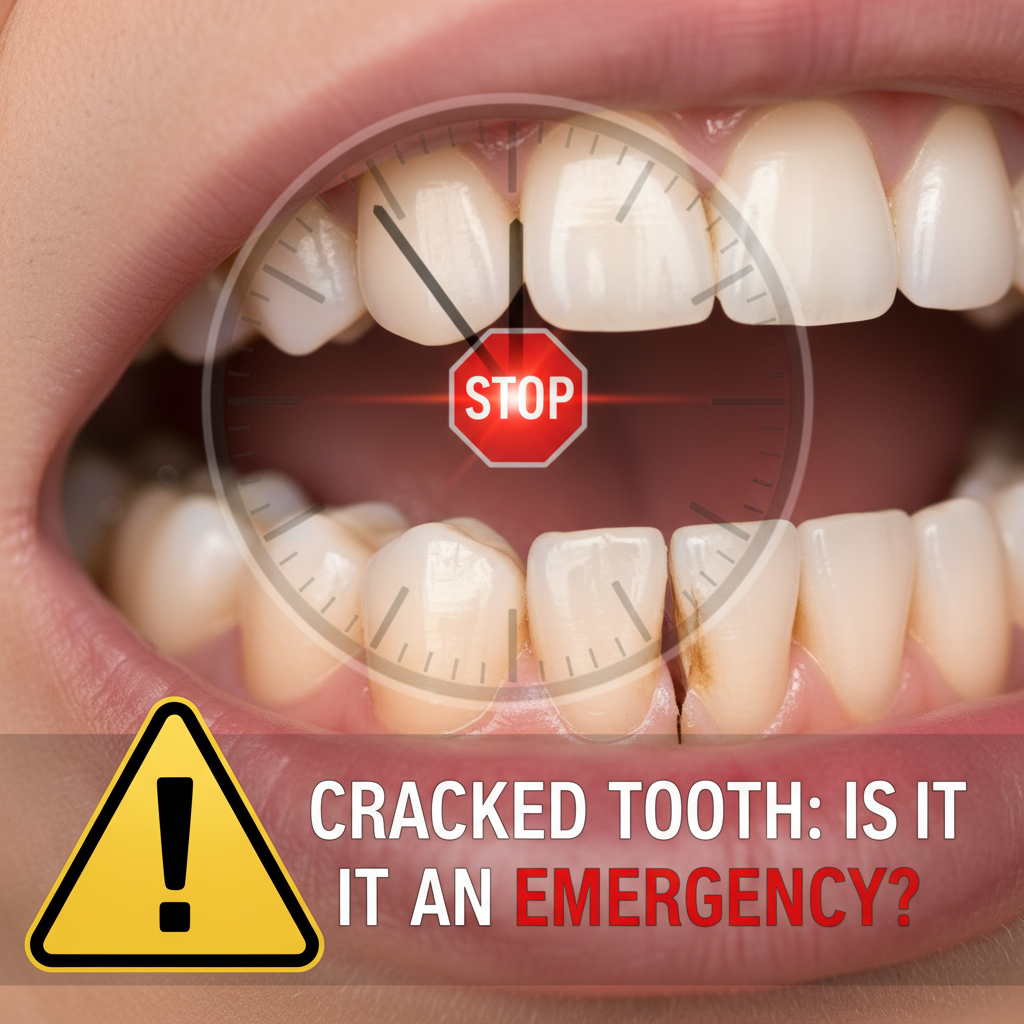
If you are wondering, “is a cracked tooth an emergency,” you are not alone. Cracks can range from tiny surface lines that are mostly cosmetic to serious fractures that threaten the health of your entire tooth. Some situations can safely wait for a scheduled visit. Others need same day attention to prevent infection, severe pain, or tooth loss.
A badly cracked tooth can let bacteria reach the inner pulp of the tooth, which may lead to an abscess and infection in the jawbone or surrounding facial tissues [1]. Knowing how to tell urgent from non urgent problems gives you a clear plan for what to do next. You can also explore broader guidance on urgent vs non urgent dental problems if you have additional concerns.
Types of cracked teeth you might notice
Not every crack looks or feels the same. Understanding the common types helps you make sense of what you see and feel.
Craze lines and minor enamel cracks
Craze lines are tiny, shallow lines in the outer enamel. They are very common in adults and usually cause no pain. These do not normally count as emergencies, although you may want them checked at your next routine visit to confirm there is no deeper damage.
Minor enamel cracks or small chips that do not hurt when you bite, drink, or chew are usually non urgent. They still deserve attention because they can collect plaque and may worsen over time, but they rarely need middle of the night emergency care.
If you are unsure whether a small break is urgent, compare your situation to the scenarios in is a chipped tooth a dental emergency. This can help you decide how quickly to call.
Moderate cracks and broken cusps
A broken cusp is a piece of tooth, often around a filling, that snaps off when you chew something hard. This can leave a sharp edge or a visible missing corner. If you are not in severe pain and there is no heavy bleeding, this is usually urgent, but not life threatening. You should still call a dentist the same day or next day to prevent the crack from spreading and to protect the exposed area.
Media Center Dental notes that a broken molar is more serious than a simple crack or chip and usually qualifies as a dental emergency that requires prompt care [2]. In other words, a large chunk missing from a back tooth deserves fast attention even if you can still function.
Deep cracks and split teeth
A deep crack that runs vertically from the chewing surface toward the root is more serious. When the crack reaches the inner pulp, bacteria can infect the nerve and blood supply, which may cause intense pain and abscess formation [3]. In some cases, the tooth may eventually split into two pieces, often requiring extraction.
Dentists consider badly cracked or split teeth as true dental emergencies because of the high risk of infection and tooth loss [1]. If your tooth feels loose, looks like it has a deep vertical line, or seems to move in separate segments, you should seek care as soon as possible.
When a cracked tooth is an emergency
A cracked tooth moves from “concerning” to “emergency” based less on what it looks like and more on what you feel and what your other symptoms are. Several consistent warning signs can help you decide when to act.
Red flag symptoms you should not ignore
You are likely dealing with a dental emergency if any of the following are present:
- Significant or worsening pain when chewing or biting
- Sharp, intermittent pain that keeps returning on one side
- Sensitivity to hot, cold, or sweet foods that lingers
- Swelling of the gums, face, or jaw near the tooth
- Bleeding from around the tooth that does not stop
- Visible large crack, broken piece, or a tooth that is loose or partially out of the socket
According to the Cleveland Clinic, pain, swelling, and temperature sensitivity, especially when biting down, are key signs that a cracked tooth needs prompt dental attention to avoid serious infection [1]. Valley Creek Dental Care also points to pain with chewing, sensitivity, swelling, and bleeding as indicators that infection or advanced damage may be underway [4].
If several of these match your experience, review broader emergency dental warning signs and plan to seek urgent care.
Cracked tooth vs broken tooth vs knocked-out tooth
Sometimes it helps to compare different kinds of damage. This quick overview can guide your sense of urgency:
| Situation | Likely urgency | Why it matters |
|---|---|---|
| Small crack or chip, no pain | Usually non urgent, schedule soon | Low risk of immediate infection but should be monitored |
| Moderate crack or broken cusp, mild pain | Urgent, call same day | Higher risk of worsening crack and pulp damage |
| Deep crack with strong pain or swelling | Emergency | High risk of infection and tooth loss |
| Tooth partially broken or loose | Emergency | Structural stability is compromised, needs prompt treatment |
| Tooth completely knocked out | Immediate emergency | Very short time window for possible reattachment [2] |
If you fall into one of the more serious categories, it helps to know what dental issues require immediate treatment so you can communicate clearly when you call a dentist or urgent care.
Why timely treatment is so important
You might be tempted to wait and hope a cracked tooth “settles down.” Unfortunately, that is not how teeth work. Unlike bones, which can remodel and heal, cracked teeth do not repair themselves. Enamel and dentin lack the regenerative biology needed to close a crack, so delays usually let the crack grow and deepen [3].
Risk of infection and abscess
When a crack reaches the pulp chamber, bacteria can invade the nerve tissue. This can lead to:
- Pulp inflammation and nerve death
- Abscess formation with pus around the root
- Intense, throbbing pain
- Facial swelling and sometimes fever
Several sources highlight that untreated cracked teeth can progress to serious infections or even systemic illness, including sepsis in rare but severe cases [5]. If you notice swelling, difficulty swallowing, or feel unwell overall along with tooth pain, you should seek immediate care.
To learn more about these warning signs, you can review dental emergency symptoms to watch for.
Structural weakening and tooth loss
A crack weakens the tooth structure. As you continue to chew, the forces of biting can extend the fracture. Over time the tooth may split entirely, at which point extraction is often the only option [3].
Losing a tooth affects:
- Your ability to chew comfortably
- The alignment of your bite
- The health of the jawbone beneath the lost tooth
Earlier intervention usually means more conservative options, such as bonding, fillings, or crowns, instead of extractions and implants [6].
If you are weighing whether you can wait, resources like how long can you wait for tooth pain can provide additional context.
How to decide if your crack can wait
Although delays are risky in serious cases, not every cracked tooth needs to be treated in the middle of the night. You can ask yourself several questions to judge urgency.
Questions to ask yourself
-
How severe is the pain?
If pain is mild, occasional, and responds to over the counter medication, you may be able to wait for a prompt regular appointment. If the pain is intense, throbbing, or wakes you at night, it is more likely an emergency. For more context, explore how to know if tooth pain is emergency. -
Do you see swelling or spreading redness?
Swelling around the tooth, in the gums, or in your face suggests infection and should be taken seriously. If swelling spreads or is paired with fever or difficulty breathing, this is an emergency. -
Is there persistent bleeding?
Some brief bleeding after trauma can be normal. Bleeding that does not slow after firm pressure for several minutes is more urgent. -
Can you chew or close your teeth together?
If your bite feels off or the tooth feels loose, you could risk further fracture by waiting. -
How large is the missing or cracked portion?
A hairline crack with no pain is different from losing a large portion of a molar. Bigger breaks are more likely to require emergency care.
If your answers point toward higher risk, it is wise to review how to tell if you need urgent dental care and contact a dentist quickly.
When to call an emergency dentist
You should contact an emergency dentist or urgent dental clinic right away if:
- Your pain is severe and constant
- You notice facial or gum swelling
- There is a large crack or broken part of the tooth
- The tooth is loose, partially out, or completely knocked out
- Bleeding is heavy or does not slow
Penn Dental Family Practice advises against trying to fix a broken tooth at home and recommends prompt professional treatment to avoid infection and pain [7]. If your regular dentist is closed, the Cleveland Clinic recommends going to the nearest emergency room for pain control and evaluation until you can receive definitive dental treatment [8].
If you want a broader framework, you can also read more about when to go to an emergency dentist and dental emergencies vs routine dental care.
What to do right away if your tooth cracks
If your tooth cracks suddenly, what you do in the first minutes can help protect it until you see a dentist.
Immediate self care steps
Cleveland Clinic and several dental practices suggest the following basic first aid steps for a badly cracked or broken tooth [9]:
- Rinse your mouth gently with warm water to clear blood and debris.
- Save any broken pieces of tooth, and rinse them gently with water.
- Apply clean gauze or cloth with pressure if there is bleeding.
- Use a cold compress on the outside of your face to reduce pain and swelling.
- Take an over the counter pain reliever such as ibuprofen, naproxen, or acetaminophen if you can safely do so.
- Avoid placing aspirin directly on gums or the tooth, which can cause burns [8].
While waiting for care, it also helps to avoid chewing on the affected side, stay away from very hot, cold, or sweet foods, and stick to softer options. If bleeding is controlled and pain is manageable, you may have some flexibility on timing, but do not ignore the problem.
You can find more details in what to do before seeing emergency dentist and how to handle sudden dental pain.
What to avoid doing
Some home remedies or quick fixes can make the situation worse:
- Do not use super glue or hardware adhesives on the tooth.
- Do not file or sand sharp edges yourself.
- Do not ignore strong pain or swelling overnight, hoping it will disappear.
- Do not keep chewing hard foods on the cracked tooth.
If you cannot get immediate care, some dentists suggest using over the counter dental cement to cover a sharp or broken edge temporarily until you are seen [2]. This is a short term measure only and not a substitute for treatment.
How dentists treat cracked teeth
Knowing what to expect can make it easier to call for help. Treatment depends on how deep and extensive the crack is, as well as your symptoms.
Common treatment options
Across multiple practices, common treatments include [10]:
- Dental bonding or filling for small cracks or chips that only affect the enamel and a small portion of dentin.
- Dental crown for more extensive cracks that weaken the tooth structure but still allow it to be saved.
- Root canal therapy when the pulp is affected or infected, often followed by a crown to reinforce the tooth.
- Extraction and replacement, such as an implant or bridge, when the crack is too severe or the tooth has split beyond repair.
MKR Dental notes that treatment decisions are based on the severity and location of the crack, as well as whether the nerve is involved [11]. Cleveland Clinic adds that prompt repair improves the chances of saving the tooth and avoiding complications [1].
To better understand where your situation might fall, you can look at how to identify dental trauma severity.
How long treatment and recovery can take
Treatment time varies. A minor bonding or filling can often be completed in one visit. Crowns and root canals usually require at least two visits, and implants or more complex restorative work can take several months from start to finish.
That said, the focus in an emergency visit is usually on:
- Controlling pain
- Stabilizing or protecting the tooth
- Managing any infection
Definitive restoration work may be scheduled for later once your tooth and surrounding tissues have calmed down.
You can explore more general guidance in urgent dental issues explained if you are preparing for potential procedures.
Preventing future cracked tooth emergencies
While accidents happen, you can reduce your risk of future cracked tooth emergencies with a few practical steps.
Everyday habits that protect your teeth
You can lower your risk by:
- Avoiding chewing ice, hard candy, or unpopped popcorn kernels
- Wearing a mouthguard during contact sports
- Asking your dentist about nightguards if you grind or clench your teeth
- Keeping up with regular dental visits to catch small cracks early
- Addressing large fillings or old restorations that may weaken tooth structure
If you have ongoing issues with gum swelling or bleeding that make your teeth feel loose or unstable, learning when gum swelling is an emergency and when bleeding gums are an emergency can also help you act promptly.
Listening to early warning signs
Many cracked tooth emergencies start as minor warning signs:
- Brief sharp pain when biting on a certain tooth
- Occasional sensitivity to temperature changes
- Feeling like a tooth “catches” on something when you chew
These early indicators are worth mentioning at your next visit. Addressing problems at this stage usually means simpler, more affordable treatment. Waiting can turn a manageable repair into a root canal, an extraction, or a late night emergency visit.
If you are unsure how long you can safely watch a symptom, resources like when tooth pain becomes serious and how long can you wait for tooth pain can help.
Putting it all together for your situation
So, is a cracked tooth an emergency for you right now? You can make a practical decision by combining three factors:
-
Your symptoms
Severe pain, swelling, bleeding, or fever are strong signals that you need emergency care. Mild, occasional discomfort points more toward urgent but not immediate care. -
The extent of visible damage
A small chip with no pain usually can wait a short time. A large crack, broken chunk, or loose tooth calls for faster action. -
Changes over time
Worsening pain, increasing sensitivity, or new swelling suggest the crack is progressing and should not be ignored.
If you are still uncertain, it is always safer to call a dentist, describe your symptoms, and ask directly whether you should be seen today. Reviewing signs you need emergency dental care and what is considered a dental emergency can also support your decision.
Acting early often means less pain, simpler treatment, and a better chance of saving your tooth.
References
- (Cleveland Clinic)
- (Media Center Dental)
- (Modern Micro Endodontics)
- (Valley Creek Dental Care)
- (Modern Micro Endodontics, Valley Creek Dental Care)
- (MKR Dental, Valley Creek Dental Care)
- (Penn Dental Family Practice)
- (Cleveland Clinic)
- (Cleveland Clinic, Oak Tree Family Dental)
- (MKR Dental, Penn Dental Family Practice, Valley Creek Dental Care)
- (MKR Dental)