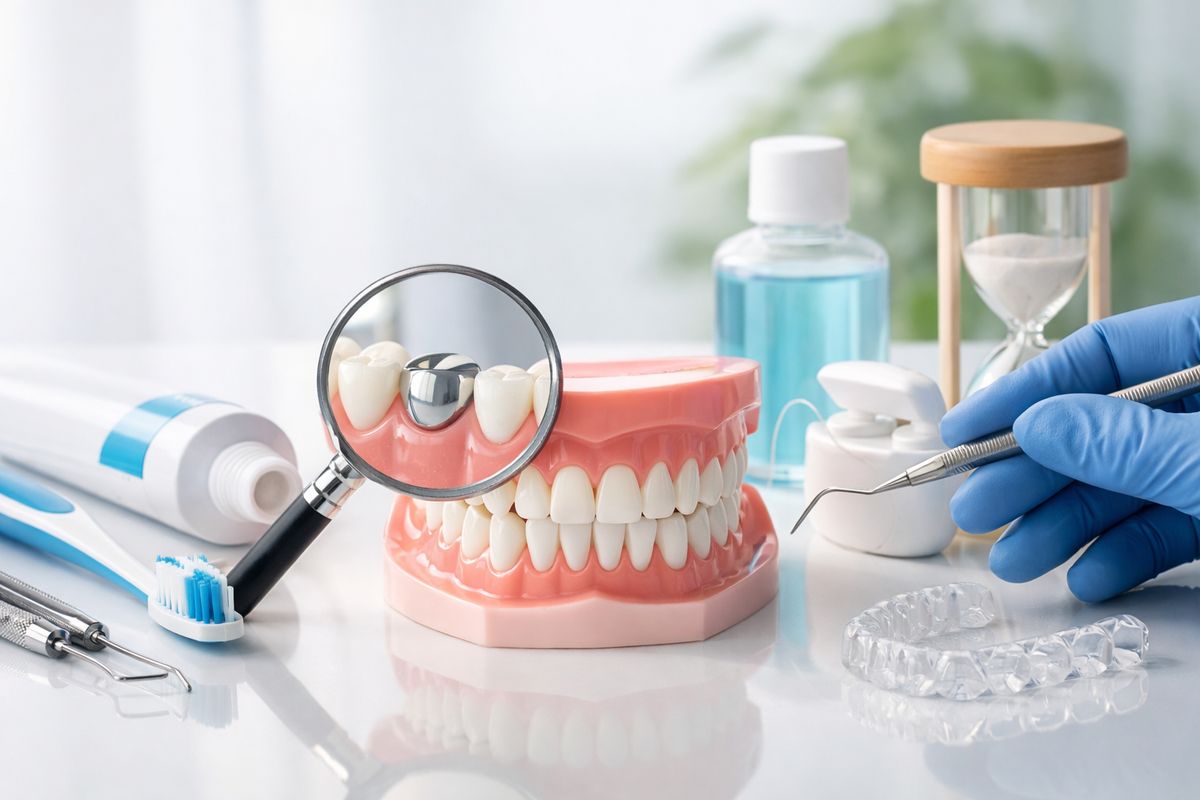
If you already needed an emergency visit, the real job starts now: maintaining dental work over time so you do not end up back in pain. A large claims-based study covering 47,379,138 direct restorations across 8,668,014 patients found that about 68% of treated teeth needed no re-intervention at 5 years, and more than half still needed no re-intervention at 10 years. In plain English, maintaining dental work over time means keeping your fillings, crowns, bridges, implants, dentures, and the tooth or gums supporting them healthy enough to avoid repair, replacement, or another emergency.
Why Maintaining Dental Work Over Time Matters
That number matters because it sets a realistic standard. Dental work is not supposed to fail right away. It is supposed to last, and the goal is not just keeping a crown looking intact or a filling staying in place. The goal is preventing the next procedure.
What this means in practice: every piece of dental work survives or fails based on what happens around it. New decay at the edge of a filling, gum disease around a bridge, a cracked tooth under a crown, or pressure from grinding can send you straight back into the emergency chair. That is especially true if you delayed care because of cost, fear, lack of insurance, or not having a regular dentist.
If you live in Baltimore and already pushed through pain once, you do not need a perfect routine. You need a maintenance plan that protects the work you already paid for, keeps small issues small, and gives you a dental home before the next crisis starts.
Here is what you will learn in this guide:
- What dental work needs watching
- Where failures usually start
- How daily cleaning protects margins
- Why recall visits save money
- How bite force breaks restorations
- Which warning signs need fast action
- How to make maintenance realistic
Know What You Have in Your Mouth Before Problems Start
The restoration-longevity research makes one point very clear: not all dental work ages the same way. A small filling, a large filling, a bridge, an implant, and a root-canal-treated tooth all carry different risks. Size matters. Location matters. The health of the supporting tooth matters.
Guessing gets expensive fast. If you show up in pain and cannot say which tooth has a crown, which tooth had a root canal, or when a bridge was placed, the appointment starts with detective work instead of decision-making. That slows urgent care and increases the chance that a stable tooth gets treated like a mystery.
The action for this section is simple: identify every major piece of dental work now, before anything hurts.
The main types of dental work and what usually threatens each one
Direct fillings usually fail at the edges. Food starts catching, the bond weakens, new decay forms at the margin, or a corner chips. Crowns often fail because the tooth underneath decays, the cement loosens, the edge opens, or the bite overloads the tooth.
Bridges depend on support teeth called abutments. If one support tooth gets decay, cracks, or gum disease, the whole bridge is at risk. Implants do not get cavities, but the gums and bone around them absolutely can break down if plaque stays in place.
Veneers often fail from force and edge chipping. Root-canal-treated teeth deserve closer watching because they already needed major repair and usually carry a large filling or crown. Dentures and partials fail differently again: poor fit, sore spots, fungal irritation, and wear on the tissues underneath.
Here is the pattern underneath all of this: dental work usually does not fail out of nowhere. Support breaks down first.
The move that works: keep a simple dental work record
The move that works is a phone note. List each tooth with the procedure and approximate year: crown, root canal, implant, bridge, denture, large filling. That is enough.
This note speeds up urgent visits, helps a new dentist judge what is actually changing, and reduces repeated guessing. It also makes it easier to connect one symptom to one restoration. If you have ever left an emergency visit and wondered what to do after the repair, keeping track of existing work pairs well with a stronger routine for taking care of your mouth after urgent treatment.
Clean for the Margins, Not Just for Fresh Breath
NIH and National Institute on Aging oral care guidance keeps returning to the same basics: brush with fluoride toothpaste, clean between teeth, and protect gum health. That sounds simple because it is. But the reason it matters for restorations is specific. Failures often begin where dental work meets natural tooth or gum.
A crown does not rot. A filling does not decay. But the edge around that restoration absolutely can. Plaque at the margin feeds acid, inflammation, bleeding, and breakdown of the seal. Once that starts, a repair that should have lasted years turns into a replacement.
The action here is direct: clean the margins every day.
Daily brushing that protects fillings, crowns, and gum tissue
Brush twice a day with fluoride toothpaste and a soft-bristle toothbrush. Angle the bristles toward the gumline and use small strokes. Hard scrubbing is not better cleaning. Hard scrubbing wears the gums down, exposes root surfaces, and makes the edge of existing dental work harder to protect.
What this means in practice: if you have crowns or large fillings, the brushing target is not the shiny top of the tooth. The target is the line where the restoration meets the natural tooth and the line where the tooth meets the gum. That is where plaque does the damage.
If you recently had emergency treatment and want a clearer home routine, the basics in keeping repaired teeth clean day to day fit perfectly here, especially once the immediate problem has settled.
Flossing and interdental cleaning where bridges and implants fail first
The National Institute on Aging highlights cleaning between teeth because regular brushing misses the places where problems build quietly. That matters even more around bridges, implants, and tightly spaced crowns. Plaque collects under bridgework, around implant posts, and between restored teeth long before you see a visible problem.
Use the tool that gets the job done consistently: floss, floss threaders, interdental brushes, or a water flosser. The specific tool matters less than the daily habit. If you have bridgework, clean under it. If you have implants, clean around them. If floss shreds or catches, treat that as a sign worth checking, not an annoyance to ignore.
Keep Recall Visits Even When Nothing Hurts
Bridge survival data from England and Wales found 72% survival without re-intervention at 10 years, and attendance pattern was one factor linked to survival. That is not office scheduling trivia. That is maintenance in real life.
Pain is a late signal. By the time a crown hurts, the decay under it is usually no longer small. By the time an implant feels loose, the inflammation around it has often been active for a while. Routine follow-up is the lowest-cost way to catch change before it becomes a bigger bill.
The action for this section is one move: keep one exam on the calendar even when everything feels fine.
What a maintenance visit catches before it turns into pain
A routine visit checks the quiet problems. Loose crown margins. Tiny fractures. Recurrent decay around older fillings. Early gum pockets. Bite wear from grinding. Food traps around a bridge. Inflammation around an implant. A denture that no longer fits the ridge correctly.
Most expensive failures start small and silent. That is why waiting for pain is such a bad filter. If you needed emergency care before, building a steady relationship with a dentist matters just as much as the treatment itself. A good place to start is turning an urgent visit into regular care.
If cost or anxiety kept you away, restart with one exam
Cost and fear keep a lot of people out of the chair until something breaks. That pattern is common, and it is fixable. Maintenance starts the day you return, not the day your history becomes perfect.
One exam and updated X-rays create a baseline for every crown, filling, bridge, implant, and root-canal-treated tooth in your mouth. That single visit tells you what is stable, what needs watching, and what will become expensive if you keep waiting. If you have Medicaid or need affordable urgent follow-up, the right maintenance plan is the one you can actually keep.
Protect Dental Work From Force, Not Just From Sugar
The big restoration data tells a familiar story: larger and more complex work tends to be less durable. One reason is obvious once you think about it. Bigger repairs are usually on teeth that already lost more structure, which means they tolerate abuse poorly.
Sugar gets blamed for almost everything in dentistry, but force breaks a lot of dental work faster. Grinding at night, clenching in traffic, chewing ice, biting hard candy, cracking popcorn kernels, or using your teeth to open things puts repeated stress on the weakest edges in your mouth.
The action here is blunt: stop treating repaired teeth like original, untouched teeth.
Bruxism, clenching, and why night guards extend the life of restorations
Grinding and clenching overload crowns, veneers, bridges, large fillings, and root-canal-treated teeth. The mechanism is simple. Repeated pressure creates microcracks, loosens margins, and drives wear into places that were already repaired once.
A night guard is maintenance, not an extra. If you wake with jaw tension, notice flattened edges, break restorations repeatedly, or hear that you grind in your sleep, a guard protects the dental work you already invested in. The same goes for daytime clenching. Unclench your jaw, keep teeth apart unless chewing, and stop bracing against stress with your mouth.
High-risk habits to stop now
The simplest version of this is one behavior change: stop testing repaired teeth with hard objects. No chewing ice. No cracking candy. No pens, fingernails, bottle caps, or package tearing.
Broken fillings and fractured crowns often come from one stupid bite, not one dramatic accident. If a tooth already needed repair, assume it deserves respect.
Watch the Supporting Tooth and Gums as Closely as the Restoration
Restoration literature keeps repeating one truth: how a material is used matters as much as the material itself. The same applies after placement. A beautiful crown on a neglected tooth fails. A stable implant surrounded by inflamed gum tissue stops being stable.
The foundation decides the future. If the supporting tooth stays clean, the gum stays healthy, and the bite stays controlled, the restoration lasts longer. Ignore the support, and the visible work becomes irrelevant.
The action here is to monitor the foundation, not just the visible cap, filling, or denture tooth.
Why gum disease shortens the life of bridges, implants, and crowns
NIH oral health guidance treats gum disease as a major oral health issue because bleeding and inflammation are not harmless. Around bridges and crowns, gum disease exposes margins and traps more plaque. Around implants, it threatens the bone support that keeps the restoration solid.
If your gums bleed around expensive dental work, treat that as active risk. Bad taste, swelling, puffy tissue, and bleeding while brushing are not cosmetic problems. They are warning signs that the support system is under stress.
Dry mouth raises the risk around existing dental work
The National Institute on Aging also flags dry mouth as a major oral health issue, and for good reason. Saliva protects teeth by buffering acids, washing debris away, and helping control the bacteria that drive decay. Less saliva means faster breakdown around crown margins, more root decay, more soreness under dentures, and more overall trouble.
Common triggers include medications, mouth breathing, and dehydration. Here is how to use that: if your mouth feels sticky, food sticks easily, or you wake with a dry tongue every day, bring it up at your next visit. Dry mouth changes the maintenance plan because high-risk teeth need closer protection.
Different Dental Work Needs Different Maintenance
Maintaining dental work over time is not one-size-fits-all. A bonded filling needs edge monitoring. A bridge needs support-tooth monitoring. An implant needs plaque control and tissue monitoring. A denture needs fit and tissue monitoring.
That difference matters because vague advice fails. Specific maintenance keeps restorations out of trouble.
Fillings and bonded restorations
The 47-million-restoration study found that the most common re-intervention after a direct restoration was simply placing another filling on the same tooth. That tells you something useful: many failures begin as edge changes, new decay, or small fractures, not instant disasters.
Watch for food catching, roughness, a chipped corner, cold sensitivity, or floss tearing at one spot. Those signs often mean the tooth needs a repair before it needs a crown or root canal.
Crowns and bridges
Crowns and bridges need close watching at the margin and at the support teeth. Loose cement, decay at the edge, gum recession, trapped food, and cracks in the supporting tooth are the usual problems. Bridge abutment teeth deserve extra respect because they carry more load than a single tooth does alone.
If one side starts trapping food or smelling bad, get it checked quickly. That is often the first visible sign that the seal or support has changed.
Implants and implant-supported work
Implants do not get cavities, but plaque still damages the tissue around them. Bleeding, swelling, soreness, a puffy gumline, or a loose feeling deserves attention right away. Professional maintenance matters here because implants fail through support loss, not decay.
Daily cleaning matters more than fancy products. If you can keep the implant area clean and keep follow-up visits consistent, you give it the best shot at lasting.
Root-canal-treated teeth and large restorations
A modern long-term analysis of 424 patients and 618 restorations on endodontically treated teeth, with follow-up up to 17 years, found that age and tooth type predicted restoration survival, while dentist experience strongly affected success outcomes. What this means in practice is straightforward: teeth that already needed major repair have less margin for neglect.
If you have a root-canal-treated molar with a large crown or filling, treat it like a high-value tooth. Do not skip checkups. Do not chew recklessly on it. Do not ignore a bite change.
Dentures and removable partials
Dentures need daily cleaning, fit checks, and tissue monitoring. Poor fit causes sore spots, ulcers, chewing trouble, and faster wear on the structures underneath. Sleeping in dentures increases tissue irritation and fungal problems, which makes maintenance harder, not easier.
If your denture suddenly rocks, rubs, clicks, or creates a sore spot, that is not normal wear you should just tolerate. It is a fit problem that needs correction.
Act Early When a Small Change Shows Up
The strongest theme across restoration research is simple: early intervention extends restoration life and reduces re-intervention. Waiting for severe pain turns a small repair into a replacement, root canal, extraction, or another emergency visit.
Avoidance feels cheaper in the moment. It gets expensive fast.
The action in this section is one rule: if something changes, act while it is still small.
Warning signs you should not ignore
A crown that feels high usually means the bite changed or the tooth shifted under stress. A filling that catches floss often points to a rough margin or chip. Pain on biting raises concern for a crack, inflammation, or a failing restoration. Bad odor around one tooth often means trapped debris, leakage, or gum breakdown.
Bleeding near a bridge or implant points to inflammation around the support. Sudden temperature sensitivity often means exposed dentin, leakage, or recurrent decay. A denture sore is a fit problem, not just a nuisance. Puffy tissue around an implant is a red flag.
If you keep ending up with the same kind of urgent problem, it helps to understand the patterns behind stopping repeat dental crises before they start.
What to do in the first 24 hours after a break, loose crown, or lost filling
Keep the area clean. Avoid chewing on that side. Save the crown or broken piece if you can. Do not test the tooth, do not glue it back with household products, and do not wait for pain to prove it is serious.
A loose crown or lost filling is easier to manage when seen quickly. Fast evaluation protects the tooth underneath, which is the part you are really trying to save.
Make Your Maintenance Plan Realistic if Money, Fear, or Access Are Barriers
The bridge survival research found that payment exemption status and attendance pattern were linked to outcomes. That matters because money and access shape restoration life in the real world, not just on paper. A maintenance plan that ignores cost, work schedules, childcare, fear, or transportation is not a plan you can keep.
The best maintenance plan is the one you will actually follow. That usually means basic prevention at home, regular exams when possible, and urgent triage the moment something shifts.
The action here is to prioritize, not disappear.
The simplest version of this: protect the most expensive or vulnerable tooth first
If full treatment feels out of reach, start with the tooth most likely to fail expensively: the crown over a root-canal-treated tooth, the bridge support tooth, the implant area, or the painful tooth that already changed. Staged care works when it is intentional.
That is the move that works. Protect the highest-risk tooth first, then build outward.
If dental anxiety has delayed care, ask for maintenance-focused visits
A shorter visit focused on checking existing dental work is an easier way back than waiting until you need something major. That gives you a lower-pressure re-entry point and creates a plan before pain takes over again.
Maintenance-focused care is not a lesser option. It is exactly how you break the cycle of emergency-only dentistry.
Build a This-Week Routine That Keeps Dental Work Out of the Emergency Chair
You do not need a perfect long-term system by tonight. You need one week of smart moves that lower the chance of another crisis. The evidence points in the same direction every time: clean the margins, control the force, keep follow-up visits, and repair small problems early.
That is how maintaining dental work over time actually works. Not with wishful thinking, and not by waiting to see what breaks next.
Your one-week action plan
Schedule one dental exam, or an urgent evaluation if something already feels off. Then start one nightly habit focused on the margins of the dental work you already have: brush gently with fluoride toothpaste and clean between the teeth, under the bridge, or around the implant that needs protection most.
If you already came in once for emergency relief, return before the next emergency decides for you. Ongoing care protects the work in your mouth, your budget, and your peace of mind.
References
- ada.org
- bajarsdental.com
- dental-update.co.uk
- humanforschung-schweiz.ch
- innovasmilesdental.com
- onlinelibrary.wiley.com
- pubmed.ncbi.nlm.nih.gov
- sciencedirect.com
- sciencedirect.com
- the209dentist.com
- townsvilledental.clinic