
You may need to repair chipped tooth same day to protect your smile, prevent infection, and relieve pain. Whether you bit down on hard candy or slipped on ice, quick action can limit damage to enamel and underlying tooth structures. In this guide, you’ll learn how to assess a chip, understand risks, schedule prompt care, explore same-day repair options like dental bonding or crowns, and manage aftercare and prevention.
By following these steps, you’ll be ready to make informed decisions about emergency dental repair and stabilize your tooth until you see a professional. Let’s dive in.
Assess chip severity
Before you seek treatment, evaluate the extent of the damage. A clear understanding of chip size, location, and symptoms helps you and your dentist choose the right repair chipped tooth same day solution.
Identify chip size
- Small chips affect only enamel and may be smoothed or polished.
- Medium-sized chips involve enamel and some dentin, requiring composite fillings or bonding.
- Large chips expose the inner pulp or nerve, often needing crowns or root canal therapy.
Check for pain and bleeding
- If you feel sharp pain or see blood, the pulp may be exposed.
- Pain that radiates into your jaw or ear can signal nerve involvement.
- Note any sensitivity to hot, cold, or pressure.
Detect nerve exposure
- Visible pink or red tissue means pulp exposure and higher risk of infection.
- Touching that area with your tongue or finger can confirm sensitivity.
- Immediate professional care is critical to save the tooth.
Citing experts, small chips can often be smoothed and repaired in one visit with dental composite resin, sometimes without numbing [1]. When pulp is exposed, root canal treatment plus a crown may be required [1].
Understand health risks
Delaying repair can increase the chance of infection, pain, and further breakage. Here’s what you risk by waiting.
Risk of infection
Bacteria can enter through cracks and exposed pulp, causing abscesses and requiring more invasive treatment.
Risk of nerve damage
Exposed nerves are vulnerable to decay and trauma, leading to chronic pain or tooth loss.
Risk of structural failure
Untreated chips weaken the tooth, making it more likely to fracture under normal biting forces.
Timely emergency dental care reduces these risks and preserves more of your natural tooth.
Schedule same-day appointment
Fast treatment is key to repair chipped tooth same day and prevent complications. Many practices offer emergency slots or walk-in service.
- Call your regular dentist to request an emergency appointment.
- If unavailable, contact a clinic offering emergency dental stabilization.
- Consider nationwide providers like Aspen Dental, which offers same-day walk-in care for broken or chipped teeth [2].
- For local emergencies, Neighbor Dental in Laurel, MD, provides same-day booking for chipped tooth repair [3].
When you schedule, describe symptoms and trauma details so the office can prepare necessary equipment and staff.
Select a qualified provider
Choosing an experienced dentist or specialist ensures the best outcome for your same-day repair. Look for:
- Emergency credentials and training in trauma care
- Advanced technology like intra-oral scanners and CAD/CAM milling
- Positive patient reviews and before-and-after photos
- Transparent pricing and insurance guidance
You can verify qualifications online or call the office to ask about their emergency protocols and same-day crown capabilities.
Explore repair options
Depending on severity, you’ll choose among several same-day treatments. Discuss these with your dentist.
Dental bonding
A popular dental bonding emergency repair, bonding uses tooth-colored resin applied, shaped, and cured with UV light.
- Ideal for small to medium chips
- Often completed in 30–60 minutes
- Typically requires minimal or no anesthesia
- Cost ranges from $100 to $600 [4]
Dental crown repair
Crowns cover and protect larger chips or weakened teeth. Options include:
- Traditional two-visit crowns with a temporary cap in between
- Same-day crowns using CAD/CAM milling for instant fabrication [1]
Ask about emergency crown repair service or temporary crown after trauma.
Veneers
Thin porcelain shells bonded to the front of teeth, ideal for aesthetic front-tooth chips.
- Requires two visits spaced 1–2 weeks apart [1]
- Not usually a same-day solution
Tooth splinting
If the chip leaves a loose fragment, your dentist may use a splint to secure it. See tooth splinting emergency or splint broken tooth dentist.
Root canal treatment
When pulp is exposed, the tooth may need a root canal then a crown. Costs range from $470 to $1,500 [5]. Learn more at repair fractured tooth emergency.
Consider treatment timeline
Not all repairs follow the same schedule. Compare:
- Single-visit procedures
- Dental bonding often done in under an hour
- Some offices create and place CAD/CAM crowns same day [6]
- Multi-visit solutions
- Traditional crowns: prep and temporary placement, then permanent crown in 2–3 weeks
- Veneers: impressions one visit, placement another
- Emergency alternatives
- Temporary crowns and quick splints keep you comfortable until final restoration
- For urgent replacements see emergency crown replacement
Knowing timelines helps you plan time off work and follow-up appointments.
Review cost and coverage
Out‐of‐pocket costs vary by treatment. Typical ranges:
| Treatment | Cost range |
|---|---|
| Filling or smoothing | $200 [5] |
| Dental bonding | $100–$600 [4] |
| Crown | $800–$2,500 [4] |
| Root canal plus crown | $1,200–$4,000 combined |
Most dental plans cover medically necessary repairs. If you lack insurance, consider using an HSA or FSA to pay for treatment.
Use temporary fixes
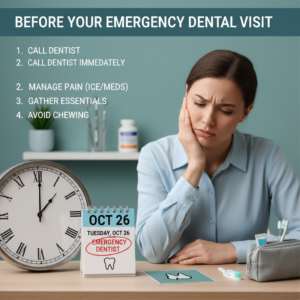
While awaiting care, protect the tooth and ease discomfort:
- Rinse with warm water and gently clean the area
- Cover sharp edges with dental wax or sugar-free gum
- Bite on soft cloth or gauze to stabilize fragments
- Take over-the-counter pain relief as directed
Immediate first‐aid tips include rinsing, using wax, and seeking prompt professional help [2]. For splint details see repair broken tooth now.
Follow aftercare steps
After same-day repair, care for your restored tooth:
- Manage discomfort with recommended analgesics
- Avoid hard, sticky, or chewy foods for 24–48 hours
- Brush gently around the repaired area and floss carefully
- Attend all follow-up visits and notify your dentist of any changes
Proper aftercare supports healing and extends the life of your repair [7].
Prevent future damage
Protect your smile long term by:
- Wearing a custom mouthguard during sports or night grinding
- Avoiding chewing on ice, hard candies, or popcorn kernels
- Scheduling routine dental check-ups and cleanings every six months
- Addressing clenching or bruxism with your dentist
By following these strategies, you’ll reduce the chance of needing another emergency repair and maintain strong, healthy teeth.