Understanding urgent dental issues
When you are in pain or notice something suddenly wrong in your mouth, it can be hard to know if you are facing a true emergency or something that can wait. Having urgent dental issues explained in clear terms helps you decide when to act fast and when to schedule a routine visit instead.
The American Dental Association defines dental emergencies as problems that are potentially life threatening and require immediate treatment to stop bleeding, control severe infection, or relieve intense pain, as well as issues where quick action is needed to prevent serious functional or cosmetic problems [1]. In other words, anything that risks your life, your ability to swallow and breathe, or the survival of a tooth needs fast attention.
You also experience less dramatic but still urgent problems that should not be ignored. Understanding urgent vs non urgent dental problems keeps you from waiting too long, while also helping you avoid unnecessary late night ER visits.
True dental emergencies that must not wait
Some situations are always emergencies and require immediate care from a dentist or, if needed, an emergency room. These are the problems where delay can cost you your tooth, your jaw health, or even your life.
Uncontrolled bleeding in your mouth
Any oral bleeding that you cannot control is an emergency. This can occur after a tooth extraction, an injury, or unexpectedly.
You can try basic first aid at home. Gently bite down on clean gauze or a damp tea bag to help slow or stop the bleeding [2]. Keep firm, steady pressure for at least 15 to 20 minutes. If bleeding continues heavily for more than a short time, or if you feel lightheaded or weak, you should seek emergency care right away.
Post extraction bleeding that lasts longer than 8 to 12 hours is considered a common but serious post procedural dental emergency and can even jeopardize your airway if untreated [1]. In these cases, you should not wait to see if it improves on its own.
Severe tooth pain that will not ease
Severe tooth pain that does not respond to over the counter medication, wakes you from sleep, or clearly will not wait is a strong sign of a dental emergency that requires quick professional care [3]. Persistent severe pain can indicate infection, advanced decay, or nerve damage.
Short term self care measures include rinsing your mouth with warm water, flossing gently around the painful tooth to remove trapped food, and applying a cold compress to the outside of your cheek to reduce swelling [4]. You can also use over the counter pain relievers such as ibuprofen if you are able to take them safely.
You should not place aspirin directly on your gums, since it can cause burns on the soft tissue [2]. If you are unsure, resources like how to know if tooth pain is emergency and when tooth pain becomes serious can help you decide, but do not hesitate to call an emergency dentist if the pain is intense.
Knocked out permanent tooth
A knocked out permanent tooth is one of the clearest urgent dental issues. Quick action can be the difference between saving and losing the tooth.
If a tooth is completely knocked out, you should:
- Handle the tooth only by the crown, the part you normally see in your mouth, and avoid touching the root.
- Rinse it gently with water if it is dirty, without scrubbing.
- Try to place it back in the socket and hold it in place by gently biting down.
- If you cannot reinsert it, store it in milk or a saline solution to help preserve the root surface [4].
Ideally you should reach a dentist within 30 to 60 minutes for the best chance of successful reimplantation [5]. This situation always qualifies as an emergency, and you should not delay.
Facial swelling and signs of spreading infection
Swelling in your gums, face, or jaw, especially when combined with intense pain, fever, or feeling unwell, often indicates an abscess or serious infection. Dental abscesses can produce pus, swollen glands, a bad taste in your mouth, or difficulty swallowing. These infections require urgent care and will not improve on their own [6].
Untreated dental infections can spread into the deep spaces of the neck and face, threaten your sinuses, and in severe cases compromise your airway [1]. Early identification and treatment are essential, because conditions such as Ludwig angina, a rapidly progressing infection, can become life threatening if not managed promptly [1].
You can rinse gently with warm salt water several times daily to help with discomfort, but you still need emergency dental or medical care for drainage and antibiotics [4].
Serious injuries to lips, tongue, or cheeks
Soft tissue injuries to your tongue, lips, cheeks, or gums are emergencies when bleeding is heavy or does not slow down with firm pressure. Lacerations inside your mouth can be more serious than they look and often bleed heavily.
You should apply clean gauze or a soft cloth with firm, direct pressure. If bleeding continues or the cut is deep, you need immediate medical or dental treatment [4]. In some cases, stitches and careful evaluation are necessary to prevent complications.
If you experience broken facial bones or trauma involving your jaw, this is a medical emergency and you should go to the emergency room, since these injuries may affect breathing and require imaging and surgery [4].
Urgent problems that need same day care
Not every serious dental issue is immediately life threatening, but some still require prompt, same day attention. These problems can worsen quickly if you wait too long.
The Michigan Dental Association describes urgent dental care as needed for non life threatening situations that could become serious if treatment is delayed [7]. When you notice these warning signs, you should contact a dentist quickly, even if you can wait a few hours for your appointment.
Painful swelling, abscess, or gum boil
A swollen area on your gum that feels warm, painful, or filled with fluid often signals an abscess. You may also notice fever, a foul taste, or swollen glands in your neck. Dental abscesses stem from untreated cavities, advanced gum disease, or trauma and always require urgent evaluation and treatment [6].
You should not try to pop an abscess yourself. A gum abscess will not resolve on its own and must be drained safely by a dentist, who may also recommend root canal therapy, scaling and root planing, or extraction in more severe cases [8]. If you are unsure whether your gum swelling requires fast attention, resources such as when gum swelling is an emergency can provide additional guidance.
Loose or suddenly moving adult tooth
A loose permanent tooth is always a reason for urgent dental care. In adults, looseness often indicates significant gum disease, bone loss, or trauma, even if you do not remember a specific injury.
Because tooth mobility can lead to tooth loss, your dentist will typically order X rays to look for infection, fractures, or bone changes [6]. Prompt evaluation offers the best chance to stabilize the tooth and address the underlying condition before it worsens.
Cracked, broken, or chipped teeth
Cracked or chipped teeth range from minor cosmetic issues to true emergencies. When you experience dental trauma, your next steps depend on how much of the tooth is involved and whether you have pain.
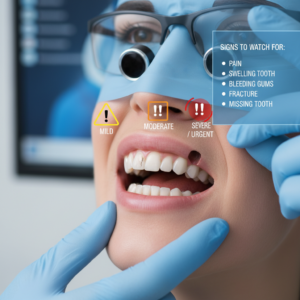
A crack that exposes the inner layers of the tooth, especially if you feel sharp pain with cold, heat, or biting, should be treated as urgent. Broken or fractured teeth that are painful, have sharp edges, or are associated with swelling should also be evaluated quickly. If you are not sure, you can review is a cracked tooth an emergency or is a chipped tooth a dental emergency for more detail.
According to guidance on urgent dental care, broken, cracked, or chipped teeth are considered urgent problems that should be seen by a 24 hour emergency dentist rather than waiting for a routine appointment [8]. Fast treatment helps reduce pain and can often preserve more of your natural tooth.
Severe toothache with swelling
Tooth pain that is moderate to severe, especially when combined with swelling of your face or gums, should be treated urgently. While some toothaches improve when trapped food is removed by flossing or rinsing, pain that continues, worsens, or interferes with normal activities should not be ignored [8].
Immediate relief steps include warm water rinses, gentle flossing, and cold compresses on the outside of your cheek [4]. You can learn more about evaluating your symptoms in how to handle sudden dental pain, how long can you wait for tooth pain, and dental emergency symptoms to watch for. If symptoms remain intense, you should call for same day care.
Sudden, heavy gum bleeding
Gums that bleed a little when you brush or floss occasionally typically reflect irritation or early gum disease and can be addressed at a routine visit. However, severe gum bleeding, especially when accompanied by swelling, pain, or loosening teeth, can indicate advanced gum disease or infection and requires urgent evaluation [6].
If gum bleeding starts suddenly, is heavy, or does not stop easily, it is safer to treat it as urgent. For more detail on what to watch for, you can review when bleeding gums are an emergency.
Problems that usually can wait
Some dental issues feel uncomfortable or inconvenient, but typically do not require after hours emergency care. These are still important to address, but they can usually be scheduled during normal office hours.
The Michigan Dental Association notes that many non emergency needs, such as routine fillings, cleanings, and minor sensitivity, can safely be postponed without risk of serious harm if necessary [7]. When you are unsure, you can always call your dental office for advice.
Lost filling or crown without severe pain
A lost filling or crown can feel alarming, but if you are not in severe pain and there is no sharp edge cutting your tongue or cheek, it is usually considered non urgent. You should still call your dentist promptly to schedule a repair, because exposed tooth surfaces can become more sensitive or decayed over time [8].
In the meantime, you can keep the area clean and avoid very hot, cold, or sticky foods on that side. Over the counter temporary dental cement can sometimes help protect the area until your appointment.
Mild tooth sensitivity or intermittent discomfort
Tooth sensitivity to cold air, sweet foods, or mild pressure is common and does not always signal an emergency. Many people have intermittent minor discomfort from early cavities, gum recession, or recent dental work.
These symptoms still deserve attention, but they fit better under routine or non urgent care, rather than requiring immediate emergency treatment. Comparing your symptoms to resources like dental emergencies vs routine dental care can help you distinguish when to wait and when to act.
Chronic problems that are not changing
Longstanding issues such as slightly rough fillings, mild TMJ discomfort, or chronic halitosis, bad breath, generally belong in scheduled dental visits. If your symptoms are stable and not accompanied by severe pain, fever, swelling, or bleeding, you can usually wait to see your dentist at the next available appointment.
However, it is important not to ignore these concerns entirely. Routine care, including at least twice yearly checkups and cleanings, helps identify early problems, control plaque and tartar, and reduce the chance that small issues will turn into emergencies later [9].
Simple home care while you wait
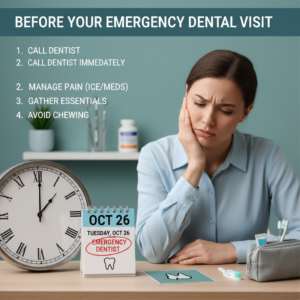
Even when you plan to see a dentist the same day, or within the next few days, there are steps you can take at home to protect your mouth and reduce discomfort.
You can:
- Stay calm and take slow breaths, since anxiety can heighten your perception of pain.
- Apply a cold compress to the outside of your face near the painful area, in 10 to 15 minute intervals, to decrease swelling and numb the area slightly [2].
- Use over the counter pain relievers such as ibuprofen or acetaminophen if you can safely take them, following package instructions. Avoid putting pain medication directly on your gums [2].
- Gently rinse your mouth with warm salt water to help reduce bacteria and soothe irritated tissues [4].
- Protect retainers, mouth guards, or other appliances by removing them if they are damaged or causing pressure in an injured area, as long as it is safe to do so [3].
These measures are not substitutes for professional care, but they help manage symptoms until you are evaluated. For a more detailed guide, you can review what to do before seeing emergency dentist.
If you are ever unsure whether your situation is an emergency, you should call a dentist and describe your symptoms. It is always safer to ask than to wait with a serious problem.
How dentists handle emergency visits
Knowing what to expect during an emergency dental visit can make the experience less stressful. Emergency appointments focus on identifying the problem quickly, managing pain, and preventing complications.
At a visit for urgent dental issues, your dentist will typically start with a brief conversation about your symptoms and medical history, followed by a focused oral exam. X rays are often taken to identify hidden issues like fractures, deep decay, or infection [3].
Pain relief is a priority. Your dentist may use numbing gel, local anesthetic injections, or other methods to keep you comfortable while they stabilize the problem. Depending on what they find, they may provide definitive treatment right away or perform a temporary procedure and schedule a follow up visit for more complex care.
Infections may be treated with drainage and antibiotics. Broken or cracked teeth may be smoothed, bonded, or protected with temporary restorations. For more complete context about what qualifies as emergency care, you can explore what is considered a dental emergency and what dental issues require immediate treatment.
Preventing future dental emergencies
While you cannot prevent every accident, many urgent dental issues are linked to habits and conditions you can control. Small changes today lower your risk of facing a painful emergency later.
Regular checkups and cleanings at least twice a year help your dentist catch early cavities, gum disease, and small cracks before they become serious [9]. Addressing parafunctional habits, such as nail biting, chewing on pens, grinding your teeth, or using your teeth to open packages, reduces the risk of chips and fractures [9].
If you play contact sports or grind your teeth at night, wearing an appropriate mouth guard protects your teeth from excessive forces and reduces the chance of dental trauma [9]. Avoiding very hard foods that can crack teeth is also important, especially if you already have large fillings or previous dental work [9].
Untreated dental caries, or cavities, are extremely common, and about one third of adults leave them untreated, which can eventually lead to urgent emergency visits if decay progresses [6]. Keeping up with routine care and addressing small problems early is one of the most effective ways to avoid painful and costly emergencies.
Deciding when to act fast
When you face sudden dental symptoms, you are really deciding whether you need immediate emergency care, same day urgent care, or a standard appointment. Combining the guidance in this article with your own experience of pain and function helps you make that choice.
If you notice:
- Uncontrolled bleeding
- Trouble breathing or swallowing
- A knocked out permanent tooth
- Severe pain that does not respond to medication
- Rapidly spreading swelling or signs of infection
you should seek emergency care without delay. When you have significant pain, swelling, a loose tooth, a cracked or broken tooth, or an abscess, urgent same day dental care is usually the safest path. For milder issues, you can schedule a regular visit and review information like how to tell if you need urgent dental care, emergency dental warning signs, and signs you need emergency dental care.
If you are ever uncertain, calling a dental office and describing your symptoms is the best next step. Asking for guidance is far better than waiting while a serious problem worsens. When you understand urgent dental issues explained clearly, you are better prepared to protect your health, your comfort, and your smile.