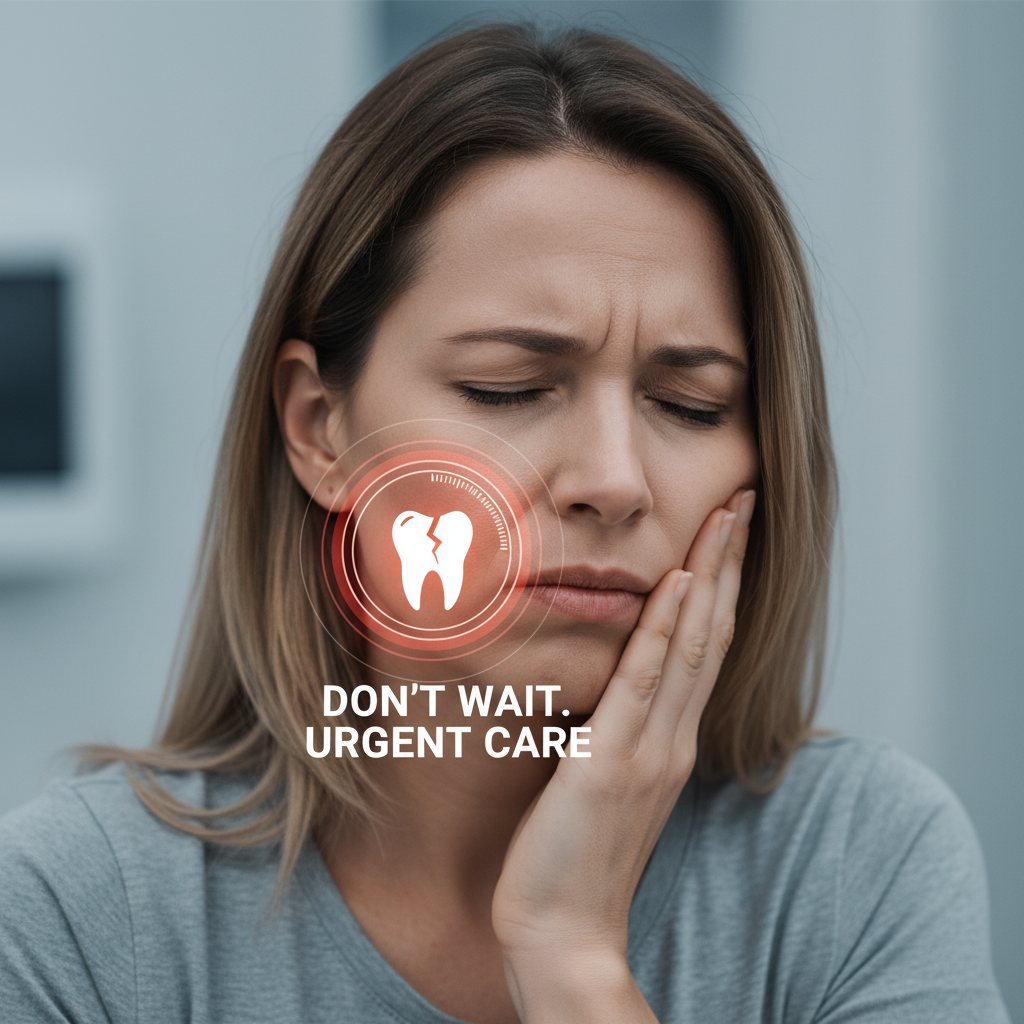
Why it matters when tooth pain becomes serious
Tooth pain is common, but it is never truly “normal.” Understanding when tooth pain becomes serious helps you decide if you can wait for a routine visit or if you need immediate care. Ignoring warning signs can allow infections to spread and turn a manageable issue into a true emergency that affects your overall health.
Dental providers repeatedly stress that tooth pain often signals underlying problems such as tooth decay, a tooth abscess, gum disease, or injury, and these issues rarely improve on their own [1]. Knowing when to act can protect your teeth, your jaw, and in some cases even your life.
If you are trying to sort out urgent vs non urgent dental problems, use this guide as a practical framework to help you decide what to do next.
How to tell if tooth pain is serious
To understand when tooth pain becomes serious, start by paying attention to what the pain feels like, how long it lasts, and what other symptoms you have.
Pain type and intensity
Different patterns of pain often point to different levels of urgency:
- Sudden, sharp pain, especially when biting or chewing, can indicate a cavity, cracked tooth, or beginning infection that needs timely evaluation [2].
- Throbbing or pulsing pain that worsens over time usually suggests a deeper infection, such as one needing a root canal, and should be treated right away [2].
- A dull, persistent ache is typically less urgent but still important, because it often reflects underlying issues that should not be ignored [3].
If your pain is intense, constant, or strong enough to disrupt sleep, work, or daily activities, it is already in the serious category and you should seek prompt dental care.
Duration of tooth pain
Mild gum irritation sometimes settles within a day or two. However, when pain lasts or returns, it is a signal you should not wait.
According to the Cleveland Clinic, temporary gum irritation may resolve fairly quickly, but tooth pain that lingers longer than a day or two or that seems to come from the tooth itself typically requires professional evaluation [4]. Pain that keeps coming back, or that gradually worsens, often reflects a growing problem that can become an emergency if it is not treated.
If you are wondering how long you can wait for tooth pain, a good rule is that anything more than 24 to 48 hours of noticeable pain, especially if it is not improving, deserves a call to your dentist.
Associated symptoms to watch for
Your symptoms beyond the tooth itself are often the clearest clues that your situation is urgent.
Warning signs include:
- Swelling in your face, cheek, jaw, or gums
- Fever or chills
- Difficulty swallowing or breathing
- A foul taste or persistent bad breath
- Red, swollen gum bumps near the painful tooth
- Pain that radiates to your ear, jaw, or neck
These symptoms often point to infection that may be spreading, and they should never be ignored. They are also key emergency dental warning signs that mean you should seek care immediately.
Signs your tooth pain is an emergency
When tooth pain becomes serious, it usually crosses into emergency territory. Emergency tooth pain is not just uncomfortable, it is potentially dangerous.
Symptoms of a spreading dental infection
A tooth abscess is a pocket of pus caused by a bacterial infection in or around a tooth. It can damage nearby tissue and bone and can sometimes spread beyond your mouth [5]. Signs of a serious or spreading infection include:
- Severe, throbbing tooth pain that may radiate to your ear, jaw, or neck
- A swollen, red bump or “pimple” on your gums
- Swelling of the face, neck, or jaw that is warm or tender to the touch
- Fever, chills, or feeling unwell in general
The Cleveland Clinic warns that tooth pain that lingers for more than a day or two, or that is accompanied by swelling, fever, or chills, requires urgent dental consultation because it may indicate a serious infection [4].
The Mayo Clinic also notes that untreated abscesses can spread over days, weeks, or months to the jaw bone, soft tissues of the face and neck, and in rare situations to the heart or brain [6]. If you see or feel these signs, you are no longer dealing with a minor toothache. You need immediate care.
Red flag signs that require same day care
You should seek same day emergency attention, either through your dentist or an emergency room if a dentist is not available, if you experience any of the following:
- Unbearable tooth pain with fever or chills, especially if you feel very sick, since infections in the mouth can spread to the bloodstream or brain [4]
- Difficulty breathing or swallowing, which may indicate that the infection has spread into the throat or neck and can become life threatening [6]
- Rapidly increasing facial or jaw swelling
- Tooth pain with confusion, extreme fatigue, or a very rapid heart rate, which could suggest sepsis in high risk cases [6]
If you have these symptoms, you are dealing with what is clearly a dental emergency, and delaying increases your risk of serious complications.
When an abscess or infection is involved
One detail many people do not realize is that a tooth abscess does not heal on its own. Even if the pain suddenly improves, the infection is still present. According to the Cleveland Clinic, an abscessed tooth will not resolve without proper dental treatment, and pain relief can simply mean the nerve inside the tooth has died while bacteria continue to spread [5].
The Mayo Clinic also notes that if an abscess ruptures and pain decreases, you still need urgent dental care to prevent the infection from moving into your jaw, head, neck, or causing sinus infections or sepsis [6].
In other words, if pus, swelling, or a gum bump has appeared, tooth pain has already become serious and needs fast attention, even if the pain lets up.
Serious but not life threatening tooth pain
Not every urgent situation is life threatening, but some problems still require same day or next day care to prevent major damage.
Severe pain without infection signs
Intense, throbbing, or constant tooth pain that disrupts your ability to function, even without visible swelling or fever, is usually a sign of a serious underlying issue such as advanced decay, a cracked tooth, or inflammation inside the tooth. These conditions generally do not improve without treatment and can quickly progress into infections.
Mountain Top Periodontics notes that intense, throbbing tooth pain that worsens over time cannot typically be relieved by rest or over the counter pain medications and should be treated as an emergency to prevent complications [7].
If you are trying to judge how to know if tooth pain is an emergency, ask yourself if the pain is:
- Constant or pulsing
- Worsening, not improving
- Interfering with sleep, eating, or focus
If the answer is yes to any of these, you should seek urgent dental evaluation.
Pain when biting, chewing, or touching the tooth
Sharp pain when you bite down or chew often signals an untreated cavity, fractured tooth, or early abscess [2]. Pain when tapping or lightly touching the tooth can also be a sign of inflammation around the root.
Pain on use is important because it suggests structural damage or pressure in the tissues around the tooth. Without prompt care, you risk cracks worsening, teeth breaking, or infections developing. These are classic dental emergency symptoms to watch for, even if your tooth looks normal in the mirror.
Persistent sensitivity that is getting worse
Occasional brief sensitivity to hot or cold is common, particularly if enamel is worn or gums have receded. However, if your sensitivity is:
- Sudden and intense
- Lasting for more than a few seconds
- Triggered by light chewing or even by air
- Progressively worsening over days or weeks
it may indicate that the inner layers of the tooth are exposed and are at higher risk for decay or infection [8].
This usually does not require an ER visit, but you should not wait weeks to see a dentist. Addressing the cause early can prevent the situation from shifting into a true emergency that needs more complex treatment.
Tooth pain that usually can wait a short time
While tooth pain should never be ignored, some issues are less urgent and can often be handled at a scheduled dental appointment within a reasonable timeframe.
Mild, short lived sensitivity
If you notice mild sensitivity that only lasts a moment when you drink something cold or hot, but you have no visible damage, swelling, or persistent pain, it is typically not an emergency. Thinning enamel or exposed root surfaces commonly cause this type of discomfort and can be evaluated during a regular visit [9].
You should still mention it to your dentist at your next appointment, but in this situation it is usually safe to wait a short time, especially if the sensitivity does not affect your daily life.
Dull aches that are stable
A dull, off and on ache that is mild and has not changed in intensity is often a sign of early problems such as small cavities or minor clenching habits. Nexus Dental of Lewisville notes that this type of pain is generally not an emergency but still should not be ignored, because it can indicate underlying issues that need attention before they worsen [3].
If your pain is mild and stable, but has lasted more than a day or two, it is wise to schedule an appointment within the next week or two rather than waiting months. This is part of the practical difference between dental emergencies vs routine dental care.
Minor chips without pain
A small chip on the edge of a tooth that causes no pain and does not have sharp edges cutting your tongue is usually not an immediate emergency. However, you should still have it checked. Chipped areas can collect bacteria and may crack further.
If you are unsure if your injury is urgent, look into resources like is a chipped tooth a dental emergency and is a cracked tooth an emergency. In general, chips with no pain and no deep cracks can wait a short time, while chips with pain or visible fractures need much faster attention.
Tooth pain, infection, and your overall health
When tooth pain becomes serious, it is not just about the tooth. Untreated dental infections can affect the rest of your body.
How dental infections spread
A tooth abscess starts with bacteria inside or around a tooth. If it is not treated, infection can move into the jaw bone, neighboring teeth, and soft tissues of the face and neck [5]. The Mayo Clinic warns that in rare but dangerous cases, bacteria can even spread to the heart, brain, or bloodstream, leading to sepsis or other severe complications [6].
Bleeding gums with a foul taste or bad breath can also signal serious gum infections or abscesses that become harder to treat the longer you wait [7].
Systemic risks of ignoring tooth pain
Ignoring tooth pain because it seems manageable can have serious long term consequences. Penn Dental Medicine notes that waiting for problems to turn into emergencies allows infections to spread beyond the mouth and may contribute to health issues like cardiovascular disease, diabetes complications, respiratory infections, and pregnancy problems [1].
Delaying care due to cost or inconvenience often leads to more extensive and more expensive treatment later, such as root canals, extractions, or surgeries that might have been avoided with earlier care [1].
If you have wondered what dental issues require immediate treatment, any problem that carries a risk of infection spreading or permanent tooth loss belongs in that category.
Key point: Tooth pain that lingers, worsens, or comes with swelling, fever, or difficulty swallowing is no longer just a dental issue. It is a whole body health concern that needs urgent attention.
What to do when tooth pain becomes serious
Once you recognize that your tooth pain is serious, your next steps can help you stay safer and more comfortable until you receive professional care.
First steps at home
While you arrange care, you can:
- Take over the counter pain relievers such as acetaminophen or ibuprofen as directed, unless your medical provider has advised against them. The Cleveland Clinic notes that these can provide temporary relief while you wait to see a dentist, but they do not treat the underlying cause [4].
- Rinse gently with warm salt water to help reduce irritation.
- Keep your head elevated, especially when lying down, to help reduce pressure and throbbing.
- Avoid hot, cold, or very sweet foods that trigger pain.
- Do not place aspirin directly on the gum or tooth, since this can burn the tissue.
These steps do not replace treatment, but they can make you slightly more comfortable while you arrange urgent care. For a practical overview, you can also review how to handle sudden dental pain.
When to call a dentist vs go to the ER
If your symptoms fit a true dental emergency, contact your dentist immediately and explain what you are feeling. Many offices reserve time for urgent visits or will direct you to an emergency provider.
Use this simple guide:
- Call an emergency dentist right away if you have severe pain, swelling in your face or gums, or signs of infection but you can still breathe and swallow normally.
- Go straight to an emergency room if you have difficulty breathing or swallowing, rapidly worsening facial or neck swelling, high fever, or feel extremely unwell. The Mayo Clinic stresses that fever and facial swelling in someone with a tooth abscess require immediate ER care if a dentist is not available [6].
If you are unsure when to go to an emergency dentist or how to tell if you need urgent dental care, err on the side of caution. Describing your symptoms clearly over the phone often helps staff decide how quickly you should be seen.
Information to share with your provider
To help your dentist or medical team respond appropriately, be prepared to share:
- When the pain started and how it has changed
- What makes the pain better or worse
- Whether you have had fever, chills, swelling, or difficulty opening your mouth
- Any medications you have taken for pain
- Any recent injuries to your mouth or jaw
If you need more guidance on how to prepare, resources such as what to do before seeing emergency dentist can help you organize key details.
Preventing minor tooth pain from becoming serious
You cannot always prevent sudden dental emergencies, but you can significantly lower your risk that everyday problems will turn into crises.
Do not ignore early warning signs
Toothaches are widespread, with research suggesting that more than half of adults experience tooth pain within a six month period [2]. Because they are common, it is easy to minimize them. Yet experts consistently emphasize that toothaches should never be ignored, even if they seem manageable in the beginning [1].
Scheduling an appointment when you first notice:
- Occasional sharp twinges
- Mild but persistent sensitivity
- Dull, recurring aches
can help your dentist address problems before they become emergencies. This is the heart of understanding urgent dental issues explained. Acting early lowers your chance of facing severe infections, tooth loss, or costly treatments.
Regular checkups and cleanings
Routine dental visits are one of your best protections against serious tooth pain. Penn Dental Medicine notes that regular checkups allow early identification and treatment of problems, which helps prevent tooth pain from escalating into emergencies and can reduce your need for urgent dental services later [1].
Consistent professional cleanings and exams:
- Catch cavities while they are small
- Monitor gum health to prevent advanced periodontal disease
- Identify fractures or worn fillings before they fail
- Provide an opportunity to discuss minor symptoms before they worsen
If you are comparing dental emergencies vs routine dental care, think of routine care as your insurance policy against future urgent visits.
Planning ahead for emergencies
You cannot always predict when tooth pain will become serious, but you can prepare for how you will respond:
- Know which local dentist or clinic handles emergency cases.
- Save their phone number and hours in your phone.
- Understand your insurance coverage for emergency visits.
- Keep basic pain relief and salt for rinses at home.
Familiarizing yourself with resources like signs you need emergency dental care and how to tell if you need urgent dental care now makes it easier to act quickly later, when you may be in pain or stressed.
When tooth pain becomes serious, time matters. By recognizing red flag symptoms, understanding what constitutes a true dental emergency, and seeking help promptly, you protect not only your teeth but your overall health. If you are ever in doubt about the seriousness of your tooth pain, treat that uncertainty itself as a reason to reach out to a dental professional.