
Understanding Medicaid emergency tooth removal
If you are on Maryland Medicaid and dealing with severe tooth pain, swelling, or a broken tooth, you may be wondering if you can get a Medicaid emergency tooth removal and what the process actually looks like. You might also be worried about cost, timing, and how quickly you can be seen.
Maryland Medicaid does cover medically necessary emergency tooth extractions in most situations. The challenge is often finding an emergency dentist that accepts Medicaid, understanding what is covered, and knowing how to prepare so your visit goes as smoothly as possible.
This guide walks you through what to expect before, during, and after an emergency extraction, how Medicaid coverage typically works in Maryland, and what your options are if you need follow up treatment such as dental implants.
When emergency tooth removal is needed
Not every toothache requires an emergency visit, but some symptoms should never be ignored. Emergency removal is usually recommended when the tooth cannot be saved quickly and delaying care could put your health at risk.
Common reasons for emergency extraction
You are more likely to need a Medicaid emergency tooth removal if you have:
- Severe tooth pain that does not improve with over the counter pain relievers
- A broken or fractured tooth with exposed nerve or sharp edges
- Swelling in your gums, face, or jaw
- Signs of infection, such as pus, a bad taste, or fever
- A tooth that is loose due to advanced gum disease
- Impacted or partially erupted wisdom teeth causing pain or infection
Many of these situations involve serious infections. Untreated dental infections are a major reason people visit the emergency department, and Medicaid ends up paying a large share of those costs. These hospital visits often only provide pain medication or antibiotics, not the actual dental treatment you need, and are considered largely preventable with timely dental care [1].
Getting to an emergency dentist that takes medicaid instead of the hospital whenever possible helps you get definitive treatment and protects your overall health.
Red flags that mean you should not wait
If you notice any of the following, you should seek urgent dental care that takes Medicaid the same day if possible:
- Trouble breathing, swallowing, or opening your mouth
- Rapidly spreading swelling in your face or neck
- High fever or feeling very ill along with tooth pain
- A broken tooth with exposed nerve and severe pain
In these situations, call your dentist and your medical provider. If you cannot reach a dental office and your breathing or swallowing is affected, go to the nearest emergency room, then follow up with a medicaid dentist accepting new patients as soon as you can.
How Medicaid typically covers emergency extractions in Maryland
Medicaid adult dental coverage has historically varied from state to state and can change with budgets. Adult dental services are often among the first benefits to be reduced when states face financial pressures, which affects access for low income adults [1].
Maryland, however, is working to expand access to adult dental care. While the exact details of your coverage depend on your specific plan and eligibility category, there are some general patterns you can expect.
What Medicaid usually pays for in an emergency
In an emergency situation, Maryland Medicaid will typically cover services that are considered medically necessary to treat pain, infection, or trauma. This often includes:
- Evaluation and exam for a dental emergency
- Dental X rays that are needed to diagnose the problem
- Simple tooth extractions
- Surgical extractions, including some wisdom tooth removal medicaid cases
- Antibiotics or other medications when indicated for infection
If your dentist recommends extraction for an infected tooth, this is usually considered medically necessary. For more detail, you can review pages like does medicaid cover tooth extraction and tooth extraction covered by medicaid.
Studies of Medicaid programs in multiple states show that when Medicaid includes adult dental coverage, dental related emergency department visits drop, and when coverage is missing, those ED visits rise [1]. This suggests that having access to benefits like emergency extractions is not only important for your health but can also reduce avoidable hospital use.
What may not be fully covered
Maryland Medicaid is more likely to cover treatment that stops pain and infection than elective or cosmetic procedures. In an emergency visit, you may find that:
- Basic extractions are covered, but tooth saving options such as some root canals or crowns might have more limits
- Premium materials or upgraded restorations may not be covered
- Replacement options after extraction, such as dental implants, are often limited or excluded
Current research shows that only certain preventive public health measures, like community water fluoridation or targeted sealants for high cavity risk patients, have clear evidence of cost effectiveness. Many other dental services have not yet been studied in a way that proves long term savings for Medicaid programs [1]. This is one reason your coverage for more complex restorative care may be tighter than it is for an emergency extraction.
If you want to understand your benefits in more depth, you can also review resources like medicaid oral surgery coverage and free tooth extraction medicaid.
How to verify your Medicaid dental benefits
Before your appointment, it helps to confirm your coverage so there are fewer surprises. This is especially important if you are planning to see an oral surgeon that takes medicaid or if you think you might need surgical extraction.
Steps to confirm your coverage
You can usually verify your Medicaid dental benefits in three ways:
-
Look up your plan details online.
Sign into your Maryland Health Connection or plan member portal. Check your dental benefits section for information on emergency care, extractions, and any limitations. -
Call the number on your Medicaid card.
Ask the member services representative:
- Do I have adult dental coverage?
- Are emergency exams and tooth extractions covered?
- Do I need prior authorization for surgical extraction or wisdom tooth removal?
- What copays or limits apply?
- Confirm with the dental office.
When you call to schedule, let the staff know you are a Maryland Medicaid member. Ask if they are a medicaid dentist accepting new patients and whether they can check your eligibility and benefits for emergency extraction.
Having this information in advance can make your visit smoother and helps the office plan appropriate treatment options for you.
Finding an emergency dentist that accepts Medicaid in Baltimore
When you are in pain, you may not feel like calling multiple offices. Knowing what to ask for can make it easier to find an urgent dental care that takes medicaid near you.
Where to start your search
You can begin with:
- Your Medicaid plan directory. Use the online search tool or call member services and ask specifically for an emergency dentist that takes medicaid within a reasonable distance of your home in Baltimore.
- Local dental clinics and community health centers. Many of these offices accept Medicaid for urgent cases and may offer same day tooth extraction medicaid slots.
- Walk in dentist that takes medicaid. If you cannot wait for a scheduled appointment, some practices reserve time for walk in emergencies for Medicaid patients.
When you call, mention your main concern, for example, “I have a broken tooth and I am on Medicaid,” or “I think I have an infected tooth and I need to see a Medicaid dentist quickly.” That helps the office understand the urgency.
Questions to ask when you call
To make sure you are in the right place, you can ask:
- Do you accept Maryland Medicaid for emergency visits and extractions?
- Can you see me today or tomorrow for a dental emergency?
- Do you perform extractions in your office, or will I need a referral to an oral surgeon that takes medicaid?
- What should I bring to my appointment?
If you suspect you have an infected tooth medicaid dentist can evaluate, mention any swelling, fever, or drainage when you speak with the office.
How to prepare for your emergency extraction appointment
Even in an emergency, a bit of preparation can make your visit more efficient and less stressful. Your goal is to give the dentist all the information they need quickly so they can focus on relieving your pain.
What to bring
Try to have the following with you:
- Your Medicaid card and a photo ID
- A list of current medications and doses
- Any allergies, especially to medications, latex, or anesthesia
- A brief medical history, including any heart conditions, pregnancy, bleeding problems, or major illnesses
- Information about your dental symptoms, for example, when the pain started, what makes it worse, and any swelling or fever
If you think you may need sedation or if you feel very anxious, consider bringing someone who can drive you home. Some sedation methods require an escort.
What to avoid before your visit
If you think you will need extraction, it helps if you:
- Do not eat a heavy meal right before the appointment if there is a chance you may receive sedation. Follow the dental office instructions about food and drink.
- Do not take aspirin unless your medical provider has prescribed it, since it can increase bleeding. Other pain relievers like acetaminophen may be safer, but check with your provider.
- Avoid alcohol or recreational drugs. These can interact with local anesthetic or pain medications.
If you are not sure what is safe, ask the dental office when you schedule.
What happens during a Medicaid emergency tooth removal
Once you arrive, your dentist will move quickly to identify the source of your pain and decide whether extraction is the best option for you.
Evaluation and diagnosis
You can expect:
-
A brief medical and dental history.
The dentist or assistant will ask about your symptoms, medications, and medical conditions. -
An oral exam.
Your dentist will look at the problem tooth, surrounding gums, and other areas of your mouth. -
X rays.
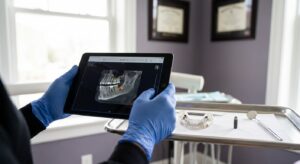
X rays help your dentist see the root, bone level, and surrounding structures. These are almost always needed before extraction so the procedure can be done safely.
Once your dentist has all the information, they will explain your options, which may include emergency extraction, temporary treatment to stabilize the tooth, or referral to a specialist.
If you have a broken tooth medicaid emergency dentist might be able to repair it rather than remove it, depending on the extent of the damage.
The extraction procedure itself
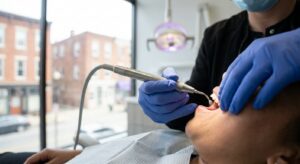
If extraction is the best choice, your dentist will:
-
Numb the area with local anesthetic.
You will feel pressure but should not feel sharp pain. If you do, tell your dentist immediately. -
Loosen the tooth.
Special instruments are used to gently loosen the tooth from the surrounding bone and ligaments. -
Remove the tooth.
For a simple extraction, the entire tooth is lifted out once it is loose. In a surgical extraction, your dentist may need to make a small incision in the gum or section the tooth into pieces. -
Clean and protect the area.
The socket is cleaned, and gauze is placed to help stop bleeding. Stitches may be used for surgical extractions.
Most emergency Medicaid covered extractions are done under local anesthesia only. If you require more complex surgery or have significant anxiety or medical issues, you may be referred to an oral surgeon that takes medicaid for IV sedation or other advanced options.
Aftercare, healing, and follow up
What you do in the first 24 to 72 hours after extraction makes a big difference in your comfort and healing. Your dental team will give you written instructions, but it helps to understand the basics ahead of time.
Immediate aftercare
For the first day:
- Bite gently on the gauze as instructed to control bleeding. Replace it as needed.
- Do not spit forcefully, use a straw, or rinse vigorously for the first 24 hours, so the blood clot stays in place.
- Apply an ice pack on your cheek for 10 to 20 minutes at a time to reduce swelling.
- Take pain medication exactly as prescribed. If you do not receive a prescription, you may be advised to use over the counter options.
Mild oozing, soreness, and swelling are normal. Intense pain, heavy bleeding that does not slow, or signs of spreading infection should be reported to your dentist immediately.
What to expect over the next few days
Most people feel significantly better within a few days. You can usually:
- Begin gentle warm saltwater rinses after 24 hours to keep the area clean
- Reintroduce soft foods as your comfort improves
- Gradually return to normal brushing, avoiding the extraction site at first
Your dentist may schedule a follow up visit, especially if you had a surgical extraction or stitches. Keep this appointment so your healing can be checked.
If your tooth was removed because of severe infection, you might need additional treatment, such as a deep cleaning or other procedures, to reduce the chance of further problems in the same area.
Can you get dental implants with Medicaid after extraction?
Once your emergency situation is under control, you may start to think about how to replace the missing tooth. Dental implants are a popular option, but they are not always covered by Medicaid.
Typical Medicaid rules for implants
In many states, adult Medicaid programs have very limited coverage for dental implants. Current research has not yet provided strong evidence that most individual preventive or restorative dental procedures, beyond some public health measures, reduce overall Medicaid health costs in a way that clearly justifies coverage expansions [1]. This contributes to tighter limits around higher cost procedures like implants.
To explore your options, it helps to review:
These resources explain common limitations, such as strict medical necessity criteria, documentation requirements, or exclusion of implants except in special cases.
Understanding implant candidacy and alternatives
Even if your Medicaid plan does not pay for implants, a dentist that takes medicaid for implants can still evaluate you and explain your options. They can help you understand:
- Whether you are a good candidate for implants, based on your bone level, gum health, medical conditions, and smoking status
- Which teeth would benefit most from replacement
- Alternatives that may be covered, such as bridges or partial dentures
If implants are not covered or are only partly covered, you can look into low cost dental implants medicaid programs, payment plans, or phased treatment that spreads costs over time.
Step by step: How to get a tooth pulled with Medicaid
When you are in pain, having a clear roadmap can make everything feel more manageable. If you are in Baltimore and need a Medicaid emergency tooth removal, you can think of the process as a series of steps.
Quick path to care: Confirm your Medicaid coverage, find an emergency Medicaid dentist, get your evaluation and extraction, then plan your follow up and any needed replacement options once you are out of pain.
Here is how that looks in more detail:
-
Confirm you are eligible
Check that your Maryland Medicaid is active and that you have adult dental coverage. If you need help, review how to get a tooth pulled with medicaid. -
Identify a Medicaid dentist
Use your plan directory or search for an emergency dentist that takes medicaid or walk in dentist that takes medicaid in Baltimore. -
Call and explain your emergency
Describe your symptoms clearly. If you suspect infection, mention that you are looking for an infected tooth medicaid dentist. Ask about same day tooth extraction medicaid availability. -
Prepare your information
Gather your Medicaid card, ID, medication list, and medical history. Follow any instructions the office gives you about food, drink, or medications before your visit. -
Attend your evaluation
The dentist will examine you, take X rays, and discuss whether extraction is needed now or if another treatment is possible. -
Have the extraction performed
If your tooth must be removed, your dentist will numb the area, perform the extraction, and give you detailed aftercare instructions. -
Follow aftercare closely
Take medications as directed, avoid disrupting the blood clot, and call your dentist if you notice signs of complications. -
Plan long term care
Once you are healing well, talk to your dentist about cleaning, prevention, and replacement options. If you are interested in implants, review can you get dental implants with medicaid and dentist that takes medicaid for implants to see what might be possible.
Getting the care you need today
Dental pain and infection can be overwhelming, especially when finances and insurance are on your mind. Maryland Medicaid is intended to help you access urgent care when you need it, including evaluation and emergency tooth removal in many situations.
If you are in Baltimore and think you might need a Medicaid emergency tooth removal, your best next step is to contact an urgent dental care that takes medicaid or emergency dentist that takes medicaid as soon as you can. Let them know your symptoms and your coverage so they can guide you from there.
With the right information and support, you can move from pain and uncertainty toward relief, healing, and a plan to restore your oral health.