
Can you get a free tooth extraction with Medicaid in Baltimore? In most cases, yes. When an extraction is medically necessary, for example because of infection, severe pain, or a tooth that cannot be repaired, Maryland Medicaid is designed to cover it at low or no cost to the patient. The catch is access. You need a dentist or dental clinic that participates in your Medicaid plan and has room to see you soon. Baltimore Emergency Dental is in-network with Medicaid and offers same-day emergency appointments and emergency tooth extractions in Baltimore.
This guide explains when Medicaid typically covers an extraction, what counts as an emergency, how to find care in the city, and what to plan for after the tooth is out.
Is a tooth extraction with Medicaid really free?
Short answer: often, but not always. A medically necessary extraction is usually covered with little or no out-of-pocket cost. Your exact cost can depend on:
- The specifics of your Maryland Medicaid plan or managed care organization
- Whether you see a general dentist or an oral surgeon who takes Medicaid
- Whether hospital care or certain types of anesthesia are required
- Whether your plan requires prior authorization for the procedure
When treatment is medically necessary, Medicaid is meant to remove most of the financial barrier so you can get care instead of living with pain. The best way to know your cost before treatment is to ask the office to verify your benefits, which most Medicaid-participating offices will do for you.
How Medicaid dental coverage generally works
Medicaid is a joint state and federal program, and each state decides which adult dental services to include. That is why friends in other states may describe very different coverage. Maryland Medicaid focuses its adult benefits on essential care that protects your health, and extractions fall into that category in many situations.
Coverage on paper is only part of the picture. Researchers have long documented that low-income adults and people on public insurance face real disparities in access to oral health care, even when benefits exist. An American Dental Association Health Policy Institute report on barriers to dental care among adult Medicaid beneficiaries looks at why: finding a dentist who participates in Medicaid is one of the major hurdles, alongside cost concerns and practical issues like getting to an appointment.
Coverage does matter, though. Studies of states that expanded adult dental benefits, such as this analysis of the impact of Medicaid dental coverage expansion, examine how adding coverage relates to how adults rate their own oral health and access to care.
The practical takeaway: when you search for a free tooth extraction with Medicaid, you are really solving two problems at once. You need coverage, and you need a provider who will actually see you.
When tooth extraction is typically covered by Medicaid
The key phrase is “medically necessary.” Medicaid programs prioritize services that:
- Treat or prevent infection
- Relieve severe pain
- Address conditions that affect your ability to eat, speak, or function normally
Extractions usually fall into that category when:
- You have a severe toothache that does not respond to basic care
- Decay has reached the nerve of the tooth
- You have swelling in your face or gum from an infection
- The tooth is broken, cracked, or not restorable
- An infected tooth threatens your overall health, especially if you have other medical conditions
If your situation fits any of these, you are likely a candidate for an extraction covered by Medicaid. In true emergencies, programs and providers often prioritize getting you seen, since untreated dental infections can become serious.
Emergency tooth extraction: why you should not wait
A broken, infected, or severely painful tooth can get worse quickly. Infection can spread, pain can increase, and you may end up in a hospital emergency room, where you often receive only temporary relief, such as medication, rather than treatment of the tooth itself.
Treat it as an emergency and look for an emergency dentist that takes Medicaid if you notice:
- Swelling in your face, jaw, or under your tongue
- Fever or feeling very ill along with tooth pain
- A broken tooth that cuts your tongue or cheek
- Pain that wakes you up at night or does not improve with medication
If you have difficulty swallowing or breathing, go to a hospital emergency department right away. Those symptoms need immediate medical attention.
For the other warning signs, prompt dental care can be the difference between a routine extraction and a more complicated procedure. Baltimore Emergency Dental was built around this kind of situation: same-day emergency care for adults in acute pain, with treatment for dental infections and abscesses, severe toothaches, and broken or fractured teeth.
Broken or infected tooth: when you need emergency Medicaid care
A broken tooth or abscess can move from uncomfortable to dangerous faster than many people expect. Seek urgent dental care quickly if:
- A tooth breaks at the gumline and you feel sharp edges
- You see or feel pus near the tooth
- Your gum is extremely tender, red, or swollen
- Pain spreads to your ear, jaw, or neck
With a broken or infected tooth, the first goal is to control pain and infection. In many cases that means removing the damaged tooth, or treating the infection first while planning the final treatment.
Delaying care increases the odds of needing more complex treatment, missing more work, and putting your general health at risk. Using your Medicaid coverage promptly protects more than your smile.
Where to find a Medicaid dentist in Baltimore
Baltimore patients with Medicaid generally have a few types of options. Knowing the differences helps you call the right place first.
Private practices that participate in Medicaid. Some general and emergency dentistry offices are in-network with Medicaid. These offices can often move faster for urgent problems. Baltimore Emergency Dental is in-network with Medicaid, Aetna, Blue Cross Blue Shield, and Cigna. Delta Dental members are seen as out-of-network patients and can use their plan’s out-of-network benefits, so it is worth checking how your Delta Dental plan reimburses out-of-network care before your visit.
Community health centers and community dental clinics. Many cities have a community health center or low-cost dental clinic that serves patients on Medicaid or with limited income. These clinics can be a good long-term dental home, though wait times for new patients can vary.
Oral surgeons who take Medicaid. If your tooth is impacted, badly broken below the gumline, or you have complex medical needs, a general dentist may refer you to an oral surgeon.
Your Medicaid plan’s provider directory. The member services number on your Medicaid card can point you to participating dentists and other resources in the city.
When you call any office, use clear language:
“I have Maryland Medicaid and a very painful tooth. Are you accepting new Medicaid patients, and can you see emergencies the same day?”
Step by step: how to get a tooth pulled with Medicaid
When you are in pain, you want a clear process. Here is how to move from searching for a free tooth extraction with Medicaid to having the tooth safely removed.
1. Gather your information
Before you call, have this ready:
- Your Maryland Medicaid ID number
- The name of your Medicaid managed care plan, if you have one
- A list of your current medications and medical conditions
- A short description of the problem, how long it has been going on, and your pain level
Being prepared helps the office decide how urgent your situation is and what kind of appointment you need.
2. Find a dentist that accepts Medicaid
Your priority is a dentist or dental clinic that takes your coverage and is accepting new patients. Depending on your situation, you may want:
- An emergency dentist that takes Medicaid if you have severe pain or swelling
- A walk-in or same-day option if you cannot wait for a scheduled visit
- An oral surgeon that takes Medicaid if your case is complex
3. Confirm coverage for the extraction
Before treatment, ask the office:
- “Is this tooth extraction covered by Medicaid under my plan?”
- “Will there be any out-of-pocket cost today?”
Most offices that work with Medicaid verify eligibility and benefits for you. If there is a copay, you can decide ahead of time instead of being surprised afterward.
4. Get a full exam and diagnosis
At the visit, you can expect:
- A review of your medical history and medications
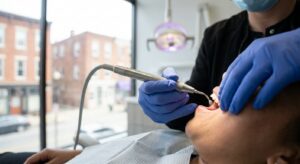
- An exam of your mouth and the specific tooth
- X-rays to see the roots, bone, and surrounding structures
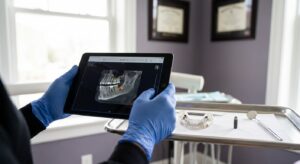
Baltimore Emergency Dental uses 3-D X-rays, which give a detailed view of the tooth, its roots, and nearby structures. That kind of imaging supports precise diagnosis, which matters when deciding whether a tooth can be saved or should come out.
From there, the dentist explains your options. Some teeth can be saved with a filling or root canal. In other cases, extraction is clearly the safest choice, especially when pain or infection is severe. If a root canal or crown is not covered by your plan or would leave a large bill, you may decide extraction is the right step to remove the infection and get relief. Baltimore Emergency Dental offers both emergency root canal treatment and emergency tooth extractions, so you can discuss both paths in one visit.
5. Complete the extraction and follow up
If the tooth is straightforward and you are medically stable, the extraction can often be done the same day. More complex cases may need a referral.
After the tooth is removed, you should receive instructions about:
- Pain control
- Eating and drinking safely
- Keeping the area clean
- Warning signs that mean you should call the office or seek urgent care
If the tooth was infected, you may also receive antibiotics. A follow-up visit helps confirm you are healing well and gives you a chance to talk about replacing the tooth.
Can you get dental implants with Medicaid?
Once a painful tooth is out, many patients ask about replacing it. Dental implants are a strong long-term option, and Baltimore Emergency Dental does offer dental implants.
Medicaid programs generally focus on medically necessary care. They more often cover treatment for pain and infection, such as extractions, and are less likely to pay for procedures they consider elective, which often includes standard implants for adults. Specific medical situations may be reviewed individually, so it is worth asking your plan directly.
If your plan does not cover implants, ask your dentist about other approaches, such as covered alternatives or staging treatment over time to spread out costs. The immediate priority is always to stop pain and infection. Replacement can be planned once your mouth is healthy.
How to verify your Medicaid dental benefits
Before you commit to significant treatment, especially oral surgery or implants, confirm exactly what your plan covers.
Call the number on your Medicaid card. Ask for a summary of covered dental services, any annual limits, and prior authorization requirements for extractions, oral surgery, or implants.
Talk to your dental office. A practice familiar with Medicaid can check your eligibility, submit prior authorizations when needed, and explain what is covered versus optional.
If a service is not covered or only partly covered, ask:
- “Is there a covered alternative that will still keep me healthy?”
- “Can we stage my treatment so I can manage any out-of-pocket costs?”
Clear information lets you make decisions that protect both your health and your budget.
Planning next steps after extraction
Once the tooth is out and you feel better, think about the long term. You still want to chew comfortably and keep nearby teeth from shifting.
Common options include:
- Waiting for now, if the missing tooth is in the back and not affecting function
- A removable partial denture
- A bridge supported by nearby teeth
- An implant, if your medical situation and coverage allow
Staying connected with a dentist who accepts Medicaid also gives you access to regular checkups and teeth cleaning, early treatment of new problems, and advice on affordable ways to replace missing teeth over time. Baltimore Emergency Dental offers teeth cleaning in addition to emergency care, so follow-up and preventive visits can happen in the same place.
Getting Medicaid-covered extraction care in Baltimore
If you are in Baltimore, in pain, and looking for a free tooth extraction with Medicaid, the path is more straightforward than it may feel right now:
- Gather your Medicaid information and a short description of your symptoms.
- Contact a dentist or dental clinic that takes Medicaid and ask for the soonest available appointment.
- Confirm that the visit and extraction are covered and ask about any copay before treatment begins.
- Complete the extraction, then schedule follow-up care to protect your long-term oral health.
Baltimore Emergency Dental focuses on fast, accessible, and affordable emergency care for everyone in the Baltimore community, including underserved patients. With Medicaid coverage and the right provider, you can get the extraction you need and start planning for a healthier, more comfortable future.