You lost a tooth in an accident, or it was pulled in an emergency after a severe toothache or abscess, and now you are researching implants. The websites all call implants the gold standard, the best option, almost perfect. What they rarely explain is what can go wrong. Before you sign a treatment plan or a financing agreement, you deserve a straight answer to one question: what is the downside of having dental implants? At Baltimore Emergency Dental, we see Baltimore patients every day for same-day emergency care, and we believe you should see the full picture before you say yes, including the parts that rarely make it into the brochure.
Here is the short version. These are the main downsides and risks:
- The implant may not fuse with your bone, which means it has to come out and you may need another procedure.
- Infection around the implant can slowly destroy the bone that holds it.
- Nerve injury in the lower jaw can leave your lip, chin, gums, or tongue numb or tingling, sometimes for good.
- Sinus problems in the upper jaw can happen when an implant pokes into the sinus above it.
- Recovery takes months, not days, because the bone has to grow around the implant.
- The cost is high, and most insurance plans pay little or nothing toward it.
Mayo Clinic’s overview of dental implant surgery lists infection at the implant site, injury to nearby teeth or blood vessels, nerve damage, and sinus problems as known risks. None of this means implants are a bad choice. It means you should go in with open eyes, ask the right questions, and choose a team that plans carefully. Let’s walk through each risk, starting with the one that worries people most.
What Is the Downside of Having Dental Implants if Yours Does Not Take?
The biggest downside is that an implant can fail to bond with your jawbone, and when that happens it has to come out. Failure is not common, but it does happen, and it usually costs you time, money, and another procedure.
An implant is a small post, usually made of titanium, that acts as an artificial tooth root. It only works if your jawbone grows tightly around it. Mayo Clinic notes that implant surgery is usually successful, but sometimes the bone does not fuse well enough to the implant. When that bond never forms, the post stays loose instead of locking in place. Most early failures show up in the first few months, often before the final crown goes on. Some implants fail later, years after they seemed fine, usually because of infection or too much biting force.
Here is what that can feel like. Weeks after surgery, the area still aches when it should be settling down. The implant or its healing cap seems to move slightly when you press it with your tongue. Your gum stays red or sore. At your follow-up, an X-ray shows a dark gap where bone should be.
When an implant fails, the dentist removes it. The site then needs to heal, often for several months, and you may need a bone graft before a second try. Some people get a second implant that does well, while others decide a bridge or a denture makes more sense. Either way, you face more appointments, more time with a gap in your smile, and a second bill. That is why the planning before surgery matters as much as the surgery itself, and why saving a natural tooth, when it can be saved, is often worth trying first. A broken or fractured tooth, a lost filling or crown, or an infected tooth treated with an emergency root canal can sometimes stay in your mouth instead of becoming an implant site.
Can an Infection Around an Implant Really Cost You the Tooth?
Yes. An infection around an implant, called peri-implantitis when it reaches the bone, can slowly destroy the bone that holds the implant in place. If it is not caught and treated early, the implant can loosen and fail.
It works a lot like gum disease around a natural tooth. Bacteria build up on the implant surface and along the gumline. Your body fights the infection, and that ongoing inflammation breaks down the bone around the post. An implant cannot get a cavity, but the bone and gum that support it can absolutely get infected. Skipping brushing and flossing, smoking, uncontrolled diabetes, and a history of gum disease all raise the risk.
The warning signs are easy to brush off at first. Your gum may bleed when you brush near the implant. You might notice swelling, a bad taste, or pus around the crown. The gum can start to pull back so more of the implant shows. In later stages the implant itself may feel loose, which usually means real bone has already been lost.
Do not wait on these symptoms. Bleeding or swollen gums and dental abscess and infection are exactly the problems Baltimore Emergency Dental treats with same-day emergency care and no waiting, so you do not have to sit at home for a week hoping it calms down. Early infections can often be managed with a deep cleaning of the area and, when your dentist decides it is needed, medication. Advanced cases may need surgery or removal of the implant, which the dentist who placed it should handle. The sooner you are seen, the more options you usually have.
Can a Lower Implant Leave Your Lip or Chin Numb for Good?
It can, though it is uncommon. If an implant in the lower jaw is placed too close to the main nerve that runs through it, you can end up with numbness, tingling, or pain in your lip, chin, gums, or tongue. In some cases the feeling does not fully come back.
That nerve is called the inferior alveolar nerve. It runs inside a canal in your lower jawbone, under the back teeth, and gives feeling to your lower lip and chin. Mayo Clinic lists nerve damage among the risks of implant surgery and describes it as pain, numbness, or tingling in your natural teeth, gums, lips, or chin. A related nerve that runs along the inside of the jaw supplies feeling to part of the tongue.
When the nerve is only bruised or irritated, the odd feeling often fades over weeks or months. When it is cut or crushed, the change can be permanent. People with lasting nerve injury describe a lip that feels “asleep” all the time, drooling they do not notice, biting their lip or cheek by accident, or a burning, tingling ache that never quite stops. That is a hard thing to live with after a tooth replacement you chose.
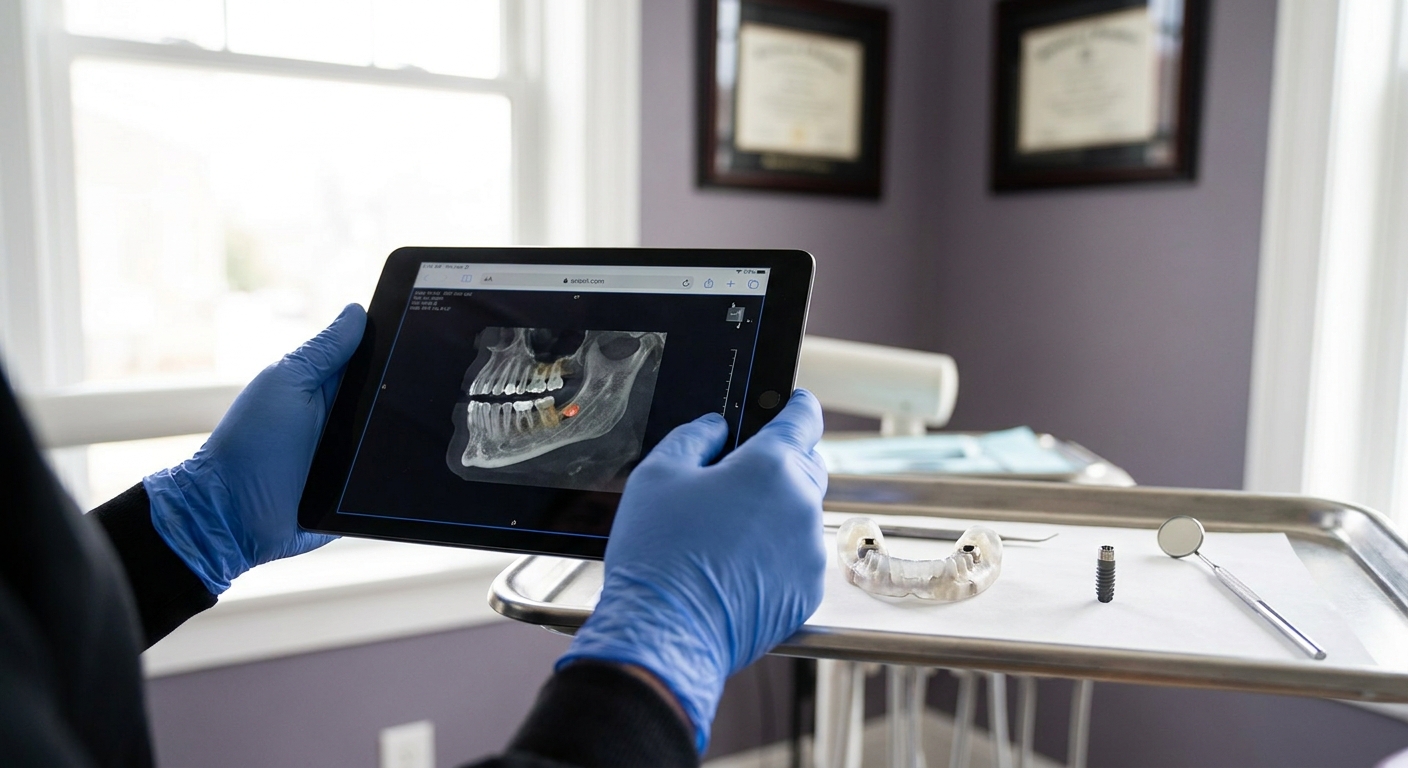
The best protection is precise planning before anyone picks up a drill. A standard dental X-ray is flat. It shows height but not depth, so it can be hard to judge exactly where the nerve sits. A 3-D scan, often called a cone beam CT, shows the jaw from every angle so the dentist can measure the distance from the planned implant to the nerve. Wherever you go, ask one direct question before lower jaw implant surgery: “Will you take a 3-D scan to find my nerve before you place this?” A confident yes is a good sign.
An Upper Back Tooth Implant Can Cause Sinus Trouble Weeks Later
Implants in the upper back jaw can poke into the sinus above them if there is not enough bone. That can lead to sinus pressure, congestion, and infection, and sometimes the implant fails.
Your upper molars sit just under your maxillary sinuses, the air spaces behind your cheeks. In some people, only a thin layer of bone separates the tooth roots from the sinus floor. After a tooth is pulled, that bone often shrinks, and the sinus can drop lower into the space. Mayo Clinic notes that sinus problems can happen when implants placed in the upper jaw protrude into one of the sinus cavities.
The symptoms can show up days or weeks after surgery, and they are easy to mistake for a cold. You may feel pressure or pain on one side of your face, a stuffy nose on that side, drainage, or a bad taste. A sinus infection can follow. If the implant does not have enough bone to hold onto, it may never become stable.
When the bone is too thin, the fix usually happens before the implant goes in. In a sinus lift, the dentist gently raises the sinus lining and places bone graft material underneath to add height. It works well for many people, but it is another surgery, it adds months of healing before the implant can be placed, and it adds cost. A 3-D scan before treatment shows exactly how much bone you have under the sinus, so you know up front whether a sinus lift belongs in your plan. Finding that out after the implant is in is the situation you want to avoid.
What Is the Step-by-Step Dental Implant Procedure?
Knowing what happens in the chair can take some of the fear out of it. It also shows you where each risk above can come into play. On the day the implant post is placed, the procedure usually goes like this:
- Numbing. The dentist numbs the area with local anesthetic so you feel pressure but not sharp pain. Some offices also offer sedation for anxious patients.
- Opening the gum. A small cut in the gum exposes the jawbone underneath. In some cases the post can go in through a tiny opening instead.
- Preparing the bone. The dentist drills a narrow channel into the bone, following the plan made from your X-rays or 3-D scan. This is the step where nerve and sinus distances matter most.
- Placing the post. The titanium post is screwed or tapped into the channel until it sits firmly.
- Covering the site. A cover screw or healing cap goes on top of the post to protect it while you heal.
- Closing the gum. Stitches close the gum around or over the implant, and you get instructions for home care.
- Follow-up visits. You return for checks over the next weeks and months. Once the bone has fused, the abutment (a small connector) and the final crown are attached.
The surgery itself often takes one to two hours for a single implant. The long part is what comes after, which is where the next downside shows up.
How Long Will You Be Healing, and How Many Days Should You Rest?
Most people rest for one to two days after implant surgery and get back to work or normal routines soon after. The full healing process is much longer: the bone usually needs about three to six months to fuse with the implant before the final crown goes on.
That longer stretch is called osseointegration, the process of bone growing directly onto the implant surface, as described in the NIH StatPearls review of dental implants. It cannot be rushed. Even when a dentist places an implant on the same day a tooth comes out, the bone still needs months to lock in.
If your tooth was just knocked out or pulled in an emergency, the full process from start to finish often looks like this:
- Exam and imaging (day one). Your dentist checks the area, takes X-rays or a 3-D scan, and decides whether an implant is a good fit. For a knocked-out tooth, getting seen fast also matters because there may still be a chance to save it.
- Extraction, if needed. A damaged tooth is removed. Sometimes the implant can go in the same day, but often the site heals first for about two to three months.
- Bone graft or sinus lift, if needed. If you do not have enough bone, grafting comes next and usually adds three to six months of healing.
- Implant placement. The post goes into the jawbone in a single visit.
- Bone fusion (about three to six months). The bone grows around the post while you protect the area.
- Abutment placement. A connector is attached to the post, and the gum heals around it for a few weeks.
- Final crown. Your custom crown is attached, and you can chew normally on that side.
Put together, the whole process commonly takes four months to a year or more, depending on whether you need an extraction healing period, grafting, or a sinus lift.
The first week asks the most of you. Expect some swelling, bruising, and soreness. You will likely eat soft foods and chew on the other side while the site heals. You should not smoke. You need to keep the area clean exactly as instructed and show up for follow-up visits. Over the next few months, you protect the implant by avoiding hard or sticky foods on that side and keeping up with brushing and cleaning.
Some health conditions and habits make this harder. Smoking cuts blood flow to your gums and bone, which slows healing and raises the chance of failure. Uncontrolled diabetes does something similar and also makes infections more likely. The FDA’s patient guidance on dental implants encourages you to talk with your dental provider about your medical history and habits before getting implants, because they can affect how well the implant does.
Any honest implant consultation should ask about your health conditions, medications, smoking, and whether you can commit to months of aftercare. If the answers point to a high risk of failure, a good dentist will tell you so and talk through alternatives such as bridges or dentures. Hearing “not yet” or “not for you” can be frustrating, but it is far better than paying for an implant that is likely to fail.
Can You Afford an Implant if Insurance and Medicaid Will Not Pay?
A single implant with its abutment and crown is commonly quoted at roughly $3,000 to $6,000 per tooth, and it can run higher if you need a bone graft or sinus lift. Many insurance plans pay little or nothing toward implants, and Maryland Medicaid generally does not cover them for adults.
For many people, this is the most painful answer to the question of what is the downside of having dental implants. Many private dental plans label implants as cosmetic or limit them heavily. Even plans that help can hit their yearly maximum fast, leaving you to cover the rest. Under Maryland Medicaid, implants are generally not part of the adult dental benefit, though rules can change, so always confirm your own coverage before you plan around it.
Baltimore Emergency Dental accepts Delta Dental, BCBS, Cigna, Aetna, and Baltimore Medicaid, with a focus on affordable care for underserved communities. Keep in mind that an office accepting your plan is not the same as your plan paying for an implant, so ask for your benefits to be checked before treatment. Even when an implant itself is not covered, urgent care such as an emergency tooth extraction, abscess treatment, an emergency root canal, or toothache relief may be handled differently under your plan, which can make the first and most urgent step more affordable.
There is also a hidden cost to think about. If you finance an implant and it fails, you may still owe on the first one while paying for removal, healing, a graft, and a second attempt or a different replacement. Before you agree to anything, ask for a written estimate that lists the implant, abutment, crown, imaging, and any grafting separately. Then ask what happens, and what it costs, if the implant does not take. A clear answer to those questions tells you a lot about the office you are trusting.
Quick Answers to the Questions You Are Probably Asking
If you are still weighing what is the downside of having dental implants, these short answers cover the risk questions people ask most often. Each one ties back to the details above.
What is the most common complication with dental implants?
Infection around the implant is one of the most common problems. When it spreads into the bone, called peri-implantitis, it can cause bone loss and loosen the implant if it is not treated early. Bleeding, swelling, or a bad taste around an implant deserves a prompt, same-day visit.
Can dental implants damage nerves?
Yes. Lower jaw implants placed too close to the inferior alveolar nerve can cause numbness, tingling, or pain in the lip, chin, gums, or tongue. It is often temporary but can be permanent. A 3-D scan before surgery helps the dentist see and avoid the nerve.
How long does it take to recover from a dental implant?
Most people rest one to two days after surgery. The bone typically needs about three to six months to fuse with the implant, plus time for the abutment and crown. Grafting or a sinus lift adds more months.
Does Maryland Medicaid cover dental implants?
Generally, no. Maryland Medicaid’s adult dental benefit typically does not include implants, and many private plans exclude or limit them too. That leaves many patients paying out of pocket or financing. Confirm your own benefits before treatment.
Who should not get dental implants?
People with uncontrolled diabetes, active smokers, people without enough jawbone (unless a graft is done first), and anyone who cannot commit to months of aftercare may not be good candidates. Certain medications and past radiation to the jaw can also raise the risk, so share your full health history.
What happens if a dental implant fails?
The implant is removed and the site heals, often for several months. A second implant may be possible, sometimes after a bone graft, at added cost. Some patients choose a bridge or denture instead.
Get a Straight Answer About Your Tooth Before You Commit
The safest way to lower these risks is a careful exam, 3-D imaging, and an honest conversation about whether an implant fits your health, your timeline, and your budget.
If you just had a tooth knocked out, broke or fractured a tooth, lost a filling or crown, or you have an implant that hurts, bleeds, or feels swollen, you do not have to wait days for answers. Baltimore Emergency Dental offers same-day emergency care, immediate pain relief, and affordable care, with no waiting. The team can treat a severe toothache, abscess, or infection right away, try to save a damaged tooth when possible, explain what is going on in plain language, and help you understand your options before you decide on a replacement.
Call Baltimore Emergency Dental to get seen the same day, get out of pain, and get a clear picture of your next step. When you talk about replacing the tooth, wherever you have it done, bring one question with you and do not leave until you have an answer: “Based on my scan, what is the specific risk for this implant, and what is the plan if it does not take?” The dentist who answers that clearly and honestly is the one you want doing your surgery.
This article is for general education only and does not replace an in-person dental exam. Treatment needs, risks, timelines, and costs vary from person to person.