
Your tongue keeps finding the gap. Maybe the tooth cracked on a bite of crab cake, a dental abscess left it beyond saving, or it had been loose for months and finally gave out. Now you chew on one side, cut your food into small pieces, and someone has mentioned an implant. The next thought is the honest one: is it worth getting dental implants at 70 years old, or does a denture make more sense at this stage of life?
For many people in their 70s and beyond, an implant may be worth considering when your general health is stable, your jaw has enough bone to hold a post, and you want a fixed tooth that may work for the next 10 or 20 years, though outcomes vary. Age alone rarely settles the question, because your health, your bone, your budget, and your goals matter far more. This guide walks through each one so you can size up your own situation before you call Baltimore Emergency Dental for same-day emergency care.
Are You Too Old for Dental Implants? Age Is Rarely What Stops Them
No, you are not. Dental implants have no upper age limit, and healthy adults in their 70s and 80s may be candidates, though individual factors determine whether an implant can work for you. What matters is how well your body heals and whether your jaw can support the post.
A dental implant is a small titanium post placed in the jawbone. It acts like a tooth root and holds a crown on top. The ADA’s consumer site, MouthHealthy, describes implants as one of the main ways to replace missing teeth, along with bridges and dentures. In a healthy person, bone may bond to that titanium post at 75 much as it can at 45, because getting older does not switch that process off, though individual healing varies.
Age does raise the odds of having conditions that slow healing, such as diabetes, heart disease, or bone loss, and of taking medicines that affect your mouth. That is why a good evaluation looks at your health and your bone, not the year you were born. Harvard Health Publishing’s guide for people who have lost a tooth covers what the process involves and what to weigh before you decide, and most of those points apply to people of every age.
Here is how that plays out. Picture two people, both 72. One walks two miles a day, has well-controlled blood pressure, and does not smoke. The other has diabetes that is not well managed and smokes half a pack a day. Their ages match, but their implant outlook does not. The first person may be a stronger candidate, while the second may need to get blood sugar under control and cut back on smoking before an implant makes sense. So instead of asking whether you are too old, ask whether you are healthy enough right now. That question has a real answer, and your dentist can help you find it.
What Actually Decides Whether an Implant Will Work for You After 70?
Your health history, your medications, your bone, and whether you smoke matter far more than your age. The main barriers include uncontrolled diabetes, active cancer treatment, certain bone medicines such as bisphosphonates, and smoking.
Here is why each one matters:
Uncontrolled diabetes may slow healing and raise the risk of infection around the post, though individual responses vary. Diabetes that is well managed usually does not rule you out.
Active cancer treatment, especially radiation to the head and neck, can damage the blood supply to the jawbone. Most dentists wait until treatment ends and coordinate with your cancer team.
Bisphosphonates and similar bone-strengthening drugs, often prescribed for osteoporosis, can make the jawbone slow to heal after surgery in some people. Your dentist needs to know how long you have taken them and in what form.
Smoking cuts blood flow to the gums and bone, and healing depends on that blood flow.
Many medicines that older adults take also cause dry mouth. The National Institute of Dental and Craniofacial Research explains that dry mouth is a common side effect of many prescriptions. A dry mouth makes it harder to keep the gums around an implant clean and healthy. It does not rule you out, but it changes how you care for the implant. If you already notice bleeding or swollen gums, get that looked at first, because healthy gums are the foundation an implant depends on.
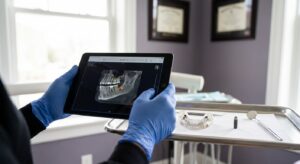
Bone is the other half of the picture. Baltimore Emergency Dental uses 3-D X-rays to look at your jaw in full detail. These images show the height and width of the bone where the tooth used to be, along with where nearby nerves and sinuses sit, which a flat X-ray cannot fully show. If the bone is thin, a bone graft may build it up first. That adds time and cost, but it may make an implant possible when it otherwise would not be.
Bring your full medication list to your visit, including vitamins and anything you take only now and then. If you take a blood thinner, tell the dentist, and never stop a prescribed medicine on your own. Your dentist can work with your doctor on a safe plan.
Why Keeping Your Jaw Bone Matters More Every Year a Tooth Is Missing
Once you know what makes you a candidate, the next question is what you may gain. An implant is the only common tooth replacement that sits inside your jaw and keeps that bone working, which may help slow the shrinking that begins after a tooth is lost, though bone loss varies by individual.
Your jawbone stays strong because your tooth roots press on it every time you chew. When a tooth comes out, that spot loses its signal, and the body starts to reabsorb bone it no longer seems to need. Much of that shrinking happens in the first months after the tooth is gone. A denture rests on top of the gums, so it does not send that signal into the bone. A bridge fills the gap by attaching to the teeth on either side, but the bone under the false tooth still sits idle.
When an implant replaces a tooth lost to a broken or fractured tooth, a knocked-out tooth, or an emergency extraction, the titanium post stimulates the bone the way a natural root does. Chewing pressure travels down the post into the jaw and signals the body to keep bone in that spot instead of reabsorbing it.
After 70, that matters for reasons you can feel. Bone loss can make the lower face look sunken and add years to your appearance. Teeth next to the gap can drift or tip into the space, which can loosen them over time. Dentures that fit well today may loosen as the bone beneath them shrinks, so they may need relining or remaking. Chewing matters too. If firm foods like apples, raw vegetables, or a good steak become hard to eat, many people switch to softer, less nutritious foods without noticing. A stable implant tooth may help you keep eating the way you want to, for as long as you want to, though individual experiences vary. That is a big part of why, for some healthy adults, the answer to “Is it worth getting dental implants at 70 years old?” turns out to be yes.
How Long Does the Implant Process Take When You Are Over 70?
From the day you lose a tooth to the day you get your final crown, the process usually takes about 4 to 9 months, though individual healing can shorten or lengthen that window. About 3 to 6 months of that is typically spent letting the bone bond to the post, and a bone graft can add more time.
For healthy older adults, that bonding stage, called osseointegration, generally follows a similar window to what younger adults go through, though conditions that slow healing can stretch it. Here is the usual step-by-step order when the process starts with an emergency:
- Same-day emergency care. Baltimore Emergency Dental sees you with no waiting, gives immediate pain relief for a severe toothache, and treats any dental abscess and infection. If you are worried the tooth will just be pulled when it could be saved, say so. Options like an emergency root canal or broken tooth repair come first when they make sense, and the tooth is removed only if it cannot be saved, through an emergency tooth extraction.
- Healing the site. If infection was present, the socket usually needs several weeks to a few months to heal before an implant goes in.
- Planning with 3-D X-rays. The dentist measures your bone, reviews your health history and medications, and decides whether you may need a bone graft.
- Placing the implant. The titanium post goes into the jaw under local anesthesia.
- Bone bonding. Over 3 to 6 months in many cases, the bone fuses to the post, though individual healing varies. Follow-up visits, often with X-rays, confirm that it is taking hold.
- Placing the abutment. A small connector goes onto the post to hold the crown.
- Attaching the crown. Your custom tooth is fitted and attached.
How many days should you rest after implant surgery? Many people rest for one to two days and return to light daily activity within a few days, though recovery varies. Plan to avoid heavy exercise and hard or chewy foods on that side for about a week. If you have health conditions or take blood thinners, give yourself a little extra time, and follow the specific instructions you get after surgery.
In some cases, an implant can go in on the same day a tooth comes out. This usually works only when there is no active infection and the bone is solid. If an abscess cost you the tooth, healing first is the safer path. Even when a post goes in right away, the bone still needs months to bond to it.
What Does a Dental Implant Cost in Baltimore, and Does the Math Favor You After 70?
In Baltimore, a single dental implant with its abutment and crown typically costs about $3,000 to $5,000. Bone grafting, extractions, and extra imaging can add to that total, and you get your exact quote after an exam and 3-D X-rays.
That figure can feel like a lot on a retirement budget, so look at what you may get per year of use. The per-year cost depends on how long the implant lasts, which varies widely by individual. Purely as a math example, and not a typical lifespan, a $4,000 implant spread over 18 years would work out to about $222 a year, or under $19 a month, though how long an implant lasts varies by individual. The titanium post is meant to be long-term and may last for decades with good care in some patients. The crown on top takes the daily wear and may need replacing at some point. Dentures cost less up front, but they usually need relining, adhesive, and replacement every several years as your gums and bone change.
The math is not the whole story, though. Before you decide, weigh the honest downsides and risks:
- Most insurance and Medicare pay little or nothing toward the implant itself.
- The process takes months and more than one visit.
- It involves minor surgery, with some swelling and soreness afterward.
- You may need a bone graft first, which adds cost and time.
- In some people, the post does not bond to the bone and has to be redone.
- The gums around an implant can get inflamed if you do not keep them clean every day.
If you are healthy and plan to keep enjoying your food for years, those trade-offs may come out in favor of the implant for you. If health problems make surgery risky, or your budget truly cannot stretch, a denture or bridge is a reasonable choice. Results vary from person to person, and a good dentist will lay out both paths without pressuring you.
How Do You Pay for an Implant on a Fixed Income When Medicare Will Not?
Cost is often the biggest worry, so it helps to know where coverage stands before you walk in. Original Medicare does not cover dental implants, and Medicaid generally does not either, so most people over 70 pay for the implant itself with savings, private dental insurance benefits, or financing.
Original Medicare, meaning Parts A and B, does not pay for most routine dental care, and that includes implants. Some Medicare Advantage plans add dental benefits, but these often come with yearly limits that cover only a small part of an implant. Call your plan and ask exactly what it pays toward implants, crowns, and bone grafts. Private dental insurance works much the same way: some plans pay part of the crown or the surgery up to an annual maximum, while others exclude implants entirely.
Medicaid plays a different but important role. Its adult dental benefit generally covers medically necessary care, such as removing an infected or broken tooth, even though the implant that may come next is usually not covered. In other words, the emergency visit that often starts the implant conversation may be covered, while the implant itself usually is not. You can read more about how Medicaid coverage for dental implants works for Baltimore patients before your visit.
Baltimore Emergency Dental accepts Baltimore Medicaid, Delta Dental, BCBS, Cigna, and Aetna. The practice was built around affordable care for underserved communities across Baltimore, so cost comes up openly, not as an afterthought. At your visit, ask what financing or payment options are available. Some patients also use third-party medical credit lines that spread the cost over months. If you go that route, read the terms closely, because some promotional plans charge back interest if the balance is not paid off in time.
Is It Worth Getting Dental Implants at 70 Years Old? Straight Answers Before You Call
For many healthy adults over 70, it may be worth considering. Here are short answers to the other questions people weigh most.
Can a 70-year-old get dental implants safely?
Yes, if your overall health is stable and your bone is strong enough, though individual factors affect outcomes. Age alone does not make implants unsafe. Conditions like diabetes and heart disease matter more, and they usually do not rule you out when they are well controlled.
How long do dental implants last in older adults?
The implant post may last for decades with daily brushing, flossing, and regular checkups, though individual outcomes vary. Some patients who get one after 70 report long-term use in that spot, though implant longevity varies widely based on individual health, maintenance, and other factors. The crown may need replacing at some point because it takes the daily chewing wear.
Does Medicare or Medicaid cover dental implants for seniors in Baltimore?
Original Medicare does not, and some Medicare Advantage plans offer only limited dental benefits. Baltimore Medicaid generally covers medically necessary extractions but usually not the implant itself.
What health conditions prevent dental implants after 70?
The main barriers include uncontrolled diabetes, active cancer treatment, certain bone medicines such as bisphosphonates, and smoking. Controlled chronic conditions usually do not disqualify you, though individual assessment is needed.
How much does a dental implant cost in Baltimore for a senior?
A single implant with its abutment and crown typically costs about $3,000 to $5,000 in Baltimore, and the price is the same whatever your age. Your exact quote depends on whether you need a bone graft or other work first.
Is it better to get an implant or a denture at 70?
An implant may protect the jawbone and work much like a natural tooth, though outcomes vary. A denture rests on the gums and may need adhesive and regular adjustments. The right choice depends on your health, your bone, your budget, and how long you expect to use it.
If you lost a tooth to a severe toothache, a dental abscess, a broken or knocked-out tooth, or a lost filling or crown that let decay take over, and you want to know whether an implant makes sense at your age, call Baltimore Emergency Dental. You get same-day emergency care with no waiting, immediate pain relief when you need it, a 3-D X-ray evaluation, and a clear breakdown of your cost and payment options, whether you carry Baltimore Medicaid, Delta Dental, BCBS, Cigna, or Aetna. Before you come in, write down every medication you take and bring your insurance card. Those two things let the dentist give you a real answer on implants at your first visit, not just a guess.
Ready to Explore Whether Dental Implants Are Right for You?
Age shouldn’t determine your options for a confident smile and comfortable bite. If you’ve been wondering whether dental implants make sense at this stage of life, a conversation with our team can give you the personalized answers you need. Baltimore Emergency Dental offers same-day appointments to evaluate your situation and discuss realistic solutions that fit your health, timeline, and goals.
Call Baltimore Emergency Dental
Individual outcomes vary, and your dentist will recommend the option that may fit your health and your mouth. This article is general information and is not a diagnosis or treatment plan.