
Understanding your Medicaid tooth extraction rights in Baltimore
If you are in pain and searching “does Medicaid cover tooth extraction,” you are not alone. Severe toothaches, infections, and broken teeth are some of the most common reasons adults with Maryland Medicaid look for an emergency dentist that takes medicaid.
Your coverage is not always easy to understand, especially when you need help quickly. This guide explains your basic rights, what Medicaid typically covers, and how to use your benefits for extractions and related services in Baltimore.
This article is informational and draws on federal Medicaid dental rules and examples from Virginia’s Cardinal Care Smiles program and national guidance. Actual Maryland Medicaid rules can differ. You always need to confirm your specific benefits directly with your plan or dental provider.
How Medicaid dental coverage works in general
Medicaid is a partnership between federal and state governments. The federal government sets minimum rules, and each state decides how generous its adult dental coverage will be. That is why you might read about extensive Medicaid dental benefits in one state and far fewer services in another.
For children and teens under 21, the rules are clear. Medicaid must provide dental care under the Early and Periodic Screening, Diagnostic and Treatment (EPSDT) benefit. That includes prevention, treatment, and restorative services, and it must cover medically necessary procedures such as tooth extractions when a dentist determines they are needed [1].
For adults, there is no federal minimum requirement for dental care. Each state can choose whether to cover services like exams, cleanings, fillings, and extractions, and at what level [1]. Some states only cover emergencies, others cover both emergency and routine services, and some have comprehensive adult benefits.
Because coverage is state specific, the only way to be certain what your plan will pay for is to contact your Medicaid dental plan or a medicaid dentist accepting new patients and have them verify your benefits before treatment whenever possible.
What “medically necessary” tooth extraction means
When you ask “does Medicaid cover tooth extraction,” the key phrase you will hear is “medically necessary.” Both federal guidance and state programs use this standard for children and often for adults too.
A tooth extraction is usually considered medically necessary when a licensed dentist determines that removing the tooth is required to:
- Treat an active infection that threatens your health
- Relieve significant pain that affects eating, sleeping, or daily life
- Address a fracture, large cavity, or failed root canal that cannot be restored
- Prepare your mouth for another covered medical or dental procedure
For example, Medicaid explains that services for children must be provided whenever needed to “prevent disease and promote oral health, restore oral structures to health and function, and treat emergency conditions,” and this specifically includes tooth extraction when necessary [1].
States that cover adult extractions usually follow similar logic. A bulletin from Virginia Medicaid lists oral surgery for adults 21 and older as a covered service, including “tooth extractions, alveoplasty, and extractions requiring surgical methods like bone removal” as long as they fall within the dental benefit and do not involve excluded procedures such as implants [2].
In practical terms, if you have an infected, broken, or non‑restorable tooth, your chances of Medicaid covering an extraction are usually much higher than if you simply want a healthy tooth removed for cosmetic reasons.
Common types of tooth extractions Medicaid may cover
Your exact coverage depends on Maryland’s rules and your managed care plan, but across states there is a common pattern in the types of extractions that Medicaid tends to cover. Understanding these categories can help you ask better questions when you talk with a dentist or plan representative.
Simple versus surgical extractions
Dentists divide extractions into two broad types:
- Simple extraction. The tooth is visible above the gum line, and your dentist can remove it with elevators and forceps under local anesthesia.
- Surgical extraction. The tooth is partially or fully under the gum or bone, or it has broken at the gum line. The dentist or oral surgeon may need to make a small incision in the gum, remove bone, or section the tooth into pieces.
Many Medicaid programs treat both simple and surgical extractions as medically necessary oral surgery when your tooth is infected, badly broken, or causing other serious problems. In Virginia, for example, covered adult services “include tooth extractions and alveoplasty,” and coverage extends to extractions that require bone removal, while implants remain excluded [2].
If your tooth is impacted, especially in the case of wisdom tooth removal medicaid, you are more likely to be referred to an oral surgeon that takes medicaid for a surgical extraction.
Emergency and urgent extractions
Many adults only discover their benefits when they suddenly need a medicaid emergency tooth removal. States that offer limited adult dental coverage often focus first on emergencies, for example:
- Severe, unrelenting tooth pain
- Swelling of the face or jaw
- Dental abscesses
- Trauma from an accident or injury
Federal guidance stresses that dental services for children must be provided at intervals that meet “reasonable standards of dental practice” and that emergency care such as necessary tooth extraction must be accessible through a referral to a dentist [1]. States that extend adult benefits often adopt a similar approach, prioritizing infection control and pain relief.
If you are in this situation in Baltimore, you may need a provider that can handle same‑day or next‑day care, such as a walk in dentist that takes medicaid or an urgent dental care that takes medicaid provider.
Wisdom teeth and complex extractions
Impacted wisdom teeth and complex extractions are often considered oral surgery. Some Medicaid programs, like Virginia’s Cardinal Care Smiles for adults, clearly list oral surgery as a covered category and include extractions and related procedures [2].
Although Maryland’s details differ, your plan is more likely to authorize wisdom tooth removal when there is documented infection, cyst formation, damage to neighboring teeth, or repeated episodes of pain.
What Medicaid typically does not cover for extractions
Even when a state offers extractions, there are common limits that you should be aware of. In Virginia, for example, adult dental coverage focuses on prevention, restoration, and oral surgery, while explicitly excluding some services such as prosthodontic bridges and implants [2]. That pattern is similar in many other states.
Typical exclusions or limits can include:
- Cosmetic extractions, where the tooth is healthy but you want it removed for appearance or orthodontic reasons
- Extractions done solely for non‑covered services, such as preparing for certain cosmetic prosthetics or implants that your plan will not pay for
- Repeat extractions in a short period of time in the same area if they are not clearly medically necessary
If you hope to replace a tooth after extraction, your benefits may be much more limited, especially for higher end options such as implants. It is important to ask about follow‑up coverage before you agree to a treatment plan.
Your rights as an adult with Medicaid
Regardless of where you live, federal Medicaid law gives you certain basic protections. States then add their own rules and benefits. Knowing the general structure can help you advocate for yourself when you are in pain or facing a difficult dental decision.
Rights for children and teens under 21
If you are responsible for a child on Medicaid in Baltimore, their dental rights are stronger than yours as an adult. Under the EPSDT benefit, Medicaid and separate CHIP programs must provide dental services to:
- Prevent disease and promote oral health
- Restore oral structures to health and function
- Treat emergency conditions, including tooth infections and abscesses
Any service that is medically necessary for a child must be covered, even if it is not listed in the state’s standard plan [1]. That includes tooth extractions, root canals, and other procedures if a dentist documents the need.
Separate CHIP plans must also offer dental packages that prevent, treat, and restore oral health and that meet or exceed federal benchmark plans [1].
Rights and limitations for adults
For adults, your rights center on:
- Fair access to the benefits your own state actually offers
- A clear explanation of what is covered and what is not
- Access to a sufficient network of dentists and specialists
- The right to appeal coverage denials within the Medicaid system
States like Virginia have expanded adult dental programs that explicitly cover exams, cleanings, fillings, crowns after root canal, and oral surgery such as tooth extraction and alveoplasty, while excluding some high‑cost options like bridges and implants [2].
Maryland structures its coverage differently, but the basic pattern is similar. You have the right to use whatever dental benefits your plan provides, and you can ask your plan to explain in writing why a claim is paid or denied.
If your plan denies a medically necessary extraction, you can request that your dentist submit more documentation or file an appeal. The appeals process and timelines should be explained in your plan materials.
How emergency extraction visits usually work
When you are in severe pain, your top priority is getting help fast. Understanding the usual steps of an emergency visit can make things feel more manageable and help you use your Medicaid coverage effectively.
Step 1: Finding a Medicaid accepting provider
Start by locating an emergency dentist that takes medicaid, a walk in dentist that takes medicaid, or an urgent dental care that takes medicaid provider in Baltimore. Many offices list Medicaid acceptance on their websites, but you should still call to confirm:
- That they currently accept your specific Medicaid managed care plan
- Whether same‑day or same day tooth extraction medicaid appointments are available
- Whether an on‑site oral surgeon that takes medicaid is available for complex extractions
You can also call your plan and ask for a list of nearby providers.
Step 2: Verification of benefits
Once you schedule an appointment, the office will usually verify your benefits using your Medicaid ID number. They will check:
- Whether you have active coverage
- Whether extractions and emergency visits are covered benefits
- Any limits, copays, or prior authorization requirements
Virginia’s Cardinal Care Smiles program, for example, encourages members to contact their dental plan or provider directly to confirm coverage for specific services like tooth extraction [3]. The same principle applies in Maryland.
If there is any uncertainty, ask the office to give you a rough estimate of what Medicaid is likely to pay and what, if anything, you might owe out of pocket.
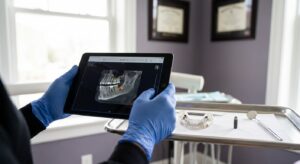
Step 3: Exam, X‑rays, and diagnosis
At your visit, the dentist will usually:
- Review your medical and dental history
- Take X‑rays of the painful area
- Perform an exam to check for swelling, abscesses, fractures, or decay
This exam allows the dentist to determine if the tooth can be saved with a filling or root canal or if it must be removed. For many Medicaid plans, diagnostic services like exams and X‑rays are covered benefits, especially for adults in expanded programs and for all children.
Step 4: Extraction or pain management
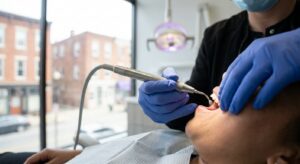
If the tooth cannot be saved and the extraction is considered medically necessary, the dentist will choose a simple or surgical approach depending on the case. They will numb the area and may also provide antibiotics or pain medication if there is an active infection.
Some offices can provide same day tooth extraction medicaid services. In other situations, you might receive medication and a follow‑up appointment with an oral surgeon, particularly for impacted wisdom teeth or complex cases.
Step 5: Aftercare and follow‑up
After the extraction, you will receive instructions about:
- Controlling bleeding
- Managing pain and swelling
- Eating and drinking during the first 24 to 48 hours
- Signs of infection that mean you should call the office right away
If you have chronic issues or multiple problem teeth, your dentist might suggest a longer term treatment plan. At that point, you may want to discuss coverage for other services, including fillings, crowns, dentures, or potential replacement options after extraction.
Getting a tooth pulled with Medicaid step by step
If you are trying to figure out exactly how to get a tooth pulled with medicaid, you can think of it as a simple sequence:
- Confirm that your Medicaid coverage is currently active.
- Locate a medicaid dentist accepting new patients or clinic that takes your plan.
- Call and describe your symptoms, for example, “severe tooth pain,” “swelling,” “broken tooth,” or “infection.”
- Ask if they offer same day tooth extraction medicaid for emergencies or if they can at least see you quickly to manage pain and infection.
- Bring your Medicaid card and a photo ID to your appointment.
- Let the dentist evaluate the situation and recommend extraction or another treatment.
- Before the procedure, confirm with the office which parts should be billed to Medicaid and whether you might have any additional costs.
In many cases of urgent pain or infection, your extraction will qualify as a free tooth extraction medicaid situation, with the plan covering the full allowed cost when you use an in‑network provider.
Implants, extractions, and replacement options
Many adults search not only “does Medicaid cover tooth extraction” but also “does Medicaid cover dental implants” because they want to know what happens after a tooth is removed.
Typical Medicaid stance on implants
Across states, Medicaid tends to be strict about dental implants. In Virginia, for example, adult dental benefits cover exams, cleanings, fillings, crowns after root canal, and medically necessary extractions, but they exclude implants from coverage [2].
Cardinal Care Smiles, Virginia’s dental program for Medicaid, offers comprehensive dental benefits for children, adults, and pregnant members, focusing on prevention, treatment, and restoration. The 2024 plan materials clarify that braces are not covered for adults and do not list implants as a benefit, which suggests that standard implant therapy is generally not included [4].
Maryland’s rules are not identical, but they follow the same pattern in many respects. Implants are usually considered an elective or high‑cost service, and Medicaid rarely pays for them except in limited, medically exceptional cases if at all.
If you are looking for a dentist that takes medicaid for implants or wondering can you get dental implants with medicaid, it is important to ask clear questions about what is covered and what is not, and whether any partial payment or alternative options are available.
Alternative tooth replacement options
Even if implants are not covered, you may still have options that work with your budget and benefits. Depending on your plan and your clinical situation, you might explore:
- Removable partial dentures
- Full dentures if many teeth are missing
- Crowns or bridges on remaining teeth, if those specific services are covered
If you are interested in more affordable solutions, you can also research low cost dental implants medicaid programs or discount plans that work alongside Medicaid.
For a detailed look at how different states handle implant benefits, you can also review resources about medicaid dental implant coverage and does medicaid cover dental implants. These can help you understand where implants may be realistic and where other options are more practical.
Verifying your own Maryland Medicaid benefits
Because Maryland’s adult dental coverage rules differ from Virginia’s and from federal minimums, you should always confirm your exact benefits. Use these steps as a checklist:
-
Find your plan information
Locate your Medicaid or managed care card. Note the plan name and any separate dental administrator. -
Call the member services number
Ask specifically:
- Do my adult dental benefits include exams, X‑rays, and tooth extractions?
- Are emergency visits covered differently than routine visits?
- Do I need prior authorization for extractions or oral surgery?
- What dentists and oral surgeons near my ZIP code are in network?
-
Ask about replacement options
If you know you will lose a tooth, ask if your benefits include dentures, partials, or any coverage for implants. This will help you plan long term. -
Confirm with the dental office
When you call an infected tooth medicaid dentist or broken tooth medicaid emergency dentist, ask them to verify benefits before the procedure if possible. -
Request written explanations
If a service is denied or only partially covered, ask your plan for a written explanation of benefits. This will help if you choose to appeal or seek a second opinion.
Virginia’s Cardinal Care Smiles program offers fact sheets and online benefit descriptions so adult members can see exactly what is covered, including expanded dental services and no‑cost access through participating dentists [3]. Maryland provides similar materials for its own Medicaid plans, and reviewing them can help you avoid surprises.
Using transportation and other support services
Getting to the dentist can be a barrier if you do not drive or have reliable transportation. Some states address this by offering non‑emergency medical transportation for Medicaid enrollees.
In Virginia, adults enrolled in dental Medicaid can access non‑emergency transportation services for dental visits, with rides coordinated by ModivCare or managed care organizations [2].
Maryland has its own transportation policies, often managed county by county. When you call your plan to ask about tooth extraction coverage, you can also ask:
- Whether non‑emergency transportation is available for dental visits
- How far in advance you must schedule a ride
- Whether escorts or caregivers can ride along
If transportation is covered, this can make it much easier to keep appointments and follow through with treatment.
When to seek care right away
Sometimes you can wait a few days for a routine exam. Other times, you should treat your situation as urgent and contact an emergency dentist that takes medicaid or urgent dental care that takes medicaid as soon as possible. Seek immediate help if you notice:
- Swelling of the face, cheek, or jaw
- Fever or chills along with tooth pain
- Difficulty swallowing or breathing
- A spreading area of redness on the face or neck
- Trauma to the face with loose or displaced teeth
These can be signs of a serious infection that may require prompt extraction, drainage, or hospital care. Medicaid is more likely to classify these situations as emergencies, which can help with coverage for both the dental and, if needed, medical side of treatment.
Moving forward with confidence
If you are in Baltimore and wondering if Medicaid will pay for a tooth extraction, your best next steps are to:
- Confirm that extractions are part of your adult dental benefits
- Connect with a medicaid dentist accepting new patients or an oral surgeon that takes medicaid for complex cases
- Ask directly about medicaid oral surgery coverage so you understand any limits
- Explore your long term options after extraction, including dentures or other replacements, and check your medicaid dental implant coverage if you are considering implants
Understanding your rights and how Medicaid decisions are made gives you more control at a time that often feels overwhelming. With the right information, you can focus on what matters most, getting out of pain, treating infection, and protecting your long term oral health.