
Why finding an emergency dentist that takes Medicaid matters
When you are in severe dental pain, the last thing you want to worry about is how to pay for care. Finding an emergency dentist that takes Medicaid in Baltimore can mean the difference between fast relief and hours of calling offices that say no.
If you are enrolled in Maryland Medicaid and dealing with a broken tooth, infection, swelling, or a tooth that probably needs to be removed, you do have options. Your coverage can help you get urgent treatment, and in some situations it may also help you explore replacements like dental implants through a dentist that takes medicaid for implants.
This guide walks you step by step through how to get seen quickly, what Maryland Medicaid typically covers, and how your emergency visit can lead to long term solutions like extractions and implants.
Recognizing a true dental emergency
You do not want to ignore serious dental symptoms. Some problems can escalate from uncomfortable to dangerous in a short time, especially if infection is involved.
You should seek an emergency dentist that takes Medicaid as soon as possible if you notice:
- Severe toothache that does not improve with over the counter pain medicine
- Swelling in your face, jaw, or gums
- Pus, a bad taste, or foul odor from your mouth
- Fever along with dental pain
- A broken or cracked tooth that is cutting your tongue or cheek
- A tooth that is loose, knocked out, or feels “high” when you bite
- Bleeding that will not stop after an extraction or injury
These can be signs of an infected tooth, which can spread beyond the mouth if not treated quickly. If you suspect an infection, look for an infected tooth medicaid dentist who can prescribe antibiotics and perform any necessary procedures.
If you are having trouble breathing, swallowing, or opening your mouth, you should go to the nearest emergency room immediately. Then, follow up with an emergency dentist that accepts Medicaid as soon as you are stable.
What Maryland Medicaid typically covers for dental emergencies
Medicaid dental coverage is state specific, so it is important to look at Maryland rules instead of assuming they match what you read about other states. In general, Medicaid focuses on medically necessary services rather than cosmetic care.
For emergency situations, coverage often includes services that are needed to:
- Control pain
- Stop active infection
- Stabilize your teeth and gums
- Prevent serious complications
That usually means things like:
- Exams and X rays to diagnose the problem
- Emergency fillings or temporary restorations to protect a tooth
- Simple or surgical tooth extractions
- Drainage of an abscess or infection
- Prescriptions related to dental infection or pain
If you want a deeper look at coverage details related to extractions, you can read more in resources such as does medicaid cover tooth extraction and tooth extraction covered by medicaid.
Maryland Medicaid dental benefits are managed by specific plans, so exactly which procedures are fully covered, partially covered, or not covered can depend on your plan and age. It is always smart to confirm your benefits before your appointment whenever you can, but in a true emergency, getting safe, timely care is the priority.
Step by step: How to get same day emergency care with Medicaid
If you are in active pain right now, having a clear checklist helps. Here is a practical sequence you can follow to find an emergency dentist that takes Medicaid in Baltimore.
1. Find a Medicaid dentist accepting new patients
Start by identifying a medicaid dentist accepting new patients in your area. When you call offices, ask directly:
“Do you accept Maryland Medicaid, and can you see me today or tomorrow for an emergency visit?”
You can also look for a walk in dentist that takes medicaid if you cannot get through by phone. Some clinics reserve slots specifically for urgent cases.
2. Confirm they handle emergency visits and extractions
Not every dentist offers same day treatment. When you call, be specific about your symptoms and ask:
- Whether they provide urgent dental care that takes medicaid
- If they can perform same day tooth extraction medicaid when needed
- Whether an oral surgeon that takes medicaid is available or nearby for more complex cases
If they need to refer you to an oral surgeon, check your medicaid oral surgery coverage or specifically ask about costs before the visit if possible.
3. Verify your Medicaid eligibility and dental benefits
Before or during your call, have:
- Your Medicaid ID number
- Your date of birth
- The name of your Medicaid plan
You can contact your plan directly to confirm what is covered. For example, in Virginia the Cardinal Care Smiles program is managed by DentaQuest, which provides an adult dental services fact sheet and a provider search tool, and members can also call 1 888 912 3456 to find participating dentists [1].
Maryland uses its own managed care arrangements, but the process is similar. You call the number on your plan card or visit the plan website, then confirm:
- Whether emergency exams and X rays are covered
- Whether extractions are covered at low or no cost
- Whether there are copays or prior authorization requirements
This step will help you avoid surprises and understand your options for restorative work after the emergency is resolved.
4. Prepare for your visit
If you can, gather:
- Your Medicaid or managed care ID card
- A list of your medications
- Any allergies, especially to antibiotics or pain medicines
- A brief history of the problem, including when it started and what makes it better or worse
Having this information ready allows the emergency dentist that takes Medicaid to move quickly from evaluation to treatment.
What to expect during an emergency Medicaid dental visit
Walking into a dental office when you are in pain can be stressful. Knowing the general process can help you feel more in control.
The initial evaluation and X rays
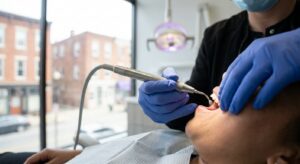
First, you complete basic forms and provide your Medicaid information. Then the dentist or clinical team will:
- Ask about your symptoms and medical history
- Perform an exam of your teeth, gums, and soft tissues
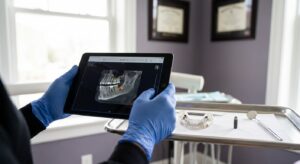
- Take X rays to see roots, bone, and any hidden infection
This evaluation guides the decision on whether you need an urgent filling, a root canal referral, or an extraction.
Deciding on extraction vs saving the tooth
If the tooth is severely decayed, cracked below the gumline, or infected, the dentist will talk with you about options that balance your health, your coverage, and your long term goals.
You may discuss:
- Immediate extraction to remove the source of infection
- Temporary treatment and a referral to a specialist
- Future replacement, including the possibility of implants through a dentist that takes medicaid for implants
If the tooth cannot be saved and removal is recommended, you can explore exactly how to get a tooth pulled with medicaid, including whether your plan covers all or part of the cost.
Same day tooth extraction with Medicaid
For many emergencies, especially when pain is intense or infection is present, same day extraction is the most direct path to relief. With same day tooth extraction medicaid, the process generally includes:
- Local anesthesia to numb the area
- Removal of the tooth with simple or surgical techniques
- Cleaning of the socket, and sometimes placing medication in the area
- Instructions for home care and prescriptions as needed
Depending on your plan, this can be fully covered as a free tooth extraction medicaid benefit or have a small copay. The office staff can usually tell you your specific costs beforehand.
If the tooth is impacted or more complicated, you may be referred to an oral surgeon that takes medicaid, especially for wisdom tooth removal medicaid.
Tooth extractions with Medicaid in Baltimore
Tooth removal can feel intimidating, but it is often the safest option if a tooth is causing recurring infections or severe pain.
Types of extractions your plan may cover
Your Medicaid coverage may include:
- Simple extractions, when the tooth is visible and can be loosened and removed without cutting bone
- Surgical extractions, needed for broken off teeth, curved roots, or impacted wisdom teeth
- Related services like X rays, local anesthesia, and certain follow up visits
If you are researching coverage, helpful resources include does medicaid cover tooth extraction and tooth extraction covered by medicaid. These can clarify which scenarios usually fall under medical necessity.
When extraction becomes urgent
There are times when you should not delay. You should contact a broken tooth medicaid emergency dentist or use medicaid emergency tooth removal options if you have:
- A broken tooth with sharp edges cutting your cheek or tongue
- Swelling and severe pain around a decayed tooth
- An abscess that has started to drain
- Pain that keeps you from eating, sleeping, or going to work
In these situations, the primary goal is to remove the immediate source of infection or trauma first. Replacement can come afterward.
Can you get dental implants with Medicaid after an extraction?
Once you get through the emergency and your mouth begins to heal, you may start thinking about how to replace the missing tooth. Dental implants are one of the most stable, long lasting options, but coverage is complex.
Understanding Medicaid dental implant coverage
Most Medicaid programs focus on functional, medically necessary treatment instead of elective or cosmetic procedures. That means implants are not always covered automatically. However, some states or specific situations may allow partial coverage, especially when:
- A missing tooth affects your ability to chew or speak
- You have lost multiple teeth
- Other tooth replacement options are not suitable
To learn more, review medicaid dental implant coverage, does medicaid cover dental implants, and can you get dental implants with medicaid. These resources explain how coverage decisions are typically made and what documentation you may need.
Working with a dentist that takes Medicaid for implants
If you are a good candidate medically, the next step is connecting with a dentist that takes medicaid for implants or an oral surgeon that takes medicaid who places implants.
Your provider can:
- Evaluate your bone health and gum condition
- Explain all tooth replacement options, not just implants
- Submit any required pre authorizations to your Medicaid plan
- Help you understand any out of pocket costs
If coverage is limited, you may still be able to explore low cost dental implants medicaid options, including payment plans or combining Medicaid covered extractions with discounted implant services.
Cost expectations and how to avoid surprises
When you are searching for an emergency dentist that takes Medicaid, you are usually trying to avoid a big, unexpected bill. Preparing a bit can help you understand your likely costs before treatment begins.
How Medicaid typically handles emergency dental costs
For many adults, Medicaid emergency benefits are designed so that:
- Exams, X rays, and simple extractions are low or no cost
- Surgical extractions and oral surgery may have higher allowed amounts but are still significantly discounted compared to private pay
- Copayments, if any, tend to be modest
If your situation qualifies as free tooth extraction medicaid under your plan’s rules, both the procedure and related anesthesia may be covered.
Questions to ask the dental office
Before treatment starts, if you have time, consider asking:
- Is this procedure covered by my Medicaid plan, fully or partially
- Will there be a copay today, and how much
- Will any lab fees or specialist fees be billed separately
- Do you need prior authorization, or can you treat today
If you are having implants or complex surgery, also ask whether the provider participates in your plan’s network for both emergency and restorative services, so you know you are not accidentally going out of network.
Using urgent dental care that takes Medicaid to protect your long term health
Emergency visits are not only about surviving a bad day. Handled correctly, they can be the start of getting your oral health back under control.
After your immediate issue is treated, ask your dentist to help you map out:
- Any other teeth that may need attention soon
- A plan for additional extractions using medicaid emergency tooth removal only when absolutely necessary
- Possible restorative options, including partial dentures and implants, with clear explanations of your medicaid dental implant coverage
Even if you came in for a single painful tooth, think of this visit as an opportunity to stabilize your overall oral health and prevent future emergencies.
The most cost effective dental care, even with Medicaid, is usually preventive care. Solving problems early generally requires less invasive treatment and less time in pain.
Staying connected with an emergency dentist that takes Medicaid for ongoing checkups and cleanings can dramatically reduce your risk of new infections, fractures, and emergency extractions.
Taking your next step today
If you are in pain, your priority is clear: get seen by an emergency dentist that takes Medicaid as soon as possible. Start by:
- Calling a local medicaid dentist accepting new patients or walk in dentist that takes medicaid.
- Asking whether they provide urgent dental care that takes medicaid and same day tooth extraction medicaid.
- Confirming your eligibility and coverage so you know your likely costs.
From there, you and your provider can address the immediate emergency and, if needed, talk about extractions, oral surgery, and longer term solutions like implants. With the right support and clear information, you can move from pain and uncertainty toward a healthier, more stable smile.