
Understanding urgent dental care that takes Medicaid
If you are in pain or dealing with a broken or infected tooth, finding urgent dental care that takes Medicaid can feel overwhelming. You may worry about cost, availability, and whether anyone will see you quickly.
In Maryland, Medicaid does provide dental coverage for adults, including urgent needs like extractions, treatment for infection, and evaluation of severe pain. The specifics depend on your plan and eligibility category, but you do have options for emergency and restorative care, including tooth removal and, in some cases, replacement options like implants.
This guide walks you through how urgent dental care works with Medicaid, what is typically covered for adults in Maryland, and how you can move from emergency treatment to long term solutions for missing or damaged teeth.
How Medicaid dental coverage works
Medicaid is a state administered program, so rules for adult dental benefits vary by state. In Virginia, for example, the Cardinal Care Smiles program covers medically necessary dental services for children and comprehensive dental benefits for adults, including urgent care needs as part of a broader oral health benefit [1].
Maryland has its own adult dental benefit structure. While coverage details are not identical to Virginia, you can generally expect Medicaid to focus on:
- Medically necessary services, especially when there is pain, swelling, or infection
- Extractions of teeth that cannot be saved
- Limited restorative care in some benefit categories
- Preventive care for eligible adults and more extensive coverage for children
If you are not sure exactly what your Maryland Medicaid plan covers, you can use the same approach that members in nearby states use. In Virginia, Medicaid members locate dentists who accept Medicaid through the DentaQuest provider search tool or by calling member services for help finding urgent care appointments [2]. In Maryland, your plan materials and member services can connect you with a dentist that participates in your specific Medicaid network and that has experience with emergency care.
When your situation is an emergency
You might be searching for urgent dental care that takes Medicaid because you are not sure if you are having a true emergency or something that can wait. In dental care, the safest approach is to contact a provider quickly and let a professional decide how urgent your situation is.
You should seek urgent or emergency dental care right away if you have:
- Severe toothache that is not improving or is getting worse
- Swelling in your face, gums, or jaw
- Signs of infection such as fever, foul taste, or pus around a tooth
- A broken or fractured tooth, especially if the nerve is exposed
- A tooth that has been knocked out or loosened by injury
- Bleeding that will not stop after an extraction or trauma
Many Medicaid focused practices clearly separate emergency visits, urgent pain visits, and routine appointments. If you know you need an emergency dentist that takes medicaid, it is important to describe your symptoms in detail when you call so staff can prioritize you correctly.
What Medicaid usually covers for urgent dental care
Although the exact list of covered procedures depends on your plan, adult Medicaid benefits in the region consistently focus on conditions that are medically necessary. For urgent situations, that usually includes:
- Limited exam or problem focused exam to diagnose the issue
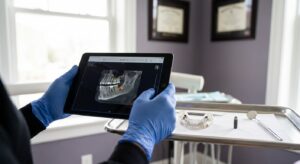
- X rays or other imaging needed to identify the tooth and the problem
- Palliative treatment to reduce pain or pressure, such as draining an abscess
- Tooth extraction when a tooth cannot be restored and is causing pain or infection
- Follow up visits connected to the emergency treatment
If you are specifically wondering does medicaid cover tooth extraction, the answer is often yes when the tooth is decayed, broken, infected, or otherwise medically necessary to remove. For many adults, tooth extraction covered by medicaid is the most common emergency benefit, especially for severe decay or an abscess.
In Virginia, for example, all adults enrolled in Medicaid now have access to a comprehensive dental benefit that includes urgent dental care, and the program emphasizes access for both insured Medicaid members and people who use community clinics for emergency services [2]. Maryland Medicaid follows the same principle of focusing on necessary care for infection, pain, and serious oral health problems.
Same day extractions and emergency tooth removal
If you are in significant pain, you may be searching for same day tooth extraction medicaid or medicaid emergency tooth removal. These phrases all point to a similar type of visit. You need a dentist who:
- Accepts your Medicaid plan
- Has open urgent appointment slots
- Can evaluate and, when appropriate, remove the tooth the same day
In many cases, you will first see a general dentist who treats adult Medicaid patients. If your situation is more complex, you may be referred to an oral surgeon that takes medicaid, especially for surgical extractions, impacted teeth, or complicated wisdom tooth removal. When the tooth is severely decayed but straightforward to remove, the general dentist may be able to complete your extraction during that first visit.
If cost is your main concern, you can also look into free tooth extraction medicaid to understand when your plan might cover most or all of the cost for emergency extractions.
Broken, infected, and wisdom teeth on Medicaid
Not every urgent situation looks the same. You might have an obvious crack, a deep cavity, or a tooth that has been bothering you for months. The type of problem you have will guide how your Medicaid covered urgent visit is handled.
If you have a broken tooth, especially one that is sharp, painful, or sensitive, it is important to see a broken tooth medicaid emergency dentist. A dentist will decide if the tooth can be repaired or if extraction is the safest option under your Medicaid benefit.
With an infected tooth, your priority is to control the infection and pain. An infected tooth medicaid dentist will typically take an x ray, evaluate the source of infection, and then either perform a root canal, prescribe medication, refer you to a specialist, or proceed with extraction if that is what your coverage and your clinical situation allow.
If your wisdom teeth are the problem, you may need wisdom tooth removal medicaid. Impacted wisdom teeth can cause swelling, severe pain, and sometimes infection, which frequently makes removal medically necessary. Medicaid is more likely to cover extraction in these cases, including referrals to an oral surgery provider when needed, which is why it is helpful to understand your medicaid oral surgery coverage before your procedure.
Moving from extraction to replacement
For many adults with Medicaid, urgent dental care solves the immediate problem but leaves you with missing teeth. Once the pain is gone, your next question is often how to replace those teeth in a way that lets you chew comfortably and feel confident about your smile.
The most common replacement options after a Medicaid covered extraction are:
- Partial dentures or full dentures in benefit plans that allow them
- Bridges in limited cases
- Dental implants, which may or may not be covered depending on your plan and medical situation
If you are researching tooth extraction covered by medicaid because you know a tooth has to come out, it is helpful to ask your provider about your replacement options during that initial visit. That way you understand whether your plan supports dentures, temporary appliances, or other solutions and can plan ahead.
Can you get dental implants with Medicaid
Many people ask can you get dental implants with medicaid because implants are often seen as the best long term solution for missing teeth. The honest answer is that Medicaid coverage for implants is limited and varies by state and by benefit category.
In general:
- Traditional Medicaid programs focus on medically necessary services, such as controlling infection or restoring ability to eat and speak
- Dental implants are usually considered elective or at least not first line in most Medicaid plans
- A few specific situations, such as reconstruction after trauma or major surgery, may increase the chance of some implant related benefits
To understand your situation, start with medicaid dental implant coverage. This will help you see where implants may fit within your plan. Then you can explore does medicaid cover dental implants, which explains common rules around medical necessity, prior authorization, and state level limits.
If implants are not fully covered, you can still look into low cost dental implants medicaid options. Some providers use Medicaid for the covered parts of your care, such as extractions or infection control, then offer payment plans or reduced fees for the implant itself and related restorative work.
When you are ready to talk to a professional, a dentist that takes medicaid for implants can give you a clearer picture of how your specific plan works and what your out of pocket costs might be.
How to get a tooth pulled with Medicaid
If you know a tooth needs to come out and you want to use your Medicaid benefit, it helps to follow a simple, step by step process. This is especially true if you are trying to see a provider as quickly as possible.
The general steps are:
- Confirm that your Medicaid coverage is active.
- Call your plan or check your member portal for a list of participating dentists.
- Look for a medicaid dentist accepting new patients who treats adults and provides emergency or same day visits.
- Ask if they are a walk in dentist that takes medicaid or if you need a scheduled appointment.
- Be clear that you are calling for urgent pain, swelling, or a tooth that needs to be removed.
- Bring your Medicaid card and any photo ID to your visit.
For more specifics, you can review how to get a tooth pulled with medicaid. That resource explains documentation, typical waiting times, and what to expect during and after the extraction.
In Virginia, state agencies encourage Medicaid members and uninsured individuals to use search tools and community clinics to find urgent care, especially now that adult dental benefits have expanded [2]. Maryland offers its own combination of participating private practices, community health centers, and nonprofit clinics to support access to emergency extractions and other critical services for Medicaid adults.
What to expect during your urgent visit
Going into your urgent appointment with realistic expectations can reduce stress. While every office is different, most urgent visits that use Medicaid follow a similar pattern.
First, staff will verify your eligibility and benefits, then ask about your pain level, medical history, and any medications you take. You will usually have a focused exam and x rays so the dentist can identify which tooth is causing the problem and whether there is any infection or abscess.
Next, the dentist will explain your options:
- Conservative treatment like medication or temporary filling, if appropriate
- Root canal or restorative treatment, if covered and clinically reasonable
- Extraction, when the tooth cannot be saved or when that is the covered option
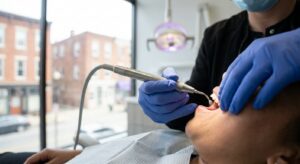
If extraction is chosen and can be done the same day, the dentist will numb the area, remove the tooth, and provide instructions for care at home. If you are seeing an oral surgeon that takes medicaid for a more complex case, you may need a separate appointment but urgent situations are typically scheduled quickly.
After your visit, follow any instructions about pain control, diet, and follow up. If you experience increasing swelling, difficulty breathing, or signs of spreading infection, call your provider or seek emergency medical care immediately.
Verifying your benefits and choosing a provider
Because Medicaid coverage can change over time and can differ among states and plan types, it is important for you to verify your current dental benefits before or during your urgent visit. In nearby states, dental programs like Cardinal Care Smiles in Virginia make it possible for members to call a dedicated number or use online tools to find participating providers and confirm coverage for urgent services like extractions and infection treatment [1].
In Maryland, you can use similar strategies:
- Review the dental section of your Medicaid member handbook
- Call the member services phone number on your Medicaid card
- Ask specifically about adult emergency dental benefits, extractions, and any limits
- Request help locating a nearby dentist or clinic that accepts your plan and provides urgent appointments
If you prefer to stay within a traditional dental office rather than a clinic, focus your search on a medicaid dentist accepting new patients. If you cannot get a fast appointment, ask whether they can refer you to an emergency dentist that takes medicaid in your area.
Using community resources if you still cannot find care
Even with Medicaid coverage, you might struggle to find an open appointment on short notice, especially if you live in an area with limited providers. States in the region encourage adults with urgent needs to use community health centers, hybrid clinics, and nonprofit programs that explicitly welcome Medicaid members and uninsured residents.
In Virginia, for example, the Virginia Health Care Foundation maintains a search tool that helps individuals identify local dental providers, many of which offer urgent services for Medicaid patients or sliding scale options for those who do not have coverage [2]. While Maryland has its own set of organizations, the idea is similar. Community based programs help close the gap between what your Medicaid card covers and what you can realistically access in your neighborhood.
If you are unable to find a same day private dentist, ask your Medicaid plan or local health department about:
- Federally qualified health centers with dental departments
- Hospital affiliated dental clinics
- Nonprofit or faith based clinics that accept Medicaid
- Events and programs that provide urgent care to adults with few options
These resources may not appear in a simple online search for urgent dental care that takes Medicaid, but they are often designed specifically to help people in your situation.
Taking your next step
If you are in pain right now, your most important step is to contact a provider that accepts your Medicaid plan and can see you urgently. Whether you need medicaid emergency tooth removal, help with a broken tooth medicaid emergency dentist, or guidance on does medicaid cover dental implants, your situation is easier to manage once a professional has evaluated you and explained your options.
Use your Medicaid member services line, local health department, or online tools to locate a walk in dentist that takes medicaid or an emergency dentist that takes medicaid. Be clear that you are experiencing pain, swelling, or another urgent symptom, and bring your Medicaid information with you.
With the right combination of urgent treatment, Medicaid coverage, and follow up planning, you can move from crisis to a more stable, long term solution for your oral health.