
You are 74, living on Social Security in West Baltimore, and the dentist just told you the infected molar they pulled last week should be replaced with an implant. The quote is $4,500, about two months of your income. So you went home and typed a simple question into your phone: are there free dental implants for seniors? You found a list of programs and called six numbers. You hit waiting lists, income cutoffs you miss by $180 a month, or silence the moment you said the word “implant.” You want a permanent fix, not a removable partial that clicks when you eat, and right now the gap between wanting it and affording it feels too wide to cross.
If that sounds familiar, you are not alone, and you have not done anything wrong. This guide explains what is free in Baltimore, what is low cost, and what Maryland Medicaid will and will not pay for. It also shows you a realistic path to a replacement tooth without waiting in pain.
Are There Free Dental Implants for Seniors? Almost Never, and Knowing Why Saves You Weeks
Truly free dental implants for seniors in Baltimore are extremely rare. Most programs that advertise “free” dental care cover exams, cleanings, fillings, and extractions. Implants are usually treated as elective, so they are almost always excluded or offered only at a reduced price.
Part of the confusion comes from search results. Free implant programs do exist in some places, but many are not in the United States. For example, Beijing’s municipal health commission announced free dental implant services through a government program. Pages like that show up next to American results, and they make free implants seem far more common than they are. In Maryland, no standing public program pays for implants for every senior who needs one.
The bigger reason is how dental care gets paid for after 65. The National Institute of Dental and Craniofacial Research’s report on oral health in older adults explains that traditional Medicare does not cover most routine dental care and that cost is a major barrier for older Americans. Many people lose their dental benefits when they retire, right when they start needing more work done.
Even so, seniors keep looking for implants because they offer something dentures and bridges cannot. An implant is an artificial tooth root, a small post placed in the jawbone that holds a crown. Unlike a bridge, it does not require grinding down the healthy teeth next to the gap, and unlike a removable partial, it does not slip or click. It also puts chewing pressure on the jawbone, which can help slow the bone loss that follows a missing tooth in some patients. Those benefits are real, and so is the price. The rest of this guide is about closing that gap honestly.
What Will Maryland Medicaid Actually Pay For When You Lose a Tooth?
Maryland Medicaid generally covers the emergency care that comes before an implant, such as extractions, treatment of infections and abscesses, and pain relief. It generally does not cover the implant that replaces the tooth, because implants are usually classified as elective rather than medically necessary for adults.
That split matters for your wallet. Say a back molar cracks and an abscess forms. The infection, the swelling, the throbbing that keeps you up at night, and the extraction that addresses it all fall into the kind of urgent care Maryland’s adult dental benefit is built to handle. Baltimore Emergency Dental treats these problems with same-day emergency care and no waiting: severe toothache, dental abscess and infection, broken or fractured teeth, and emergency tooth extractions. The practice accepts Baltimore Medicaid, so the urgent part of your care can happen under the benefits you already have. Once the tooth is out and the infection is cleared, though, the replacement becomes a separate decision, and Medicaid usually steps back at that point. Covered services can change, so ask for your plan’s current benefit list before you assume anything. For a deeper look at the rules, read our guide on how Medicaid coverage works for dental implants in Baltimore.
If you have both Medicare and Medicaid, your dental benefits often come from the Medicaid side, since traditional Medicare covers so little dental work. Some Medicare Advantage plans include dental benefits, and a few put money toward implants, usually with a yearly dollar cap that covers only part of the cost. Call the number on your card and ask two direct questions: “Does my plan pay anything toward dental implants?” and “What is my annual dental maximum?”
Private dental insurance works in a similar way. Many plans pay a percentage of an implant or of the crown on top of it, up to an annual maximum. Others pay toward a bridge or denture and leave you to cover the difference if you choose an implant. Either way, the extraction you need today is often covered, and Baltimore Emergency Dental accepts Delta Dental, BCBS, Cigna, and Aetna as well as Baltimore Medicaid. Keeping that extraction under your benefits keeps money in your pocket for the next step.
What Does a Dental Implant Cost in Baltimore, and Where Can You Pay Less?
A single dental implant, including the post, the connector (called an abutment), and the crown, commonly costs about $3,000 to $6,000 without insurance in Baltimore, as in most US cities, though your total can vary based on what your mouth needs. Your total can be higher if you also need an extraction, a bone graft, or extra imaging first.
That range is wide because every mouth is different. A front tooth with healthy bone may need nothing but the implant and crown, while a molar that has been missing for ten years may need a bone graft to rebuild the area before an implant can hold. The only way to know your number is an exam and a 3-D X-ray from the implant provider you choose. Ask that office to walk you through what your case involves and what each piece costs before you commit to anything.
When you compare quotes, ask what is included. Some offices quote only the surgical post and then bill separately for the abutment and crown, while others quote the full tooth. A quote that looks $1,500 cheaper may simply leave out the crown you need to chew.
Dental School Clinics Can Cut the Price If You Can Wait
Baltimore is home to a dental school, and dental school clinics often charge less than private offices for implants because students and residents do the work under the supervision of licensed faculty. The trade-off is time. You may go through a screening visit before you are accepted, wait for an opening, and sit through longer and more frequent appointments as each step is checked. If you have an active infection or severe pain, get that treated first with same-day emergency care, because a school clinic waitlist is not the place to manage an abscess.
Charitable Dental Events Handle Pain First, Implants Rarely
Maryland hosts periodic free dental events and charitable clinics. They do important work, but they focus on cleanings, fillings, and extractions for as many people as possible in a short time. Implants depend on volunteer specialists and donated materials, so they are uncommon and limited when offered. These events can be a resource for pain relief, but few seniors leave them with an implant.
How Long Will This Take, and How Many Days Will You Need to Rest?
The full implant process usually takes about 4 to 9 months from extraction to final crown, and it can run longer if you need a bone graft, though individual timelines vary. Most of that time is quiet healing at home, not appointments.
Here is the step-by-step sequence many patients follow:
- Emergency care, if you need it (same day). Pain, swelling, or infection gets treated first, since an implant cannot go into infected tissue. This is the step Baltimore Emergency Dental handles, with same-day appointments and prompt pain management.
- Consultation and 3-D X-ray (one visit). Your implant dentist checks bone height, bone width, nerve position, and, for upper back teeth, the sinus.
- Extraction, if the tooth is still there. Sometimes a bone graft is placed in the socket at the same time to protect the site.
- Socket healing (often about 2 to 4 months). In some cases a dentist can place the implant the same day the tooth comes out, but active infection or weak bone usually rules that out. Most emergency extractions follow the traditional, delayed timeline.
- Implant placement surgery (one visit). The post is placed in the jawbone under local anesthesia.
- Osseointegration (typically 3 to 6 months). Bone grows onto the implant and locks it in place. You may wear a temporary tooth during this time.
- Abutment placement (one short visit). A connector is attached to the post, and the gum heals around it for a few weeks.
- Crown attachment (one or two visits). Your final crown is made to match your bite and attached to the abutment.
How many days should you rest after a tooth implant? Many people rest for 1 to 2 days after a single implant is placed and go back to light daily activity by day 2 or 3, though recovery varies from person to person. Swelling often peaks around the second or third day, so plan on soft foods for about a week and skip heavy lifting or hard exercise for several days.
Seniors sometimes need a little more time, especially after multiple implants or a bone graft, or if they take blood thinners. Line up help with errands for the first couple of days, keep ice packs ready, and follow your aftercare instructions closely. Recovery varies from person to person.
Your Age Is Not the Problem, Because Bone and Health History Decide
Being 70, 80, or older does not by itself rule you out for an implant. What can affect your candidacy is the quality of your jawbone, your gum health, your medications, and how well your body heals. An implant provider will typically use a 3-D X-ray to see those details before anyone talks about surgery.
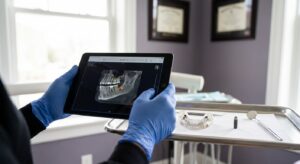
A standard flat X-ray shows teeth well, but it cannot measure bone in three dimensions. A 3-D scan shows how tall and wide the bone is where the tooth used to be, how close the nerve sits in the lower jaw, and how much room there is below the sinus in the upper jaw. This matters a lot for seniors. When a tooth has been missing for years, the bone around the gap shrinks, and osteoporosis can lower bone density too. The scan tells you whether an implant can go in as is, whether you need a graft first, or whether a bridge or denture may be an option to consider.
Every honest conversation about implants should include the downsides. Here is what you should weigh:
- Infection. The surgical site can become infected, and gum inflammation around an implant can develop years later without good cleaning.
- Failure to fuse. Sometimes the bone does not bond with the post, and the implant must be removed and possibly tried again.
- Nerve irritation. Lower implants placed near a nerve can cause numbness or tingling in the lip or chin.
- Sinus problems. Upper back implants can press into the sinus if bone is thin.
- Medication concerns. Some osteoporosis drugs carry a rare risk of a serious jawbone problem after dental surgery, as MedlinePlus notes in its drug information. Tell your dentist about every medication you take.
- Slower healing. Uncontrolled diabetes and smoking can make it harder for the implant to heal in some patients.
- Time and cost. The process takes months, and most of the bill usually falls on you.
Where Baltimore Emergency Dental fits is the part that cannot wait. The practice focuses on emergency and urgent dental care, accepts Delta Dental, BCBS, Cigna, Aetna, and Baltimore Medicaid, and is built around affordable care for underserved communities. That means the abscess, the broken tooth, and the emergency extraction can be handled the same day under your current benefits, so the area is healthy and ready when you meet with an implant provider.
Can You Really Afford an Implant on a Fixed Income?
Often, yes, but rarely in one payment and rarely from one source. Some seniors who get implants on a fixed income combine insurance benefits, spread treatment across time, and finance the remaining balance.
Start with timing. Dental plans with a yearly maximum reset each benefit year. If your plan covers part of the extraction and graft this year and part of the crown next year, splitting treatment across two benefit years can increase the help you receive. The healing gap built into the implant process makes this easier, since you are waiting months between steps anyway.
Next, look at financing. Healthcare credit cards and medical lenders often offer promotional periods with no interest if you pay off the full balance in time. Read the terms carefully, because many use deferred interest: if any balance remains when the promotion ends, interest for the entire period can be added at once. The simple math looks like this: a $3,000 balance spread over 24 months works out to $125 a month. Ask any implant office you consider what payment options are available for your treatment plan.
Finally, compare paths side by side. A dental school clinic may lower the price but stretch out the timeline. A charitable event may cover the extraction for free, and an emergency extraction billed to Baltimore Medicaid or your insurance can do the same, which leaves more of your budget for the implant itself. If implants are in your future, a Medicare Advantage plan with implant coverage may be worth a look during open enrollment. So when someone asks, “Are there free dental implants for seniors?”, the most useful answer is that the seniors who get there sometimes combine two or three of these pieces instead of waiting for one perfect program. Do not let one “no” end the search.
What Should You Do Today If a Tooth Is Gone or Going?
Treat the emergency first, then plan the implant. If you have pain, swelling, or an infection, get same-day emergency care now, because an implant cannot be placed until the area is healthy.
If a tooth was knocked out, act fast. Pick it up by the top, not the root, rinse it gently, and keep it moist, ideally in milk, then get to a dentist right away. MouthHealthy explains that quick action can give a knocked-out tooth a better chance of being saved in some cases, and saving your own tooth is often worth trying before you think about replacing it. Baltimore Emergency Dental treats knocked-out teeth as a same-day emergency.
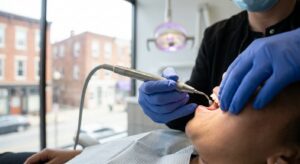
If the tooth is broken, loose, or infected, or you have a lost or broken filling or crown, or bleeding or swollen gums, call Baltimore Emergency Dental for a same-day visit. You may be worried that a dentist will rush to pull a tooth that could be saved, or that you will be judged for waiting this long. The goal of that first appointment is simply immediate pain relief, stopping the infection, and explaining your options clearly. Sometimes an emergency root canal or a broken tooth repair can keep your own tooth in place. If the tooth cannot be saved, an emergency extraction is often necessary to address the infection and prevent further complications. Bring your Medicaid card or insurance card to the visit.
Once the emergency is handled, schedule a consultation with an implant provider for a 3-D X-ray to see whether you may be a candidate. Then use the healing months well: check your plan’s annual maximum, look into dental school clinic screening if you are open to a longer timeline, and compare financing terms. Do not wait months in pain because you assume an implant is out of reach. The emergency care you need today is often covered under many plans, though coverage varies by your specific benefits and plan terms, so verify your coverage before your visit, and the implant can be planned step by step.
Questions Baltimore Seniors Ask Before They Call
Are there free dental implants for seniors in Baltimore?
Very rarely. Free programs in Baltimore usually cover exams, cleanings, fillings, and extractions, not implants. Lower-cost options such as dental school clinics, insurance benefits, and financing may be more realistic paths.
Does Maryland Medicaid cover dental implants for seniors?
Rarely. Maryland Medicaid generally treats implants as elective for adults, but it does cover urgent care such as extractions, infection treatment, and pain relief. Ask your plan for its current benefit list.
Where can seniors get low-cost dental implants in Baltimore?
Dental school clinics in Baltimore often charge less than private offices, though they involve screening, waitlists, and longer visits. Charitable dental events occasionally help but usually focus on extractions and fillings.
How much does a dental implant cost in Baltimore without insurance?
A single implant with abutment and crown commonly costs about $3,000 to $6,000, though your total can vary. Extractions, bone grafts, and imaging can add to the total, and an exam with a 3-D X-ray gives you an accurate quote for your situation.
Can I get a same-day appointment if my tooth hurts and I am thinking about an implant?
Yes. Baltimore Emergency Dental offers same-day emergency appointments with no waiting for severe toothache, abscesses, and broken teeth. Getting the pain and infection treated is the first step before any implant evaluation.
What should I do if I need an emergency extraction and want an implant later?
Get the extraction first to stop the infection and the pain. Then plan the implant with a 3-D X-ray from an implant provider while the socket heals, and review your benefits and financing during those months.
Are there payment plans for seniors on fixed incomes?
Some seniors use healthcare financing with promotional periods, combined with insurance benefits spread across benefit years. Ask the implant office you choose what payment options are available for your treatment plan.
If you are in pain or need an emergency extraction, call Baltimore Emergency Dental today for same-day emergency care, immediate pain relief, no waiting, and a focus on affordable care. Bring your Medicaid card or insurance information to that first visit. One step that can save seniors money is this: get the infected tooth handled now under your current benefits, then use the healing months that follow to line up the implant. Your plan’s next benefit year may arrive before you are even ready for the crown.
Let’s Talk About Your Options
Finding affordable dental implant solutions in Baltimore doesn’t have to feel overwhelming. While truly free implants are rare, there are assistance programs, payment plans, and alternatives that might work better than you think. If you’re dealing with missing teeth or urgent dental concerns right now, Baltimore Emergency Dental can see you the same day to assess your situation and walk you through realistic next steps that fit your circumstances.
Call Baltimore Emergency Dental
This article is general information, not dental advice or a coverage determination. Costs, benefits, recovery, and implant candidacy vary by individual and plan. Your dentist and insurer can confirm what applies to you.