You just had an emergency tooth extraction at Baltimore Emergency Dental. The socket is packed with gauze, and you heard that an implant might be an option once you heal. Then you read that implants take three to six months, and one word kept coming up: osseointegration. You want to know what that means for your mouth, your timeline, and whether waiting that long is worth it. So, what is osseointegration in the context of dental implants? It is the slow work your jawbone does to grip the implant, and it is the reason this part of the process cannot be rushed.
This guide explains what happens in your bone during those months and why the upper and lower jaw heal at different speeds. It also covers what can throw healing off course, what an implant costs, and how a same-day emergency visit for a severe toothache, a dental abscess, or a broken or knocked-out tooth fits into a long-term implant plan. Once you understand the biology, the timeline makes sense, and deciding whether to wait gets much easier.
What Is Osseointegration in the Context of Dental Implants? Your Jawbone Grows Onto the Implant
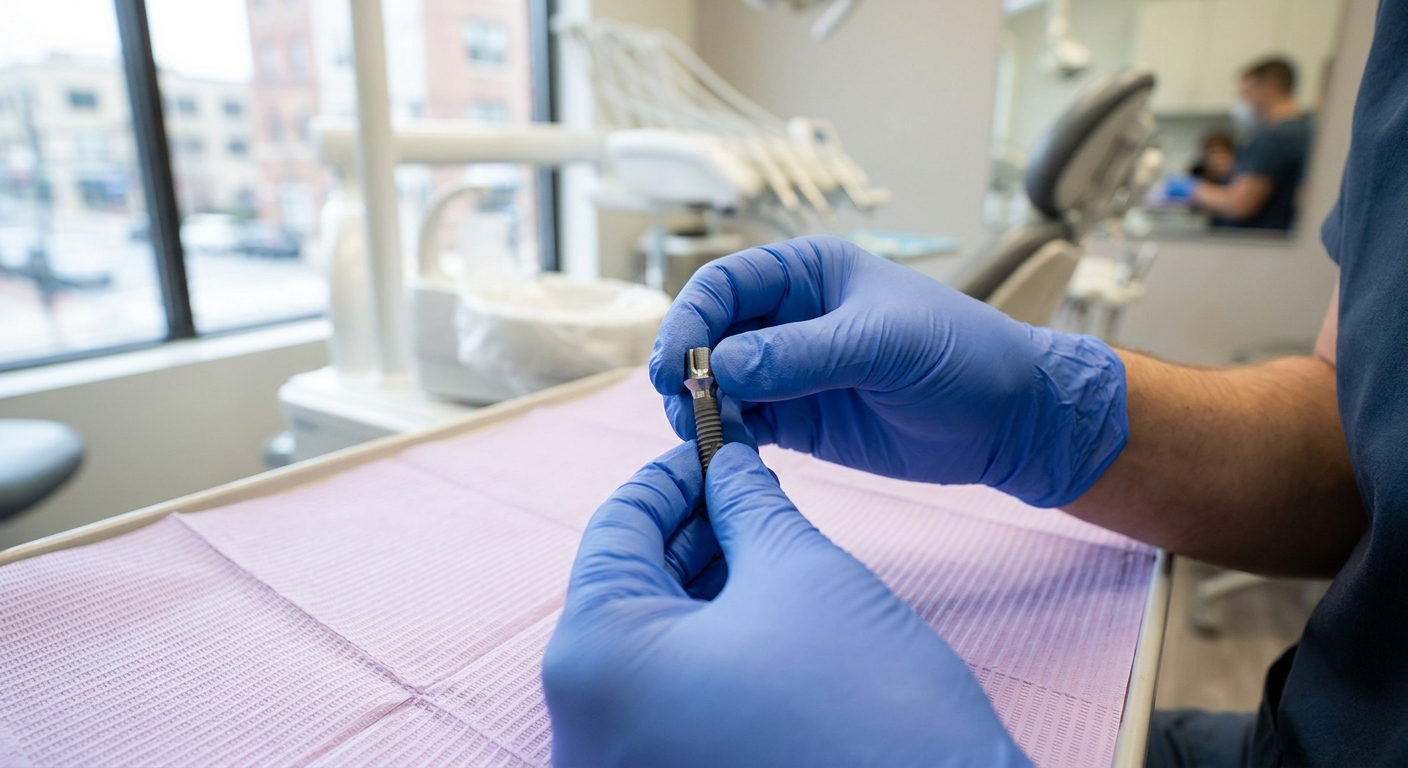
Osseointegration is the process in which living jawbone grows directly onto the surface of a titanium dental implant until the two lock together. It turns a small metal post into a stable artificial tooth root that can handle the force of chewing.
The discovery happened by accident. In the 1950s, Swedish researcher Per-Ingvar Brånemark was studying blood flow in bone using small titanium chambers. When he tried to remove them, the bone had fused to the metal so tightly that the chambers would not come out. He named the effect osseointegration. He defined it as a direct structural and functional connection between ordered, living bone and the surface of a load-carrying implant, a history laid out in this review of osseointegration published through the NIH. By the mid-1960s, his team had placed titanium implants in a human patient, and modern implant dentistry grew from that work.
To picture it, think about planting a young tree. In the first week, you can wiggle the trunk with your hand because only loose soil holds it. Over the next season, the roots spread and grip the ground until the tree stands firm on its own. Osseointegration works the other way around: the implant stays still, and your bone does the growing. New bone cells creep across the implant’s surface, fill in tiny gaps, and harden around it.
Titanium matters here. Its surface forms a thin, stable oxide layer that your body generally accepts instead of attacking or walling it off. That is why bone can sit right against the metal.
There is one difference from a natural tooth worth knowing. Your natural teeth sit in a thin cushion called the periodontal ligament, which lets them move very slightly. An implant has no ligament. It is fused straight to bone, so it feels solid, and that is also why healthy healing matters so much before you put full chewing pressure on it.
Why Does Osseointegration Take Three to Six Months?
Osseointegration takes three to six months because bone rebuilds slowly, one layer of cells at a time, though individual healing rates vary. The lower jaw usually heals faster than the upper jaw because its bone is denser and gives the implant a firmer starting grip.
The traditional healing protocol that grew out of Brånemark’s research allowed about three to four months of healing in the lower jaw and about six months in the upper jaw before the implant carried a tooth, as described in the same NIH-published review. The lower jaw has a thick, hard outer shell of bone. The upper jaw, especially toward the back near the sinuses, has softer, more porous bone. Softer bone can still bond well, but it may need more time to reach good strength in some individuals.
Here is a detail most people never hear. Right after placement, the implant is held in place mechanically, the way a screw grips wood. Over the next few weeks, your body clears away some of the old bone around the implant while new bone is still forming. For a short stretch, the implant can sometimes be a little less stable than it was on day one, until the new bone takes over. This dip can be a normal part of healing, and it is a big reason you are asked to go easy on the implant early on.
How Long Does the Dental Implant Process Take From Start to Finish?
From an emergency extraction to a finished crown, the full process often takes about four to nine months for some patients, depending on how quickly your socket heals, whether you need a bone graft, and which jaw the implant is in. Here is the step-by-step dental implant procedure some patients follow:
- Emergency visit. At Baltimore Emergency Dental, you get same-day emergency care with no waiting and immediate pain relief, and the problem tooth is treated or removed with an emergency tooth extraction if it cannot be saved.
- Socket healing. The extraction site closes and bone begins to fill in over several weeks. Some patients need a bone graft first.
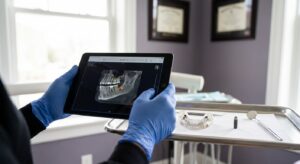
- Implant planning. The implant dentist reviews your health history and uses imaging to measure the bone.
- Implant placement. The titanium post is placed in the jawbone.
- Osseointegration. Bone grows onto the implant over a period that varies by individual, often roughly three to six months.
- Stability check. Before moving on, the implant is checked with X-rays and stability testing to confirm bone has grown in around it.
- Abutment. A small connector is attached to the implant.
- Crown. Your final tooth is fitted and adjusted to your bite.
How Many Days Should You Rest After a Tooth Implant?
In some documented cases, patients returned to normal routines within one to two days after a single implant, though individual recovery varies. More involved surgery or a bone graft can mean a few extra days of rest for some patients.
What you do during healing matters more than how many days you take off work. Eat soft foods, skip smoking, and avoid chewing on that side, because these habits may help protect the bone while it forms. Some swelling and soreness in the first two to three days is common, and it should steadily improve after that for many patients.
Which Health Conditions and Habits Can Slow Osseointegration?
Smoking, poorly controlled diabetes, and certain medications can slow or disrupt osseointegration in some patients because they reduce blood flow and weaken the bone cells doing the rebuilding. None of these automatically rules you out, but each one changes the plan.
Bone needs a steady blood supply to heal. Smoking narrows blood vessels and starves the healing site of oxygen. The CDC links smoking to gum disease and tooth loss, and the same damage to blood flow that harms gums can make it harder for bone to bond with an implant in some individuals. If you smoke, stopping before placement and through the healing months may give your implant a better chance.
Diabetes works differently but leads to a similar place. High blood sugar can slow healing and make infection more likely in some cases. The National Institute of Dental and Craniofacial Research notes that people with diabetes face a higher risk of gum disease and other mouth problems, including the bleeding or swollen gums that often bring people in for urgent dental care. When blood sugar is well managed, many people with diabetes heal well after implants. When it is not, the risk may climb.
Some medications and treatments also affect bone. Drugs used for osteoporosis, long-term steroids, and radiation to the head or neck can change how bone repairs itself in some patients. Clenching or grinding your teeth can also put too much force on a new implant before it has bonded.
You might worry that sharing all of this will get you lectured or turned away. That is not why these questions get asked. Patients who come to Baltimore Emergency Dental for same-day emergency care have their health history reviewed so the team can treat the emergency safely and flag anything that could affect healing if you later decide on an implant. For example, if you smoke and your blood sugar has been running high, knowing that early lets you decide whether to work on those factors first or choose a different tooth replacement for now.
What Are the Downsides or Risks of Dental Implants?
Implants are a widely used tooth replacement option, and individual outcomes vary, but it is fair to weigh the trade-offs before you commit:
- A long timeline. Healing and osseointegration can stretch the process over several months for some patients.
- Cost and limited coverage. Implants usually cost more up front than other tooth replacements, and insurance often pays for only part of the work, or none of it.
- Surgical side effects. Swelling, bruising, soreness, and minor bleeding are common for a few days after placement in many patients.
- Infection. Bacteria at the surgical site can disrupt healing in some cases if it is not caught early.
- Nerve irritation. In the lower jaw, an implant placed near a nerve can cause tingling or numbness in the lip, chin, or tongue in some patients, which is why careful imaging matters.
- Sinus problems. In the upper back jaw, an implant can affect the sinus in some individuals if the bone is thin.
- Failed osseointegration. Sometimes the bone does not bond, and the implant has to be removed and replaced later.
- Long-term gum and bone problems. Without good brushing and checkups, inflammation around an implant (called peri-implantitis) can cause bone loss years down the road in some cases.
Can You Get an Implant the Same Day You Lose a Tooth?
Sometimes, yes. An implant can occasionally be placed right after an extraction and fitted with a temporary crown that same day, but the bone still needs months to bond to the implant beneath the surface.
This is where a lot of online content gets misleading. An immediate-load implant gives you a tooth right away, but it does not skip osseointegration. The temporary crown is usually shaped to stay out of heavy contact with your other teeth, so the implant is not pushed around while bone forms. You leave with a tooth in the gap, but you still need to treat it gently for months.
Not every emergency is a good fit for immediate placement. If the tooth came out because of a dental abscess or infection, the site may need to clear the infection first. If trauma from a broken or fractured tooth cracked the surrounding bone, or if bone has already been lost, the implant may not get the firm starting grip it needs in some cases. In those situations, a staged approach, where the socket heals before the implant goes in, may offer different considerations.
The trade-off comes down to time and risk. Immediate placement can shorten the overall timeline and spare you weeks with a visible gap for some patients. A staged approach takes longer, but it lets the bone and gums recover first, which can lower the risk of early failure in a site that was recently infected or injured in some cases. If you lose a tooth in a dental emergency, Baltimore Emergency Dental focuses on getting you out of pain and treating the infection or injury today, which is the step that protects the bone either option depends on.
How Do You Know If Osseointegration Is Failing?
Healthy osseointegration feels like nothing at all in many cases, so pain, looseness, or swelling around an implant are signs to call a dentist promptly. Early failures tend to show up in the first three to four months in some patients, while the bond between bone and implant is still forming.
During that window, the connection is fragile. Infection, too much biting force, or poor healing can disrupt it in some cases, and once the bond fails, that implant cannot be coaxed back into place. That is why the early healing period matters so much and why follow-up visits are not optional.
Watch for these warning signs:
- The implant or temporary crown feels loose or moves when you touch it
- Pain that gets worse after the first few days instead of better
- Swelling, redness, or pus around the gumline
- A bad taste or odor that does not go away
- Pain when biting down on that side
- Bone loss around the implant on an X-ray, which a dentist may spot before you feel anything
If osseointegration fails, the implant is removed, the site is given time to heal, and a new implant can often be placed once the bone has recovered, usually months later. That is frustrating, but it is not always the end of the road. The worst thing you can do is wait and hope the problem settles. If something feels wrong, call right away, because swelling, pus, or worsening pain points to infection, and Baltimore Emergency Dental treats dental infections and abscesses with same-day emergency care. Catching infection early may help protect the bone you need for a second attempt.
Losing a Tooth in an Emergency Does Not Mean Losing the Implant Option
An unplanned extraction or a knocked-out tooth does not close the door on an implant. Understanding osseointegration simply helps you make better choices about when to start and how to pay for a process that spans several months.
The first 24 hours matter most. If a tooth is knocked out, the goal is to save it, not replace it. The ADA’s MouthHealthy guidance advises keeping a knocked-out tooth moist and getting to a dentist as quickly as possible. Baltimore Emergency Dental offers knocked-out tooth treatment, emergency root canal treatment, broken or chipped tooth repair, and lost filling and crown repair, and saving your natural tooth always comes before any talk of an implant. If the tooth truly cannot be saved, a clean emergency extraction and a well-healed site may give you a good starting point for osseointegration later.
What Does a Dental Implant Cost in Baltimore?
The cost of a dental implant in Baltimore depends on how many stages your treatment needs, so the most accurate answer is a written estimate that covers every step from placement to final crown. Bone grafts, imaging, and the type of crown are the biggest factors that raise or lower the total.
Cost is often the biggest worry, and it is fair to say so out loud. You may be wondering whether you can afford months of appointments right now. Ask for an itemized estimate that lists the extraction, any bone graft, the implant, the abutment, and the crown, so nothing surprises you halfway through healing. You can also ask whether the stages can be spaced out, which lets some patients spread the cost over several months.
Does Insurance or Medicaid Cover Dental Implants?
Baltimore Emergency Dental accepts Baltimore Medicaid and many major insurance plans, so give us a call to verify your specific coverage before your visit. Coverage for implants specifically is often limited, though. Many dental plans treat implants as a major or elective service, which can mean partial coverage, waiting periods, or yearly limits that cap how much the plan will pay. Some plans cover parts of the process, such as the extraction or the crown, even when they do not cover the implant post itself. Medicaid dental coverage for adults usually focuses on emergency care, extractions, and basic treatment rather than implants, so it is worth checking your benefits before you plan treatment. If you have Medicaid, this guide to Medicaid coverage for dental implants in Baltimore explains what to look into.
Baltimore Emergency Dental focuses on same-day emergency care with no waiting, immediate pain relief, and affordable care for underserved communities across Baltimore. You can get the emergency handled today and make the implant decision once you are out of pain and thinking clearly.
What Else Do Patients Ask About Osseointegration?
Most questions come down to time, sensation, and risk. Here are short, direct answers.
How long does osseointegration take for a dental implant?
It varies by individual, but the process typically takes three to six months for many patients. Implants in the lower jaw often bond faster than those in the upper jaw because the bone is denser.
Can I get a dental implant the same day I lose a tooth and still have osseointegration?
Yes, in some cases. An immediate-load implant can be placed the same day for some patients, but the bone still needs months to bond with it beneath the temporary crown.
What does osseointegration feel like while it is happening?
You should feel nothing once the first few days of surgical soreness pass in most cases. Pain, movement, or swelling later on are warning signs that need a prompt visit.
Does smoking affect osseointegration and dental implant success?
Yes, in some patients. Smoking reduces blood flow and weakens bone cell activity, which may raise the risk that the implant will not bond properly.
How do dentists confirm that osseointegration is complete before placing the crown?
Dentists use X-rays and stability checks to confirm bone has grown around the implant before moving on to the abutment and crown.
What happens if osseointegration fails after my dental implant is placed?
The implant is removed, and the site heals for several months. A new implant can often be placed once the bone recovers.
If you just lost a tooth, the choices that most shape your implant options happen in the next few hours: whether the tooth can be saved, and whether the site is treated cleanly so the bone can heal well. Call Baltimore Emergency Dental to schedule a same-day emergency appointment if you have a knocked-out tooth, a broken or fractured tooth, a dental abscess, or a severe toothache that needs immediate pain relief.
Ready to Explore Implants with a Team That Understands the Science?
If you’re considering dental implants and want to understand how osseointegration affects your timeline and success, our team at Baltimore Emergency Dental is here to walk you through every stage of the process. We combine technical precision with clear explanations so you feel confident in your care. Whether you’re dealing with an urgent situation or planning ahead, we’re ready to answer your questions and help you move forward.
Call Baltimore Emergency Dental
Individual healing times and outcomes vary. This article is for general education and does not replace an exam with a qualified provider.