
What “walk in dental with insurance” really means
When you search for “walk in dental with insurance,” you are usually looking for three things at once. You want a dentist who can see you quickly, who accepts your insurance, and who will be upfront about what you will actually pay.
Walk in dental clinics can be a good option if you have severe tooth pain, swelling, a broken tooth, or another urgent problem. Many offices accept major dental insurance plans or offer flexible financing for out of pocket costs. For example, Aspen Dental provides same day, walk in emergency visits nationwide, along with exams, X rays, and a treatment plan with a detailed cost estimate so you know what to expect before you agree to care [1].
If you plan ahead and know what questions to ask, you can find walk in care that fits your insurance and your budget instead of making a rushed decision in pain.
Know what kind of visit you need
Understanding the type of care you need helps you choose the right walk in dental office and ask better insurance questions.
True emergencies vs urgent but not life threatening
A dental problem is usually an emergency if you have any of the following:
- Uncontrolled bleeding
- Severe swelling that affects breathing, swallowing, or vision
- A major facial injury, such as after an accident
- High fever with facial swelling
In those situations, you should go to an emergency room or urgent care first. Medical plans sometimes help pay for treatment related to trauma, serious infections, or abscess drainage, so your medical insurance may be billed, not your dental plan [2].
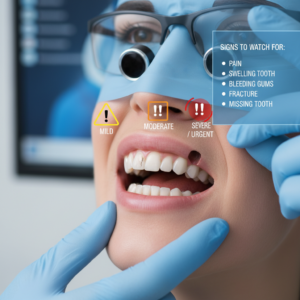
Most “walk in dental with insurance” visits are urgent but not life threatening, such as:
- Severe toothache that has lasted more than a day or two
- Broken or chipped tooth
- Lost filling or crown
- Swelling or abscess that is not affecting breathing
- Broken denture or dental appliance
These are usually handled best in a dental office or emergency dental clinic, not a hospital ER. Delta Dental notes that most dental plans cover this kind of emergency care in a dentist’s office, with normal deductibles, copays, and annual maximums applied [3].
If you are in the Baltimore area and need quick but non life threatening help, a practice that offers a same day dental appointment baltimore can be an alternative to waiting in an emergency room.
Dental office, emergency clinic, or hospital?
Where you go changes which insurance is used and what you pay.
- A general dentist or emergency dental clinic is usually billed to your dental insurance
- An urgent care center or ER is usually billed to your medical insurance, and dental work itself is often not done there, only pain control and infection management [2]
Blue Cross NC explains that if you end up in an urgent care or ER because a dentist is not available, you will likely still need follow up with a dentist to fix or restore your tooth afterward [2].
Understand how your insurance handles emergency dental
Before you pick a walk in dental clinic, it helps to know how your plan works. This puts you in control when you are comparing options.
Dental vs medical insurance in emergencies
For most people, dental insurance covers:
- Exams and X rays to diagnose the problem
- Basic treatment like fillings
- Major services like root canals, crowns, or extractions, depending on plan design
Medical insurance may help when dental problems are tied to:
- Accidents or facial trauma
- Serious infections or abscesses that require drainage
- Dental conditions linked directly to a medical issue [2]
Blue Cross NC notes that in a dental emergency, the dentist, clinic, or hospital can often help decide whether to bill your medical or dental plan based on what is being treated [2].
What dental insurance usually covers in emergencies
Delta Dental explains that most dental plans cover emergency treatment in a dentist’s office, but your usual plan rules still apply [3]:
- You may have to meet a deductible
- You will usually pay a percentage of the cost as coinsurance
- There is an annual maximum, so coverage stops after the plan has paid up to that dollar limit
Benefits can look different for:
- Exams and X rays, which often have better coverage
- Basic treatments, like fillings or simple extractions
- Major treatments, like root canals or crowns
If you expect a more complex procedure, reviewing your emergency dental coverage insurance ahead of time can help you avoid surprises.
Blue Cross NC also notes that dental insurance usually does not cover visits to an ER or urgent care for a tooth problem. Those medical facilities are handled by your medical plan instead, including any prescription medications for dental pain or infection [2].
Check if a walk in dentist is in network
In network status is one of the biggest factors that affects what you pay when you use your dental insurance.
Why network status matters
In network dentists have agreed to discounted rates with your insurance company. For you, this usually means:
- Lower contracted fees for common procedures
- Better coverage percentages
- The office will file claims directly with your insurer
Out of network offices can be more expensive, and in some cases, emergency care might not be covered at all. Delta Dental points out that certain plan designs, such as DHMO plans, may not pay for emergency care from out of network dentists, especially for non life threatening issues [3].
If your goal is urgent dental care in network, confirming network status before you walk in will protect you from unexpected bills.
How to confirm network status quickly
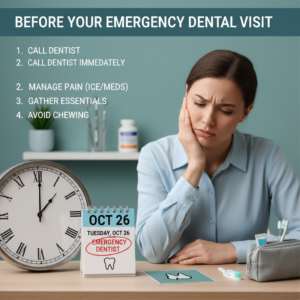
When you call a walk in dental office, you can:
- Ask if they are in network with your specific plan name, not just the insurance company
- Provide your member ID so they can verify benefits in real time
- Request a quick breakdown of your emergency benefits and expected copays
Delta Dental members can also search for in network emergency options through the insurer’s website or mobile app while traveling or at home [3].
If you want the office to do this work for you, look for a provider that acts as an insurance verified dentist baltimore or similar service in your area.
Compare walk in options by cost and financing
Even when you have insurance, emergency care can be expensive. Understanding price ranges and financing options can help you choose a walk in clinic that matches your budget.
Typical emergency dental costs with and without insurance
Guardian Life estimates that for people without insurance:
- A routine exam and cleaning averages about 203 dollars, though it can range from 50 to 350 dollars depending on location and other factors [4]
- Composite resin fillings average around 226 dollars
- Simple tooth extractions average about 177 dollars
- Major procedures such as surgical extractions can cost about 363 dollars, and porcelain crowns can reach up to 1,399 dollars [4]
GoodRx reports that across the United States, tooth extractions can cost up to 300 dollars per tooth without insurance and crowns may range from roughly 1,100 to 1,300 dollars [5].
With insurance, your share depends on:
- Deductible status
- Coverage percentage for emergency and major services
- Whether you are in or out of network
- How much of your annual maximum you have already used
If you suspect you need a root canal or crown, reviewing the cost of emergency root canal and the way major services are covered under your plan is especially helpful.
How walk in clinics handle pricing and estimates
Some walk in dental clinics, including large groups like Aspen Dental, provide:
- A focused exam and X rays, if needed
- Immediate relief, such as drainage, temporary restoration, or medication
- A personalized treatment plan
- An upfront detailed cost estimate before you consent to treatment [1]
Getting a written estimate, even for urgent care, helps you compare clinics and decide whether you need a short term solution now and a more permanent treatment later. If you want to plan ahead, some offices offer an urgent dental cost estimate service before you come in.
Financing, payment plans, and discount options
When your insurance does not cover everything, you still have several ways to reduce or spread out the cost.
Aspen Dental, for example, offers:
- The Aspen Dental Savings Plan, a discount program that can reduce dental fees by up to 30 percent for an annual membership of 49 dollars, although it is not insurance [1]
- Third party financing with a reported approval rate of 99 percent for applicants, which can help cover out of pocket emergency costs [1]
Beyond large chains, you can also look at:
- Dental savings plans, which GoodRx notes can give you access to discounted, network negotiated rates if you do not have traditional insurance or have maxed out your benefits [5]
- Dental school clinics, which may offer services at up to 50 percent less than standard fees, with students performing care under faculty supervision [5]
- Community health centers in underserved areas, where dental services are often provided on a sliding fee scale for low income patients [5]
- Flexible spending accounts and health savings accounts, which can typically be used for fillings, cleanings, X rays, dentures, and wisdom tooth removal [5]
If you know you will need to spread payments out, look for a clinic that clearly explains emergency dental financing options, offers a payment plan for emergency dental, or advertises an urgent dental payment plan to reduce pressure in the moment.
For a broader view of affordable solutions, you may also find it helpful to explore emergency dental payment options, affordable emergency dentistry, and emergency dental low cost resources.
Consider Medicaid and state programs
If you rely on Medicaid, it is especially important to confirm which dentists accept your coverage before you walk in.
In Virginia, for example, Cardinal Care Smiles is the Medicaid and FAMIS dental program, and it provides dental benefits for both adults and children [6]. Members can:
- Search online or call DentaQuest to find participating dentists
- Receive services at no cost when they see providers who accept their coverage
- Access covered care during pregnancy and for children and young adults up to specified ages [6]
Aspen Dental specifically notes that it does not accept Medicaid at its locations, which shows why checking ahead is essential if you are looking for emergency dental with medicaid or similar coverage [1].
State Medicaid programs vary. However, most have provider directories or hotlines you can use to quickly locate a walk in dentist that accepts your insurance before you arrive.
Evaluate same day availability and service quality
When your tooth hurts, you understandably want to be seen as quickly as possible. At the same time, quality of care still matters.
Same day and walk in scheduling
Some offices allow true walk ins, while others arrange same day emergency appointments during business hours. A practice like Centreville Dental Wellness Center in Virginia often schedules same day emergency visits for patients who call with urgent issues, which can feel similar to a walk in experience but gives the team time to prepare for your arrival [7].
When you call, you can ask:
- Whether they accept walk ins or require a quick phone call first
- How they prioritize patients with severe pain or swelling
- What your expected wait time is once you arrive
If you are balancing timing and cost, pairing a clinic that can see you quickly with fast dental appointment payment options is often the most practical approach.
Staff support with insurance and billing
In a stressful situation, having support with insurance and billing can make a big difference. Some offices, such as Centreville Dental Wellness Center, highlight that their front desk staff are familiar with insurance practices and can help you understand your benefits, sometimes more clearly than the plan itself [7].
When you are choosing a walk in dental clinic, consider asking:
- Will someone review my coverage and give me an estimate before major treatment?
- Can the office explain whether medical or dental insurance is more appropriate for my situation?
- Do they help with prior authorizations and claims if needed?
The right clinic will not only accept your insurance, it will help you use it effectively.
Questions to ask before you walk in
Having a short checklist of questions ready can help you quickly identify the best “walk in dental with insurance” option for you.
Keep this list on your phone so you can read it aloud when you call a clinic while you are in pain.
Key questions to ask:
- Do you take my specific dental insurance plan, and are you in network?
- Do you offer same day or walk in emergency appointments today?
- What is the emergency exam fee, and how is it billed to my insurance?
- Can you give me a basic estimate for the type of problem I have, such as a filling, extraction, or root canal?
- Do you offer any emergency dental discount plan or in house savings program if my insurance does not cover everything?
- What insurance for emergency dental care details do you need from me to verify benefits before I arrive?
- If I end up needing more extensive treatment, do you provide budget emergency dental baltimore style pricing, financing, or payment plans?
- Are you an emergency dentist that accepts insurance for my specific carrier and plan type?
If the person on the phone is willing to answer these questions clearly and without pressure, that is usually a good sign that the office will handle your emergency visit professionally.
Putting it all together
Choosing the best walk in dental clinic with insurance is easier when you break it into a few clear steps:
- Decide whether you need a dentist, emergency clinic, or hospital based on your symptoms.
- Review how your dental and medical plans handle emergencies, including in and out of network care.
- Confirm that the walk in clinic is in network and familiar with your type of insurance.
- Ask for an upfront estimate and check what financing, payment plans, or discount options are available.
- If you have Medicaid, use state directories to find offices that accept your coverage before you go.
- Prioritize clinics that can see you the same day, not just quickly, but also with support for billing and benefits.
When you combine quick access, confirmed insurance acceptance, and clear financial communication, you put yourself in a stronger position. You get the urgent dental care you need now while protecting your budget and making your insurance work for you.