
Why an urgent dental cost estimate matters
When you are in pain, you want fast relief, not financial surprises. Getting an urgent dental cost estimate gives you a clearer picture of what your emergency visit is likely to cost, how your insurance may apply, and what you might pay out of pocket.
Understanding your estimated costs before treatment can help you:
- Decide where to go for care
- Prepare for copays and deductibles
- Ask about payment plans or financing in advance
- Avoid delaying treatment because of cost fears
Emergency dental costs can vary widely by treatment. For example, common emergency procedures can range approximately from $50 to $300 for a filling, $75 to $300 for a simple extraction, $700 to $1,200 for a root canal, and $500 to $2,000 for a crown, depending on your specific situation and location [1]. Having an estimate up front helps you prepare instead of guessing.
What affects your urgent dental cost estimate
No emergency dentist can give you a single flat price that covers every situation. Your urgent dental cost estimate depends on several factors that work together.
Type and severity of the emergency
The nature of your dental emergency is usually the biggest cost driver. A chipped tooth that only needs smoothing and a small filling will cost far less than an abscessed tooth that requires a root canal and crown.
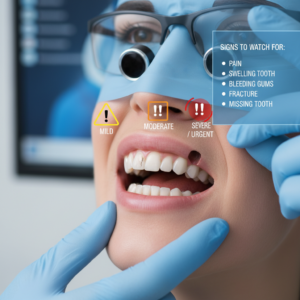
Common emergency issues include:
- Toothache or infection
- Cracked or broken teeth
- Knocked out tooth
- Lost filling or crown
- Broken or loose braces
For example, a knocked out tooth may sometimes be saved with quick treatment, but if it cannot be saved you might need a bridge or implant, and that can significantly raise your total cost [2].
Type of procedure needed
Your dentist will recommend specific procedures based on what they find in your exam and X rays. Each procedure has its own fee range. Some representative averages include:
- Tooth extraction: about $75 to $300
- Root canal: about $700 to $1,200
- Filling: about $50 to $300
- Crown: about $500 to $2,000
These ranges are broad because materials, tooth location, and your local cost of living all play a role [1]. If you are worried about a possible root canal, you can also review focused resources on the cost of emergency root canal to better understand what drives those fees.
Exam, X rays, and diagnostic steps
Your urgent visit typically starts with an exam and often X rays. Initial consultations for emergency dental care commonly cost about $50 to $150 and may include basic X rays [1]. Some clinics may discount or waive this fee for new patients or special promotions.
If you need additional imaging or tests, those will add to your estimate, but they also help your dentist avoid unnecessary or incorrect treatment, which can save you money long term.
Timing and after hours care
Emergency clinics sometimes charge more for evenings, nights, or weekends. After hours surcharges are common, especially if the dentist opens the office outside normal hours to see you.
If your situation is painful but stable enough to wait a few hours, you can ask for a same day or next day visit during regular hours to help control costs. In some locations, a same day dental appointment baltimore style option can give you fast care without the highest after hours fees.
Location and dentist experience
Costs are usually higher in large cities and lower in rural areas. A dentist with advanced training or specialty skills may also have higher fees. At the same time, an experienced clinician can sometimes resolve problems more efficiently, which might limit how many visits and procedures you ultimately need.
Insurance coverage and network status
Your dental insurance is one of the most important pieces of your urgent dental cost estimate. Plans differ widely in:
- Annual maximums
- Deductibles and copays
- Coverage for emergency exams, X rays, and urgent procedures
- Whether after hours surcharges are covered
Many plans pay at least part of an emergency exam, but restorative work such as crowns may be covered at a lower percentage or after a deductible is met [3]. Visiting urgent dental care in network can reduce your out of pocket portion through negotiated fee schedules.
If you are unsure which dentists are in network, an insurance verified dentist baltimore style service helps you confirm coverage before you sit in the chair.
How dentists estimate urgent dental costs
Even though no one can guarantee exact pricing before your exam, a clear process for an urgent dental cost estimate can bring you real peace of mind.
Using online cost estimator tools
Some insurers and dental benefit companies offer online cost estimators that show typical price ranges for common services. For example, the Delta Dental Dental Care Cost Estimator lets you see estimated cost ranges for many procedures before you visit a dentist [4].
These tools:
- Group services into treatment categories that are often delivered together
- Give you a ballpark range based on your plan, location, and dentist network status
- Help you understand which parts your plan may cover and which you may owe
It is important to remember that these are only estimates, not guarantees of fees, benefit coverage, or final out of pocket costs. Actual costs can vary from the estimate, and the categories are not treatment recommendations, so you still need to rely on your dentist for specific clinical advice [4].
In office pre treatment estimates
Once you arrive for your emergency visit, your dentist will perform an exam and discuss options with you. At that point, the office team can usually create a written estimate that includes:
- Line item fees for each planned service
- What your insurance is expected to pay
- Your estimated copay or coinsurance
- Any separate after hours or emergency fees
If you already have dental insurance, you can also look at your emergency dental coverage insurance details ahead of time, so you understand how the practice arrived at your estimate.
Verification with your insurance plan
Many offices will help by checking your benefits in real time. They confirm:
- Whether your policy is active
- What your remaining annual maximum is
- What percentage different procedures are covered at
- Whether a preauthorization is required
Since insurance coverage for emergency procedures can vary widely, checking your policy is essential to avoid unexpected bills later [5]. If coverage is a concern, it can also help to choose an emergency dentist that accepts insurance and is familiar with urgent situations.
Typical price ranges for urgent dental care
Your final costs depend on your exact situation, but understanding common ranges can help you decide what questions to ask.
Many urgent dental visits cost somewhere between $150 and $300 for the visit itself, not including more advanced treatment that may be required [1].
Some national data and examples show:
- A simple filling during an emergency visit can range roughly from $139 to $976, depending on the tooth and materials used [2]
- A molar root canal with the most expensive type of crown can reach about $2,736 in total cost [2]
- Combining a tooth extraction with an implant for a cracked or chipped tooth can average around $3,058, which makes it one of the more expensive types of emergency treatment [2]
At some practices, emergency care often costs more than routine dentistry because of the need for same day appointments, extended hours, and immediate treatment. Your dentist will also consider any antibiotics, anesthesia, sedation, or hospital based services, since these may be billed separately [5].
If you are looking for emergency dental low cost solutions, focusing on early care and conservative treatment, when appropriate, can help limit what you spend while still protecting your health.
How your insurance influences what you pay
Your insurance can dramatically change your final bill compared with the sticker price on your estimate.
Emergency exam and X ray coverage
Some plans fully or mostly cover emergency exams and necessary X rays because they are considered diagnostic. Others may apply them to your deductible or cover only a portion. It is worth reviewing your specific insurance for emergency dental care so you understand which category your plan falls into.
Restorative and surgical coverage
Coverage for fillings, crowns, root canals, and extractions can vary by plan. You might see:
- Higher coverage for simple fillings
- Moderate coverage for extractions and root canals
- Lower coverage for crowns, implants, or complex restorative work
Insurance plans can sometimes fully cover common emergency treatments, while others require copayments or have waiting periods before certain services are included [5]. That is why two people with the same procedure can end up paying very different amounts out of pocket.
If insurance is your main concern, consider starting your search with insurance accepted emergency dentist resources and walk in dental with insurance options, so you know the office is prepared to work with your plan.
Medicaid and public coverage
If you use Medicaid, emergency dental coverage depends heavily on your state and your specific benefits. Some states focus primarily on pain relief and infection control, while others offer broader adult dental benefits.
Because emergency visits for dental pain are so common in hospital emergency departments, about 2 million per year in the United States, connecting patients with dental clinics and local dentists can save significant costs and provide better ongoing care [6]. If you rely on public coverage, exploring emergency dental with medicaid options in your area can help you find offices familiar with these programs.
In network advantages
Choosing an in network provider often means:
- Lower negotiated procedure fees
- Predictable copays and coinsurance
- Less paperwork for you
- A smoother process for getting preauthorizations
If you are trying to keep expenses predictable, urgent dental care in network is usually your best starting point.
Financing, payment plans, and budget friendly options
If your urgent dental cost estimate is higher than you expected, you still have options. Many dental offices build flexible payment solutions right into their process.
In house payment plans
Some practices offer in house payment arrangements that let you divide your balance over several weeks or months. This can be especially helpful if you do not want or qualify for third party credit.
You can look for resources such as payment plan for emergency dental or urgent dental payment plan to understand how these arrangements typically work and what terms to expect.
Third party financing and medical credit
Financing plans from third party companies can spread costs over 6 to 24 months, often with promotional interest rates between 0 percent and 10 percent for those who qualify. Other options include:
- Traditional credit cards, usually at 15 percent to 25 percent interest
- Health focused credit products such as CareCredit, which can offer promotional 0 percent interest periods and standard rates up to about 26.99 percent [1]
Reviewing emergency dental financing options and emergency dental payment options before your appointment can help you decide which approach fits your budget.
Discount plans and in office savings
Some dental offices participate in discount plans or offer membership style in house savings programs. These are not insurance, but they can reduce the fee schedule for common procedures in exchange for an annual or monthly membership cost.
If you do not have dental insurance, an emergency dental discount plan or other affordable emergency dentistry option may significantly lower your final bill.
Planning for emergencies on a budget
If you are already cost conscious, you can still access urgent care by:
- Setting aside a small amount monthly for medical and dental emergencies
- Choosing a primary dentist who offers budget emergency dental baltimore style pricing or membership programs
- Confirming payment options at the time you receive your estimate
- Asking whether some treatment can be safely staged over time
Your goal is to avoid delaying care so long that a small, less costly problem turns into a major, expensive one. Addressing cracks, chips, or early infections quickly almost always lowers your total cost compared with waiting until pain becomes severe [3].
Same day appointments and fast payment processing
When you are hurting, availability can matter as much as cost. Same day or walk in emergency appointments are designed to get you seen quickly while still giving you a chance to understand your financial responsibilities.
Scheduling urgent or same day visits
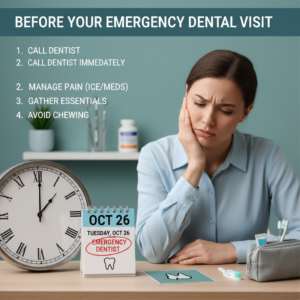
Many offices keep specific slots open for dental emergencies. When you call:
- Explain your symptoms and when they started
- Mention any swelling, fever, or trauma
- Ask whether a same day slot is available
In some regions, it is possible to find a same day dental appointment baltimore type clinic that specializes in rapid scheduling for emergencies. These practices often have streamlined check in and estimating systems so you can be seen and treated quickly.
If you face a true medical emergency, such as trouble breathing, uncontrolled bleeding, or major facial trauma, you should seek immediate emergency medical or dental assistance, such as calling 911, rather than relying on an online cost estimator tool or waiting for a routine appointment [4].
Verifying insurance and processing payments quickly
To speed up your visit and avoid delays in treatment, you can:
- Have your insurance card and identification ready
- Share your employer and plan information when scheduling
- Ask if your benefits can be checked before you arrive
By working with an insurance verified dentist baltimore style practice, your coverage can often be confirmed in advance. Many offices also support fast dental appointment payment systems, which might include contactless payment, online portals, or pre saved cards to simplify checkout.
Walk in care with insurance
If you cannot wait for a scheduled time, some practices offer walk in emergency visits. When possible, choose walk in dental with insurance options so the office team can coordinate your benefits while you are being seen.
Keep in mind that walk in care may result in longer in office waits or higher after hours fees, but it is still usually less expensive and more effective than going to a hospital emergency department for dental pain. Hospital visits often provide only pain medication and antibiotics, then they refer you back to a dentist later, which means you could pay twice.
Using your estimate to make confident decisions
A good urgent dental cost estimate is more than just a number. It is a tool that helps you make informed, confident decisions about your care.
Once you have your estimate, you can:
- Compare treatment options and their costs
- Confirm what your insurance is likely to cover
- Decide whether to use savings, payment plans, or financing
- Plan follow up visits with your budget in mind
If something on your estimate is unclear, ask your dental team to walk through each line with you. Understanding your costs ahead of time can reduce stress and help you focus on what matters most, which is getting out of pain, addressing infection, and protecting your long term oral health.
With the right combination of clear estimates, emergency dental low cost options, and flexible emergency dental payment options, you can move forward with the urgent care you need without losing control of your finances.