Emergency cosmetic dental repair is about more than stopping pain. In many cases, you are also trying to protect your smile, your bite, and your confidence in a very short window of time. Knowing what to do in the first minutes, how to manage fear or a child’s distress, and where to find the right level of specialized care can make the difference between a full recovery and long-term damage.
This guide walks you through practical, step-by-step tips for quick and reliable emergency cosmetic dental repair, with special attention to pediatric injuries and sedation options for anxious or medically complex patients.
Recognizing a true cosmetic dental emergency
Not every chipped tooth requires urgent care, but many situations do. According to the American Dental Association, a dental emergency is any problem affecting teeth or supporting tissues that needs immediate action to prevent biological, functional, or aesthetic complications, with pain being the most common complaint [1].
You should seek emergency cosmetic dental repair right away if you experience:
- A knocked out tooth, especially a front tooth
- A broken or fractured tooth with sensitivity or visible pink or red pulp
- A large or jagged chip on a front tooth affecting appearance or causing sharp edges
- A lost or broken filling, crown, bridge, veneer, or implant crown that leaves the tooth exposed
- Severe toothache, swelling, or signs of abscess
- Trauma to the mouth from a fall, sports injury, or accident
- Broken braces wires or orthodontic brackets that cut your lips or cheeks
Traumatic emergencies such as tooth fractures, luxations, and avulsions (knocked out teeth) are particularly time sensitive and often involve anterior teeth that are most visible in your smile [1].
If you are unsure whether your situation is an emergency, act as if it is and contact an emergency dentist. It is almost always safer to be evaluated promptly.
Acting in the first minutes after injury
The first 15 to 60 minutes after a dental injury are critical for protecting both appearance and function. Quick, calm steps at home can dramatically improve the outcome of your emergency cosmetic dental repair.
If a tooth is knocked out
A knocked out tooth (avulsion) is one of the most time sensitive emergencies. Patients should see an emergency dentist ideally within 30 to 60 minutes to maximize the chances of saving the natural tooth [2].
- Handle the tooth by the crown
Do not touch the root. Gently pick up the tooth by the white chewing surface. - Rinse briefly if dirty
Use cold running water for no more than 10 seconds. Do not scrub or scrape. - Try to reinsert the tooth
Gently push the tooth back into the socket, facing the correct way, and have the patient bite softly on gauze to hold it in place if possible. This is exactly what many emergency dentists, including Dr. Cheng Tai in Midtown Manhattan, recommend to increase the chance of successful reimplantation [3]. - If reinsertion is not possible, keep the tooth moist
Place the tooth in milk, saline solution, or the patient’s saliva, but not in water. Keeping the tooth moist is essential for cell survival on the root and improves the success of emergency cosmetic dental repair [4]. - Go to an emergency dentist immediately
Call on the way so the dental team can be ready. Offices with emergency expertise, such as those providing urgent smile repair or cosmetic repair after injury, are equipped to manage these cases quickly.
If a tooth is cracked, chipped, or broken
Chipped or broken teeth, even when the chip seems small, should be evaluated promptly to prevent further damage and infection [5].
You can:
- Rinse your mouth gently with warm water or saline solution
- Save any tooth fragments in milk or saline if available
- Use dental wax or sugar-free gum to cover sharp edges temporarily
- Apply a cold compress outside the mouth to control swelling
- Take over-the-counter pain relievers if needed, unless your physician has advised otherwise
Avoid biting on the injured tooth and stick to soft foods until you are seen. Emergency dentists can often restore appearance the same day using bonding, veneers, or temporary crowns as part of an urgent aesthetic dental fix.
If you lose a crown, filling, veneer, or bridge
Losing or damaging a restoration is more than a cosmetic concern. It exposes the underlying tooth, increasing sensitivity and risk of fracture or infection [6].
For temporary protection:
- Keep the crown, veneer, or bridge if it is intact
- Gently clean the inside with water
- Use over-the-counter temporary dental cement to secure a loose crown until you see an emergency dentist, as recommended by emergency care guides [7]
- Never use super glue or household adhesives
Then schedule prompt care. Practices that offer emergency temporary bridge repair, emergency veneer repair, and emergency dental implant repair can often restore both protection and aesthetics in one visit.
Using a dental emergency kit effectively
Having a dental emergency kit at home and when you travel gives you options for immediate, short-term relief until you reach professional care. Approximately 1 in 6 Americans experiences a dental emergency each year, which underscores the value of prepared at-home management [8].
A well-stocked kit for emergency cosmetic dental repair typically includes:
- Gauze or cotton rolls to control bleeding and protect damaged areas [9]
- Temporary dental cement or repair gel for loose crowns or lost fillings [7]
- Temporary filling material for short-term coverage of lost fillings, to be replaced promptly by a dentist [10]
- Saline solution to gently clean mouth injuries and reduce infection risk [10]
- Oral anesthetic gel with benzocaine for localized pain
- Over-the-counter pain relievers if appropriate for you [9]
- A small container with a lid for tooth fragments or knocked out teeth
- Non-latex gloves and a small flashlight
These tools are meant for temporary support. Once you stabilize the situation, contact a provider who offers esthetic emergency dental care or urgent smile repair to complete definitive treatment.
Home remedies and emergency kits are bridges to care, not substitutes for an emergency dentist. Use them to buy time, not to delay treatment.
Getting the right level of specialized emergency care
Emergency cosmetic dental repair is not one-size-fits-all. The best outcome often depends on matching your specific situation to a team with the right specialty services, technology, and sedation options.
Advanced cosmetic and prosthodontic expertise
If your front teeth are involved or you have complex restorative work, look for practices that highlight cosmetic and restorative emergency services. For example, prosthodontic specialists and cosmetic dentists such as Dr. Cheng Tai in Midtown Manhattan prioritize maintaining the natural appearance of your teeth during emergency care and use advanced tools like the Waterlase system to enhance outcomes [3].
Similarly, clinics like Astoria Dental Group in Queens rely on state-of-the-art technology and advanced implant and cosmetic techniques to repair broken or chipped teeth, restore aesthetics, and relieve pain the same day [11].
When you contact a dentist, you can ask:
- Do you offer same-day cosmetic repairs such as bonding or temporary crowns?
- Can you manage complex cases like broken implants or multiple fractured teeth?
- Are digital X-rays and imaging available for immediate diagnosis?
- Do you provide emergency implant support or emergency dental implant repair?
These questions help you connect quickly with a provider who can handle both the emergency and the cosmetic details.
Pediatric and child-friendly emergency services
Children are especially vulnerable to dental trauma from falls, sports, and playground accidents. Access to child friendly emergency dentistry is important so your child receives care tailored to their age and emotional needs.
You may want to look for:
- A dedicated pediatric emergency dentist in Baltimore or similar pediatric specialist in your area
- Practices that advertise trauma repair for children or child dental trauma emergency services
- Offices skilled at treating knocked out, fractured, or dislodged teeth in children within the critical first hour, as dental trauma guidelines recommend [2]
Child-focused emergency teams are used to managing frightened or very young patients and can often provide sedation or behavior guidance techniques as part of sedation assisted emergency care when needed.
Emergency care for seniors and medically complex patients
For older adults and people with medical conditions, emergency cosmetic dental repair may intersect with issues like bone loss, medications, or existing prosthetics. Services such as emergency dentistry for seniors are designed to take these factors into account.
Consider asking:
- Do you coordinate with physicians for patients on blood thinners or with heart conditions?
- Can you manage post-extraction complications such as dry socket or bleeding, which may be more common in medically complex patients [1]?
- Are you experienced with repairing dentures, bridges, and implant restorations in emergencies?
A senior-focused emergency provider is also more likely to have accessible facilities and flexible appointment scheduling.
Sedation options for anxious or high-need emergency patients
Pain, fear, and previous traumatic experiences can make it very difficult to tolerate emergency procedures. Sedation dentistry helps you receive necessary care while staying calm and comfortable.
If you know you struggle with dental visits, look for:
- Sedation emergency dental care
- An emergency sedation dentist experienced in urgent cases
- Practices that specifically mention sedation for anxious emergency patient services
Sedation-assisted care can be especially helpful for:
- Extensive or multiple cosmetic repairs in a single visit
- Complex extractions, including sedated tooth extraction emergency
- Patients with strong gag reflexes or difficulty sitting still
- Children or adults with special healthcare needs
When you call, ask which types of sedation are available and what monitoring is provided. Options may range from nitrous oxide to oral or IV sedation, depending on your medical history and the nature of the emergency.
What to expect during emergency cosmetic treatment
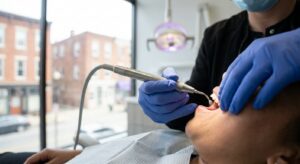
Emergency dentists prioritize stabilizing your condition, relieving pain, and protecting long-term health, while also considering how your smile will look when treatment is complete. Many offices, such as Astoria Dental Group in Queens and Serene Dental Spa in North Carolina, aim for same-day evaluation and initial repair whenever possible [12].
A typical visit may include:
- Evaluation and imaging
Your dentist will take a detailed history of how the injury occurred and review your symptoms. Digital X-rays or other imaging help assess fractures, root damage, infections, and the status of any restorations [2]. - Pain control and stabilization
This may involve local anesthetic, sedation, antibiotics if there is infection, or draining an abscess. Emergency treatment can quickly address pain, swelling, infection, and nerve damage that might otherwise escalate [2]. - Immediate repair or protection
Depending on the injury, same-day options may include
- Bonding chipped edges
- Placing a temporary or permanent filling
- Cementing a temporary crown or bridge
- Reimplanting a knocked out tooth and splinting it to neighbor teeth
- Initiating root canal therapy when the pulp is exposed, as recommended for enamel-dentin fractures with pulp involvement [1]
- Cosmetic planning
Once the emergency is under control, your dentist will outline options for final cosmetic restoration, such as veneers, crowns, implants, or orthodontic adjustments. Clinics with a focus on cosmetic repair after injury or urgent smile repair integrate these discussions into your initial visit so you understand the full pathway back to a natural looking smile. - Follow-up and prevention
Follow-up visits confirm healing and finalize aesthetic work. Your dentist will also review preventive steps, including regular checkups, addressing untreated decay, and using mouthguards in sports, which can significantly reduce the risk of future emergencies [13].
To summarize the core emergency situations and immediate actions:
| Situation | Immediate home action | Next step |
|---|---|---|
| Knocked out tooth | Reinsert or store in milk or saline | See an emergency dentist within 30–60 minutes |
| Broken or chipped front tooth | Rinse, save fragments, protect sharp edges | Call for same-day cosmetic evaluation and bonding |
| Lost crown, veneer, or filling | Use temporary cement or filling if available | Schedule prompt emergency veneer repair or restoration |
| Severe toothache or swelling | Rinse, cold compress, pain relievers if appropriate | Seek urgent evaluation for possible infection or abscess |
| Broken braces wire or bracket | Cover sharp areas with wax | Arrange emergency orthodontic repair |
Preventing future cosmetic emergencies
You cannot prevent every accident, but you can significantly lower your risk of emergency cosmetic dental repair with a few consistent habits.
You may want to:
- Maintain good daily oral hygiene and keep up with checkups and cleanings, which helps catch decay before it becomes an emergency [14]
- Wear a custom or high quality sports mouthguard during contact and high risk activities [15]
- Avoid chewing ice, hard candy, or non food items that can crack teeth or restorations [16]
- Address clenching or grinding with a night guard if recommended
- Keep your dental emergency kit updated at home and packed when traveling [17]
Having a clear plan, including which local provider you will call for sedation emergency dental care, child-friendly emergency dentistry, or emergency dentistry for seniors, turns a frightening event into a controlled, coordinated response.
When you know how to act quickly, where to seek specialized help, and how to use tools like sedation and emergency kits appropriately, you are well prepared to protect both your health and your smile in any cosmetic dental emergency.
References
- (NCBI Bookshelf)
- (Kelly Dental)
- (Madison Dental Art)
- (Kelly Dental, Novel Smiles)
- (Dr. Roy D. Jennings Dentistry)
- (Novel Smiles)
- (Dimension Dental Care, Serene Dental Spa)
- (Daniel Island Dentistry)
- (Serene Dental Spa)
- (Dimension Dental Care)
- (Astoria Dental Group)
- (Astoria Dental Group, Serene Dental Spa)
- (Daniel Island Dentistry, Kelly Dental, Powers Dental Group)
- (Daniel Island Dentistry, Powers Dental Group)
- (Daniel Island Dentistry, Kelly Dental)
- (Kelly Dental, Powers Dental Group)
- (Dimension Dental Care, Serene Dental Spa, Daniel Island Dentistry)