Understanding sedation assisted emergency care
When you are in pain, anxious, or facing an unexpected dental or minor medical emergency, the idea of “being put under” can feel unsettling. Sedation assisted emergency care is designed to help you tolerate necessary procedures that would otherwise be too painful, stressful, or frightening, while still keeping you safe.
In simple terms, sedation assisted emergency care uses carefully selected medications to reduce pain, anxiety, and awareness so that you can comfortably receive treatment, while your breathing and heart function remain supported and closely monitored. In emergency medicine, this is often called procedural sedation and analgesia and it is a standard part of modern, patient centered care [1].
You might encounter sedation in different settings, including:
- An emergency room visit for a painful injury
- A dental emergency that requires urgent repair or extraction
- A pediatric emergency when a child is too distressed to cooperate
- A cosmetic or esthetic emergency where precision work is needed
Knowing what to expect can help you feel more prepared and in control when you or your child needs this kind of care.
When sedation is used in urgent care
Sedation assisted emergency care is not used for every urgent visit. It is recommended when the benefits of comfort, safety, and successful treatment clearly outweigh the small but real risks of sedation.
Common situations where you may be offered sedation
You may be offered some form of sedation if you are:
- In severe pain that cannot be controlled with local anesthesia alone
- Extremely anxious or have a strong dental or medical phobia
- Unable to sit still due to fear, movement disorders, or developmental conditions
- A child who is distressed, frightened, or unable to understand instructions
- Facing a complex or lengthy procedure that has to be completed right away
In dental settings, you might see sedation offered for:
- Complex or painful extractions, including sedated tooth extraction emergency
- Urgent root canal or nerve treatment for severe toothache
- Emergency cosmetic dental repair after an accident that chips or breaks front teeth
- Emergency dental implant repair or emergency implant support if an implant crown becomes loose or damaged
- Emergency veneer repair or urgent aesthetic dental fix when your smile is suddenly affected
If you are someone who avoids care due to fear, you may also be a candidate for sedation for anxious emergency patient services.
How your care team keeps you safe
Although any sedative carries some risk, large studies show that serious complications like laryngospasm, aspiration, or the need for emergency intubation are rare, typically occurring only a few times per thousand sedations in emergency departments [2]. Safety comes from careful assessment, proper training, and continuous monitoring.
Pre sedation evaluation
Before you receive sedation, your team will perform a focused but thorough evaluation. You can expect questions about:
- Your medical history, including heart, lung, and sleep conditions
- Current medications, alcohol or drug use, and allergies
- Prior reactions to anesthesia or sedation
- Your last meal or drink and any nausea or vomiting
You may also have:
- A targeted physical exam, with attention to your airway, heart, and lungs
- An airway assessment, such as a Mallampati score, which helps estimate how easy it would be to assist your breathing if needed [1]
- Basic measurements like blood pressure, pulse, and oxygen level
In a dental setting, your provider will also evaluate the urgency of the problem and whether sedation assisted emergency care will allow safer, more controlled treatment. For children, your dentist or pediatric provider will look at developmental stage, cooperation, and prior experiences with care, which is especially important in services like child friendly emergency dentistry and pediatric emergency dentist baltimore.
Types and levels of sedation you might receive
Not all sedation feels the same. Guidelines describe a range of levels, from very mild relaxation to deep sedation and, separately, dissociative sedation [3].
Sedation levels explained in everyday language
-
Minimal sedation
You feel relaxed, less anxious, and more comfortable, but you are awake and can respond normally. This is similar to taking a mild anti anxiety pill. -
Moderate sedation (conscious sedation)
You feel drowsy and detached from the procedure. You may doze off but you can respond when spoken to or lightly touched. Many people remember little or nothing afterwards. -
Deep sedation
You are asleep and do not respond easily. You may need gentle support for breathing or airway position. This is usually reserved for more complex or painful procedures. -
Dissociative sedation
A specific state commonly produced by ketamine. You appear awake in some ways, but you are disconnected from pain and from your surroundings, and you rarely remember the event.
Your team chooses the least amount of sedation that will still keep you comfortable and allow the procedure to be completed safely. In emergency medicine, this approach is backed by research showing that deep, prolonged sedation can be harmful in certain critically ill patients, which is why professional societies recommend targeting lighter sedation whenever possible [4].
Medications commonly used for emergency sedation
Different medications are used alone or in combination, depending on your health, the procedure, and how quickly you need relief. While exact drug choices can vary by country and facility, several agents are widely used in emergency and urgent dental care.
Sedative and pain relieving options
-
Midazolam
A benzodiazepine that reduces anxiety, causes relaxation, and often produces amnesia. It is frequently combined with an opioid pain reliever like fentanyl to provide both sedation and pain control [1]. -
Fentanyl
A strong, short acting opioid used for pain relief during procedures. When given with midazolam, it allows you to tolerate painful steps more comfortably, but it must be dosed carefully due to the risk of slowed or stopped breathing if overused. -
Propofol
A very fast acting sedative that can bring you to moderate or deep sedation within seconds. It has a predictable recovery and is popular in emergency departments, but it can cause drops in blood pressure and breathing problems, so it is used only by providers skilled in airway management [5]. -
Ketamine
A dissociative agent that usually preserves your breathing and blood pressure. It is especially useful for painful or anxiety provoking procedures and can be helpful for children or highly anxious adults. It can cause temporary agitation or vivid dreams when you wake up, but these effects can often be reduced with a small dose of a benzodiazepine [5]. -
Etomidate
A sedative often chosen for medically unstable patients because it tends to preserve blood pressure better than some alternatives. It is more common in hospital emergency departments than in dental offices [1].
In settings focused on sedation assisted emergency care for dental or minor surgical issues, your provider will tailor the drug choice and dose to your age, weight, overall health, and the type of procedure being done. Older adults, people with sleep apnea, and those with heart or lung disease may need lower doses and closer observation.
Reversal medications such as naloxone for opioids and flumazenil for benzodiazepines are kept on hand so that any overly strong effect can be quickly treated [1].
What monitoring looks like during sedation
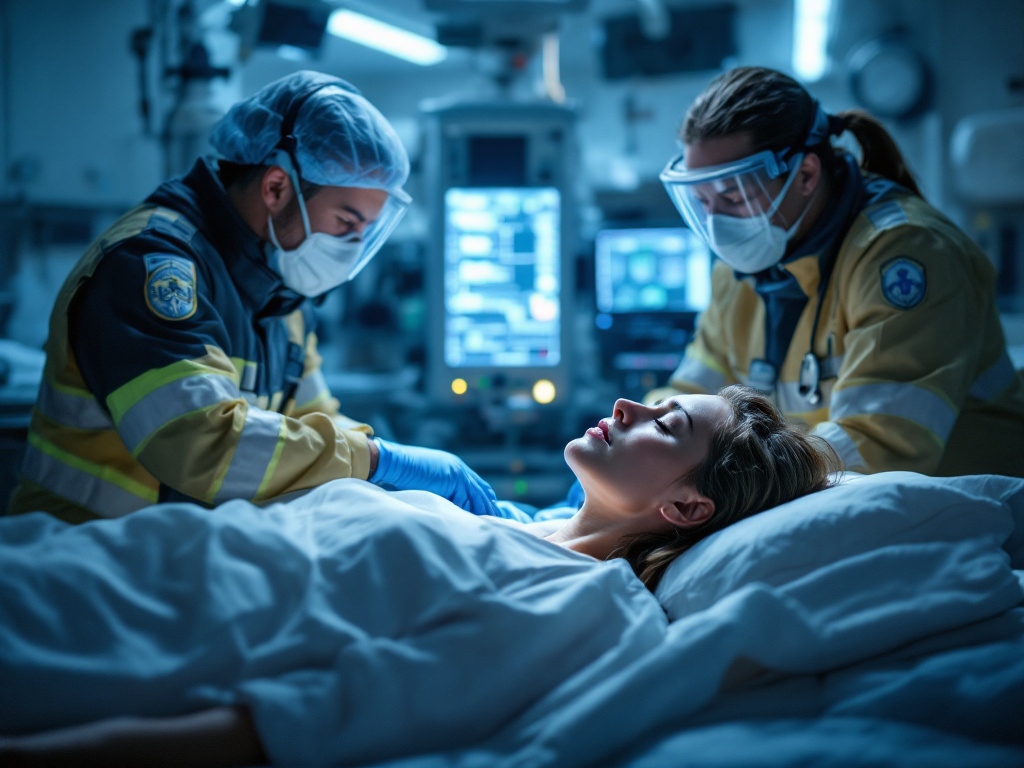
During sedation assisted emergency care, you will not be left alone. Guidelines recommend that at least one clinician focuses entirely on monitoring your sedation, while another performs the procedure [1].
You can usually expect:
- Continuous visual observation of your breathing, skin color, and comfort
- A small clip on your finger to monitor oxygen levels (pulse oximetry)
- Regular blood pressure checks
- Heart rhythm monitoring (ECG) for deeper sedation or high risk patients
- Often, a sensor near your nose or mouth that measures exhaled carbon dioxide, known as capnography
Capnography can detect subtle breathing problems before your oxygen levels drop, which allows your team to adjust your position, remind you to take a breath, or lighten sedation if needed. Studies have shown that adding capnography increases detection of respiratory events, which helps improve overall safety [2].
In a dental environment, your provider may adapt this setup to fit the office setting, but the same principles apply. Someone is always responsible for watching your breathing, responsiveness, and vital signs from the beginning of sedation until you are safely in recovery.
Potential risks and how they are managed
Even though serious complications are uncommon, it is important for you to understand potential risks so that you can make an informed decision.
Common and usually mild side effects
You may experience:
- Drowsiness or grogginess for several hours
- Nausea or vomiting, which occurs in a minority of cases [2]
- Brief drops in oxygen levels or breathing pauses, especially with opioid and benzodiazepine combinations
- Temporary changes in blood pressure or heart rate
These events are usually easy to manage with simple measures such as adjusting your position, providing supplemental oxygen, or giving small doses of other medications.
Less common but more serious complications
Rarely, patients can develop:
- Severe breathing problems or airway obstruction
- Laryngospasm, a sudden tightening of the vocal cords
- Aspiration of stomach contents into the lungs
- Need for emergency intubation
These events are infrequent, but your care team is trained to respond quickly if they occur. Organizations like the European Society of Anesthesiology recommend formal training and competency testing for clinicians who perform procedural sedation, including skills in airway management and resuscitation [5].
For you, this means that when sedation is offered, it is done with both your comfort and your safety in mind.
In emergency settings, the goal of sedation is not simply to “knock you out,” but to create a controlled, reversible state that allows necessary care while maintaining vital functions and rapid recovery.
What to expect before, during, and after your visit
Knowing the step by step process can ease much of the anxiety you may feel around sedation assisted emergency care, whether you are visiting a hospital, an urgent care center, or a dental practice offering specialized services.
Before your sedated procedure
Once sedation is recommended, your team will:
- Explain why sedation is needed and what level is planned.
- Review your medical history, medications, and allergies.
- Discuss the risks, benefits, and alternatives in terms you can understand.
- Ask you to sign a consent form, and for children, obtain parental or guardian consent.
- Place monitors and start an IV if intravenous medications will be used.
This is a good time for you to ask questions such as:
- How awake will I be?
- Who will be monitoring me?
- How long will it take to recover?
- When can I eat, drink, or drive again?
If you are seeking a niche service like sedation emergency dental care or using an emergency sedation dentist, the same informed consent process should apply.
During the procedure
As the sedative is given, you will typically feel:
- A wave of relaxation or light headedness
- Warmth or heaviness in your arms and legs
- Decreased awareness of your surroundings
You might hear voices or feel minor pressure, but the goal is that you do not experience sharp pain or distress. The team will adjust medication in small increments, watching how you respond. This incremental dosing is a cornerstone of safe practice because it reduces the chance of going deeper into sedation than planned [6].
In dental emergencies, this could mean that your dentist can complete cosmetic repair after injury, emergency orthodontic repair, or emergency temporary bridge repair without you needing to endure intense anxiety or pain.
In the recovery phase
After the procedure, you will move to a recovery area, often a quiet chair or bed where you can rest until you are more awake. During this time, staff will:
- Continue to monitor your vital signs
- Check your airway and breathing
- Assess your pain level and treat as needed
- Watch for nausea or other side effects
You will be allowed to leave when:
- You are awake enough to sit up and maintain your airway
- Your vital signs are stable
- Any bleeding from the treatment site is controlled
- You have a responsible adult to accompany you, if deep or moderate IV sedation was used
For children recovering from trauma repair for children or child dental trauma emergency care, staff will also ensure that they are calm, hydrated, and able to move safely before going home.
Special considerations for children, anxious patients, and seniors
Sedation assisted emergency care is often especially helpful for patients with unique needs. Your provider will consider not only the medical aspects, but also emotional and developmental factors.
Children and pediatric emergencies
Children may need urgent care for falls, sports injuries, or dental trauma that affects their front teeth. Services such as child friendly emergency dentistry, pediatric emergency dentist baltimore, and trauma repair for children are designed to:
- Use child appropriate communication and distraction
- Choose medications and doses specifically studied in pediatric patients
- Involve parents during evaluation and recovery whenever possible
- Minimize frightening memories by using agents that reduce awareness
Sedation allows the team to complete delicate work, such as esthetic emergency dental care for visible teeth, with less risk of movement and less emotional trauma for the child.
Highly anxious or phobic patients
If fear is the main barrier that has kept you from care, sedation assisted emergency services can be transformative. Practices that focus on sedation for anxious emergency patient care aim to:
- Respect your prior experiences and triggers
- Offer flexible levels of sedation, from oral medications to IV sedatives
- Combine sedation with reassurance and clear explanations
- Prevent escalation of anxiety that can make procedures unsafe or impossible
This is particularly important for urgent smile related concerns such as urgent smile repair or urgent aesthetic dental fix, where your appearance and confidence may already feel shaken.
Seniors and medically complex adults
Older adults and those with multiple health conditions may have:
- Increased sensitivity to sedative medications
- Higher risk of breathing problems or blood pressure changes
- Memory concerns that make fully awake procedures more stressful
Services like emergency dentistry for seniors take these factors into account. Your provider may choose lower doses, slower titration, and closer monitoring, as well as careful coordination with your primary physician or cardiologist when needed.
How specialized emergency dental sedation fits into your options
If your emergency is dental or facial, you might have options beyond the hospital emergency room. Many specialized practices provide:
- Sedation emergency dental care for severe toothaches, infections, and fractures
- Emergency cosmetic dental repair for chipped, broken, or dislodged front teeth
- Emergency veneer repair and esthetic emergency dental care for visible smile damage
- Emergency dental implant repair and emergency implant support if existing restorations fail
- Emergency temporary bridge repair, emergency orthodontic repair, and urgent smile repair to restore function and appearance
Working with an emergency sedation dentist allows you to receive both technical expertise and tailored sedation in one place. This combination can be especially valuable when you want to address both health and appearance quickly, with as little distress as possible.
Preparing yourself to choose sedation safely
When you are in the middle of a crisis, it can be hard to think clearly about options. A few key questions can guide you in deciding whether sedation assisted emergency care is right for you:
- What is the goal of sedation in my case? Pain control, anxiety relief, or both?
- What level of sedation is planned, and who will be monitoring me?
- Which medications are likely to be used, and what are their most common side effects?
- How experienced is this team with sedation in patients like me, such as children, seniors, or people with complex medical histories?
- What will recovery look like, and how long should I plan before returning to normal activities?
By understanding the process and knowing what to expect at each step, you can approach sedation assisted emergency care with greater confidence. Whether your urgent need is medical, pediatric, cosmetic, or dental, the right combination of skilled clinicians, appropriate medication, and vigilant monitoring can help you receive the care you need in a way that feels safer, calmer, and more manageable.